GasBuddy Report Shows Sunday Cheapest for Fuel Nationwide as Mid‑Week Prices Peak
Updated (10 articles)
Weekly Pricing Rhythm Identified Across All States GasBuddy’s year‑long analysis of daily statewide average gasoline prices reveals that Sunday consistently offers the lowest rates nationwide, while Wednesday through Friday register the highest prices in the majority of markets [1][2][3]. The pattern holds despite industry forecasts of a 2026 price decline to a five‑year low, indicating that weekly demand cycles and tax structures dominate short‑term pricing [1]. State‑by‑state data confirm the rhythm persists from California to New York, underscoring a predictable savings window for motorists.
Typical Savings From Timing Fill‑Ups Drivers who fill up on the cheapest day can shave 4–9 cents per gallon off the national average, while consumers in “price‑cycling” markets such as Michigan, Indiana, Ohio, Florida, Texas and parts of the West Coast can save 15–45 cents per gallon by waiting five to seven days after a mid‑week spike [1][2][3]. GasBuddy estimates that these timing strategies translate into measurable annual fuel cost reductions for regular commuters. The savings calculations exclude additional discounts from loyalty programs or regional promotions.
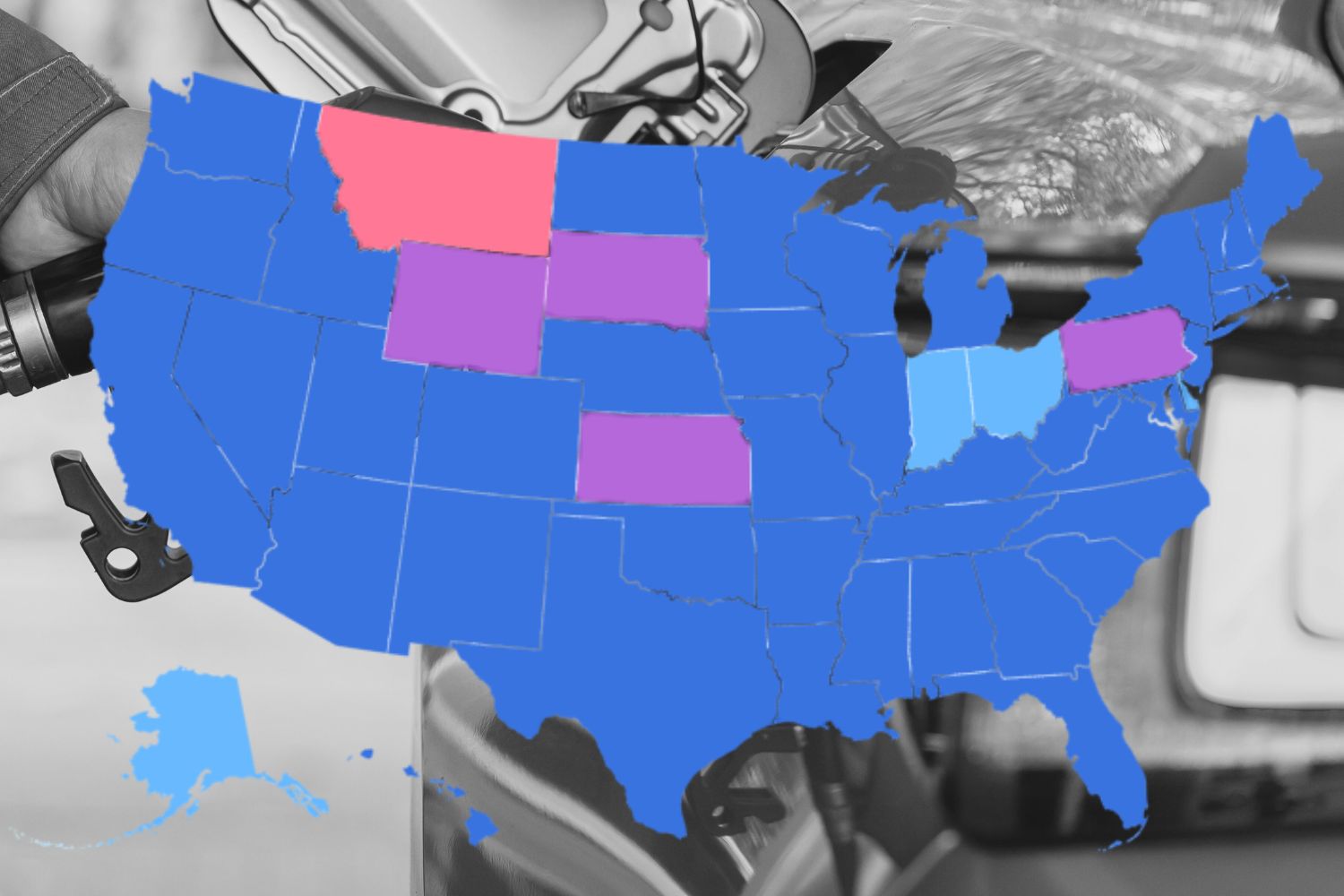
State‑Specific Exceptions to the Sunday Trend handful of states break the Sunday norm: Kansas, Pennsylvania and Wyoming typically see Saturday as the cheapest day, while Alaska, Delaware, Indiana and Ohio favor Monday, and Montana’s lowest prices fall on Tuesday [1][2][3]. These outliers reflect localized tax schedules, refinery constraints, and regional demand patterns. Drivers in these states benefit from adjusting their fill‑up day accordingly to capture maximum savings.
Price‑Cycling Markets Exhibit Sharp Mid‑Week Spikes In the identified cycling markets, gasoline prices jump sharply early in the workweek and then gradually decline, creating a predictable weekly price arc [2][3]. The spikes are most pronounced on Wednesday, Thursday or Friday, after which prices taper toward the weekend low. Consumers who monitor the cycle using price‑checking apps can strategically time purchases to avoid the peak and reduce per‑gallon costs.
GasBuddy Recommends App Use and Caution on Certain Days The company advises motorists to consult its app before refueling and to exercise particular caution on Tuesdays and Saturdays, which often carry higher rates in many regions [2][3]. Real‑time price alerts and historical trend data empower drivers to make informed decisions and avoid unnecessary expense. Continued adherence to these recommendations can amplify the modest per‑gallon savings identified in the report.
Sources
-
1.
Newsweek: Best Day to Buy Gas: Sunday Cheapest, Midweek Most Expensive Across States: Highlights nationwide Sunday‑cheapest pattern, 4–9 cent average savings, California’s high baseline prices, and the few states where Saturday is cheapest .
-
2.
WBNS: Sunday Is Cheapest Day for Fuel, GasBuddy Report Finds: Emphasizes price‑cycling markets with 15–45 cent savings, state‑by‑state best‑day variations (Monday, Tuesday, Saturday), and urges use of price‑checking apps while warning about Tuesdays and Saturdays .
-
3.
King5: GasBuddy Report Finds Sunday Cheapest for Fuel, Mid‑Week Prices Higher: Mirrors WBNS on cycling spikes, potential savings, and state‑specific best days, and reiterates the recommendation to rely on the GasBuddy app and avoid Tuesday/Saturday price peaks .
Related Tickers
Timeline
Nov 30, 2025 – The U.S. average gasoline price slips below $3 per gallon for the first time in more than four years, with every state reporting lower pump prices; stations in Oklahoma, Colorado and Texas already sell at $1.99 or less, driven by easing crude oil prices, added OPEC+ supply, record U.S. production and high refinery utilization, and GasBuddy’s Patrick De Haan notes the “speed and breadth” of the decline[8][10].
Dec 2, 2025 – The national average drops to $2.998 a gallon, the lowest level since May 2021, after a six‑cent weekly decline; 18 states post prices under $2.75, while crude oil falls to about $59 a barrel thanks to higher U.S. output and increased OPEC production, and analysts warn that Brent could slide into the low $50s per barrel in Q4 2026 and the $40s by year‑end if the supply glut continues[1][1].
Dec 4, 2025 – Columbus media launch an interactive map that lets drivers locate the city’s cheapest pumps, and the story cites the national average’s recent dip below $3 as part of a broader nationwide price relief[7].
Dec 8, 2025 – GasBuddy data show the average price at $2.897 per gallon, the lowest in roughly 1,680 days (since May 2, 2021); California posts the highest price at $4.414 while Oklahoma hits $2.298, and the decline stems from completed refinery maintenance and OPEC’s increased output, with a few stations already offering gas under $2 per gallon[4][4].
Dec 23, 2025 – AAA reports the December average hovering around $2.85‑$2.86, the cheapest December since 2020, as West Texas Intermediate trades below $60 a barrel; despite lower pump prices, inflation stays above the Fed’s 2 % target and consumer confidence hits its lowest level since April[5][5].
Jan 7, 2026 – GasBuddy forecasts the 2026 national average at $2.97 per gallon, the lowest annual figure since 2020, with current pump prices near $2.81‑$2.82; political reactions split as polls blame President Biden while former President Trump declares prices are falling “tremendously,” and De Haan cautions the drop reflects global market forces, not policy, while the firm expects a spring uptick to the low $3.20 range before softening to about $2.80 in December[3][3].
Feb 19, 2026 – GasBuddy’s year‑long analysis confirms Sunday as the cheapest day to fill up nationwide, with Wednesday‑Friday prices typically higher; in “price‑cycling” states such as Michigan, Indiana, Ohio, Florida and Texas, waiting five‑seven days after a spike can save 15‑45 cents per gallon, and the company advises drivers to use its app and avoid buying on Tuesdays and Saturdays[6][9].
Feb 19, 2026 – A separate GasBuddy report notes that Sunday remains the lowest‑price day in most states, allowing drivers to shave 4‑9 cents per gallon versus mid‑week fills; the weekly pricing rhythm endures despite forecasts of a 2026 price drop, while California’s high baseline stems from taxes, strict environmental rules and a special gasoline blend, and a few states (Kansas, Pennsylvania, Wyoming) see Saturday as the cheapest day[2][2].
All related articles (10 articles)
-
Newsweek: Best Day to Buy Gas: Sunday Cheapest, Midweek Most Expensive Across States
-
WBNS (Columbus, OH): Sunday Is Cheapest Day for Fuel, GasBuddy Report Finds
-
King5 (Seattle, WA): GasBuddy Report Finds Sunday Cheapest for Fuel, Mid‑Week Prices Higher
-
Newsweek: GasBuddy forecasts U.S. average gas below $3 in 2026, lowest annual price since 2020
-
AP: US gas prices dip to December low, AAA data show
-
Newsweek: Gas Prices Plunge to Lowest Level in Nearly Five Years
-
WBNS (Columbus, OH): Columbus Gas Prices: Current Lowest Rates and Interactive Map
-
CNN: US Gas Prices Drop Below $3 a Gallon for First Time Since May 2021
-
WBNS (Columbus, OH): National Gas Prices Drop Below $3 for First Time in Four Years
-
King5 (Seattle, WA): National Gas Prices Drop Below $3 for First Time in Four Years
External resources (7 links)
- https://blog-content.gasbuddy.com/uploads/2026/02/Best-Day-2026_By-State-1.pdf (cited 4 times)
- https://gasprices.aaa.com/ (cited 3 times)
- https://www.gasbuddy.com/ (cited 2 times)
- https://www.gasbuddy.com/go/best-day-gas-2026 (cited 2 times)
- https://www.gasbuddy.com/newsroom/pressrelease/2025/11/28/1165 (cited 2 times)
- https://interactive.10tv.com/iframes/GasBuddyChartUpdate.html (cited 1 times)
- https://www.gasbuddy.com/go/2026-fuel-price-outlook (cited 1 times)