Trump‑Appointed Fine Arts Commission Gives Final Green Light to $400 Million White House Ballroom
Updated (30 articles)
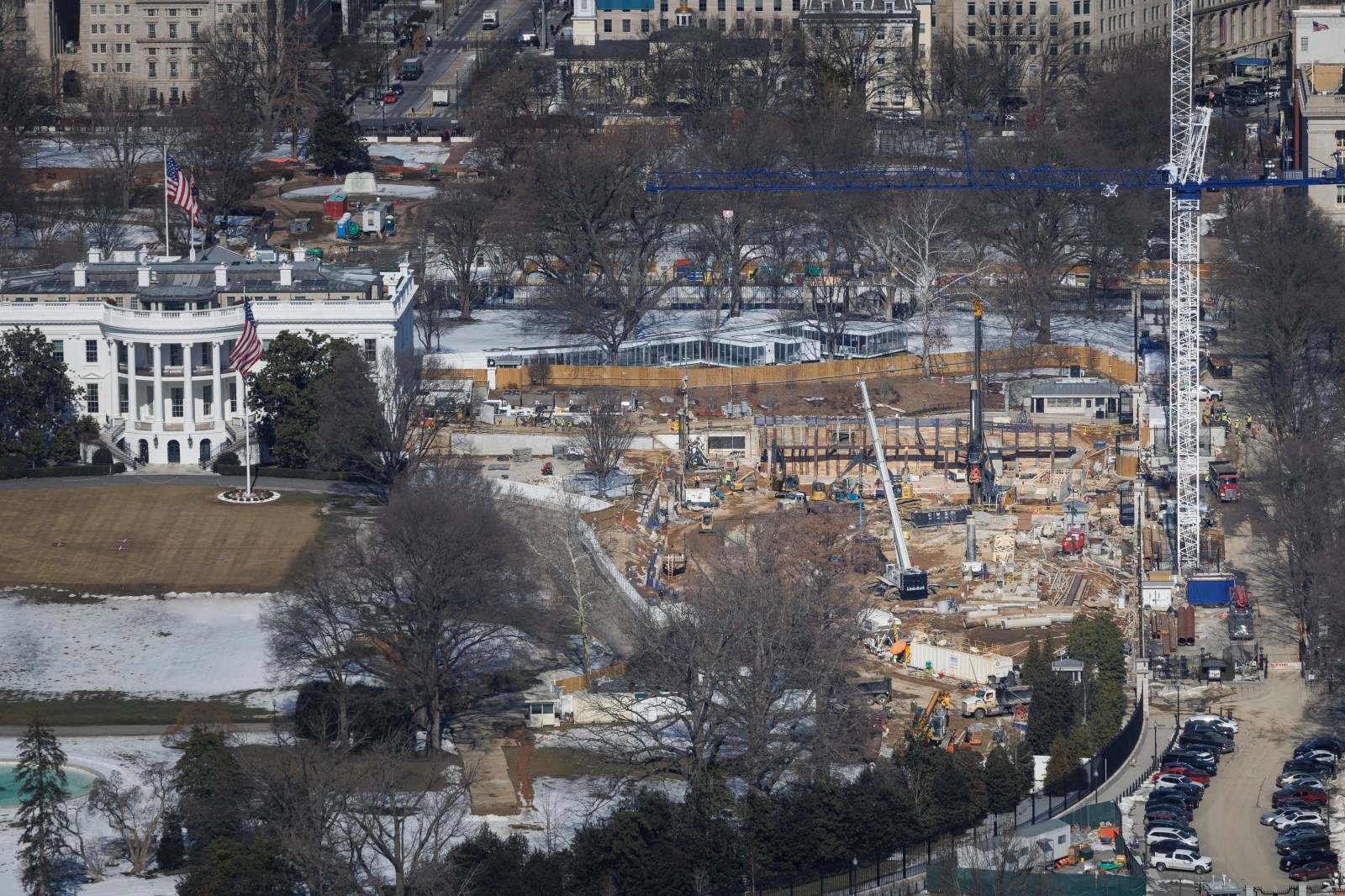
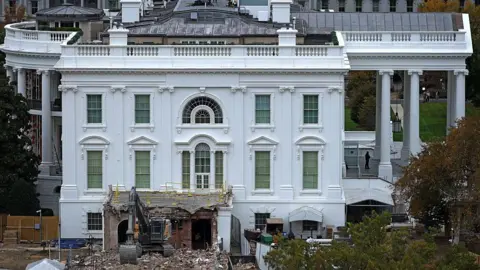
Commission of Fine Arts Grants Final Approval to Ballroom Design On February 19 2026 the U.S. Commission of Fine Arts voted in a virtual session to approve both the concept and final design for President Donald Trump’s East Wing ballroom, with all six voting members appointed by Trump in January 2026; Chairman Rodney Mims Cook Jr. moved for immediate final approval and the vote was reported as unanimous or overwhelmingly supportive across outlets [1][2][3]. The panel’s composition changed just before the vote, swearing in Chamberlain Harris and former HUD deputy secretary Pamela Hughes Patenaude, making it the first meeting entirely of Trump‑selected members [3]. Vice Chairman James McCrery abstained in the BBC report, a detail not noted by the other sources [2].
Demolition of East Wing Clears Site for Massive Ballroom The former East Wing was demolished in October 2025 to create space for the new ballroom, a move critics say bypassed required historic‑review processes and prompted the National Trust for Historic Preservation to file a lawsuit seeking to halt construction [1][2]. Lawmakers, historians, and preservationists condemned the demolition as occurring without public or congressional oversight [1]. The lawsuit remains pending as the National Capital Planning Commission prepares to consider the project in early March [1][2][3].
Project Scale, Funding, and Guest Capacity Details The plan calls for a 90,000‑square‑foot ballroom—nearly twice the size of the White House—and an estimated construction cost of $400 million, which the administration asserts will be covered entirely by private donations, though only a partial donor list has been released [1]. Capacity estimates differ: Newsweek cites roughly 1,000 guests, BBC reports an expanded capacity of 1,350 (up from an intended 500), while CNN does not specify a number [1][2]. Critics highlight the project's disproportionate scale relative to the East Room’s 200‑person capacity and question funding transparency [1][2][3].
Further Oversight Required and Additional Trump Initiatives The renovation still requires clearance from the 12‑member National Capital Planning Commission, scheduled to meet on March 5 2026, where the commission’s own members are also Trump appointees [1][2][3]. President Trump simultaneously announced a separate triumphal arch project to commemorate the nation’s 250th anniversary, linking it to the ballroom effort [2]. Architect Shalom Baranes presented the first detailed 3‑D mock‑up to the public, marking a new visual disclosure after earlier design revisions [2][3].
Sources
-
1.
Newsweek: White House Fine Arts Commission Gives Final Nod to Trump‑Backed Ballroom Project – Details the commission’s all‑Trump makeup, $400 million private‑funded 90,000‑sq‑ft design, demolition controversy, and pending legal and planning hurdles .
-
2.
BBC: Trump‑appointed panel greenlights White House ballroom redesign – Highlights overwhelming commission approval after design revisions, lawsuit over East Wing demolition, capacity increase to 1,350, and the announced triumphal arch .
-
3.
CNN: Trump’s White House ballroom moves one step closer after fast‑track vote – Reports unanimous fast‑track approval, 2,000 negative public comments, fully Trump‑appointed panel, 3‑D mock‑up reveal, and upcoming National Capital Planning Commission review .
Videos (1)
Timeline
1941 – Roosevelt orders a secret underground bunker beneath the East Wing after Pearl Harbor, creating a protected presidential facility that later becomes part of the White House complex [5].
Oct 2025 – Trump orders the rapid demolition of the 123‑year‑old East Wing, clearing the site in days for a new ballroom and drawing criticism for sidestepping historic‑preservation safeguards [7][13][30].
Dec 8, 2025 – Contractors resume East Wing demolition despite pending lawsuits, reinforcing the administration’s push to replace the wing with a massive ballroom [20].
Dec 12, 2025 – The National Trust for Historic Preservation files a lawsuit in D.C. District Court seeking a preliminary injunction to halt the ballroom until required federal reviews, environmental assessments, and congressional approval are completed [12][30].
Dec 15, 2025 – The Justice Department submits a 36‑page brief arguing the ballroom and demolition are required for national‑security reasons, offering to share classified details with the judge [20][28].
Dec 16, 2025 – Judge Richard Leon leans toward denying a temporary restraining order, noting the plaintiffs have not shown irreparable harm and warning against locking in underground work that could cement the ballroom’s scope [29].
Dec 16, 2025 – Judge Leon refuses an emergency injunction, allowing limited underground work to continue while keeping open the possibility of later court action [11].
Dec 31, 2025 – Chief usher Gary Walters says presidents have long sought larger entertaining spaces, framing Trump’s 90,000‑sq‑ft ballroom as part of a historical pattern of White House expansions [26].
Dec 31, 2025 – Trump posts updated Palm Room photos and hints at marble finishes for a “Trump‑Kennedy Center,” emphasizing that all renovations are privately funded [19].
Jan 1, 2026 – The White House releases an eight‑week schedule to push the ballroom through the National Capital Planning Commission and the Commission of Fine Arts, aiming to secure approvals before any above‑ground construction begins [17].
Jan 2, 2026 – Trump visits a Florida stone supplier near Mar‑a‑Lago to select marble for the ballroom, confirming the material will be paid for with his personal funds [10].
Jan 8, 2026 – The White House presents an information package to the National Capital Planning Commission outlining a 90,000‑sq‑ft East Wing ballroom, its security rationale, and a target completion date of summer 2028 [9].
Jan 8, 2026 – Officials argue preserving the East Wing is financially untenable, citing structural decay, water damage, and higher long‑term ownership costs; they estimate the ballroom’s price tag at $400 million [25].
Jan 9, 2026 – The White House reports that demolishing the East Wing is cheaper than renovating, projecting total ballroom costs of $400 million—about double the original estimate [2].
Jan 9, 2026 – The National Capital Planning Commission reviews detailed plans for a grand stair, a two‑story West Wing colonnade, and a 22,000‑sq‑ft ballroom seating 1,000, while DC Council Chairman Phil Mendelson criticizes the project’s scale [8].
Jan 16‑17, 2026 – Trump appoints four new members—Mary Anne Carter, Roger Kimball, Matthew Taylor, and James McCrery—to the Commission of Fine Arts, restoring a quorum for a Jan 22 meeting on the East Wing modernization [24].
Jan 22, 2026 – The all‑Trump‑appointed Fine Arts panel questions the “immense” design but affirms the ballroom’s national importance; architect Shalom Baranes outlines a 90,000‑sq‑ft addition with a 22,000‑sq‑ft ballroom [23].
Jan 22, 2026 – Judge Richard Leon expresses skepticism that Congress authorized the $400 million ballroom, suggesting the administration is end‑running statutory spending limits and indicating a ruling is forthcoming [6].
Feb 3, 2026 – Trump shares a new rendering of the ballroom on Truth Social, depicting a view from the Treasury building, reiterating a $400 million price tag and a need to replace “tiny, dilapidated” East Wing facilities [16].
Feb 4, 2026 – Trump announces a 250‑foot Independence Arch near the Lincoln Memorial, touting it as a long‑awaited national symbol and linking it to the 250th‑anniversary celebrations, though historians dispute the claimed precedent [22].
Feb 19, 2026 – The all‑Trump‑appointed Commission of Fine Arts fast‑tracks and then gives final approval to the ballroom design, endorsing a 90,000‑sq‑ft space that would dwarf the White House and confirming a $400 million private‑funded budget [1][4][15].
Feb 19, 2026 – The Fine Arts commission notes that over 99 % of more than 2,000 public comments oppose the project, highlighting widespread public resistance despite the panel’s approval [1][15].
Feb 19, 2026 – The commission schedules a final review by the National Capital Planning Commission for March 5, 2026, keeping the project on track for a projected summer 2028 completion [1][15].
Mar 5, 2026 (future) – The National Capital Planning Commission is set to meet and vote on the ballroom proposal, a key step before above‑ground construction can proceed [1][15].
Summer 2028 (future) – The administration targets summer 2028 for the ballroom’s completion, aiming to provide a permanent, secure venue for state functions and eliminate reliance on costly temporary tents [9][11][17].
Dive deeper (9 sub-stories)
-
Trump‑Appointed Fine Arts Commission Gives Final Approval to $400 Million White House Ballroom
(20 articles)
-
Trump Announces 250‑Foot Independence Arch Near Lincoln Memorial
(2 articles)
-
CNN: White House plans to rebuild top-secret bunker under East Wing as ballroom project advances
-
AP: Trump quietly appoints four new members to Commission of Fine Arts
-
CNN: East Wing expansion includes two-story West Wing Colonnade, ballroom, drawing mixed reactions at NCPC
-
Trump Chooses Marble for Expansive White House Ballroom as Costs Near $400 Million
(2 articles)
-
AP: White House usher: presidents long sought bigger entertaining space; Trump's ballroom plan follows history
-
AP: National Trust chief backs Trump-picked NCPC chair to review White House ballroom plan
-
CNN: Trump’s Washington reshaping updates as of December 2025
All related articles (30 articles)
-
Newsweek: White House Fine Arts Commission Gives Final Nod to Trump‑Backed Ballroom Project
-
BBC: Trump‑appointed panel greenlights White House ballroom redesign
-
CNN: Trump’s White House ballroom moves one step closer after fast‑track vote
-
AP: Trump pushes 250‑foot Washington arch despite historians’ objections
-
Newsweek: Trump Unveils White House Ballroom Rendering Amid Legal Fight
-
AP: Trump Appointees Probe White House Ballroom Design at Fine Arts Panel
-
CNN: Federal judge skeptical of White House authority to proceed with Trump ballroom
-
CNN: White House plans to rebuild top-secret bunker under East Wing as ballroom project advances
-
CNN: Trump pushes rapid East Wing demolition and broad DC makeover
-
AP: Trump quietly appoints four new members to Commission of Fine Arts
-
BBC: White House says demolishing East Wing cheaper than renovating for ballroom
-
CNN: East Wing expansion includes two-story West Wing Colonnade, ballroom, drawing mixed reactions at NCPC
-
AP: White House says saving the East Wing was too expensive
-
CNN: White House seeks NCPC review for Trump’s contested 90,000-square-foot East Wing ballroom
-
CNN: Trump shops for marble for new White House ballroom
-
Newsweek: White House lays out eight-week timeline for Trump ballroom approvals
-
Newsweek: Trump says DC Triumphal Arch could start within two months
-
AP: White House usher: presidents long sought bigger entertaining space; Trump's ballroom plan follows history
-
Newsweek: Trump shares new White House renovation photos, hints at marble for Trump-Kennedy Center
-
AP: National Trust chief backs Trump-picked NCPC chair to review White House ballroom plan
-
CNN: Federal Judge Declines Immediate Halt to White House Ballroom Construction
-
AP: Judge leans toward denying halt to Trump White House ballroom
-
Newsweek: Trump Administration Defends White House Ballroom Construction on National‑Security Grounds
-
AP: Trump Administration Defends White House Ballroom as National‑Security Project
-
AP: Preservationists Sue Trump Over White House Ballroom Project
-
Newsweek: Trump Ballroom Project Faces Lawsuit Over Legal and Preservation Concerns
-
CNN: Historic Preservation Group Sues Trump Administration Over White House Ballroom Demolition
-
BBC: Trump hires new architect for White House ballroom
-
CNN: Trump Appoints New Architect for White House Ballroom Amid Design Dispute
-
CNN: Trump’s Washington reshaping updates as of December 2025
External resources (12 links)
- https://www.youtube.com/watch?v=XcEmF5SSC-E (cited 1 times)
- https://www.ncpc.gov/docs/actions/2026January/8733_East_Wing_Modernization_Project_Information_Sheet_Jan2026.pdf (cited 3 times)
- https://www.whitehouse.gov/briefings-statements/2025/07/the-white-house-announces-white-house-ballroom-construction-to-begin/ (cited 3 times)
- https://www.ncpc.gov/files/projects/2025/8733_East_Wing_Modernization_Project_Project_FAQs_Jan2026.pdf (cited 1 times)
- https://www.ncpc.gov/review/agenda/ (cited 1 times)
- https://www.nps.gov/gwmp/planyourvisit/memorialave.htm (cited 1 times)
- https://www.whitehouse.gov/visit/ (cited 1 times)
- https://www.washingtonpost.com/politics/2025/11/26/trump-ballroom-architect-james-mccrery/ (cited 1 times)
- https://chairmanmendelson.com/ (cited 1 times)
- https://www.clarkconstruction.com/our-work/projects?project_search=&company_hidden=&market_hidden=&expertise_hidden=&location_hidden=&project_location_state_hidden=&delivery_method_hidden=&client_hidden=&designer_hidden=&company%5B%5D=Clark+Construction&market%5B%5D=Government&project_location_state%5B%5D=Washington%2C+DC&designer=&client= (cited 1 times)
- https://www.whitehousehistory.org/secret-spaces-at-the-white-house (cited 1 times)