NASA Alerts Public to Survey Gap of 140‑Metre Asteroids After Recent Flybys
Updated (12 articles)

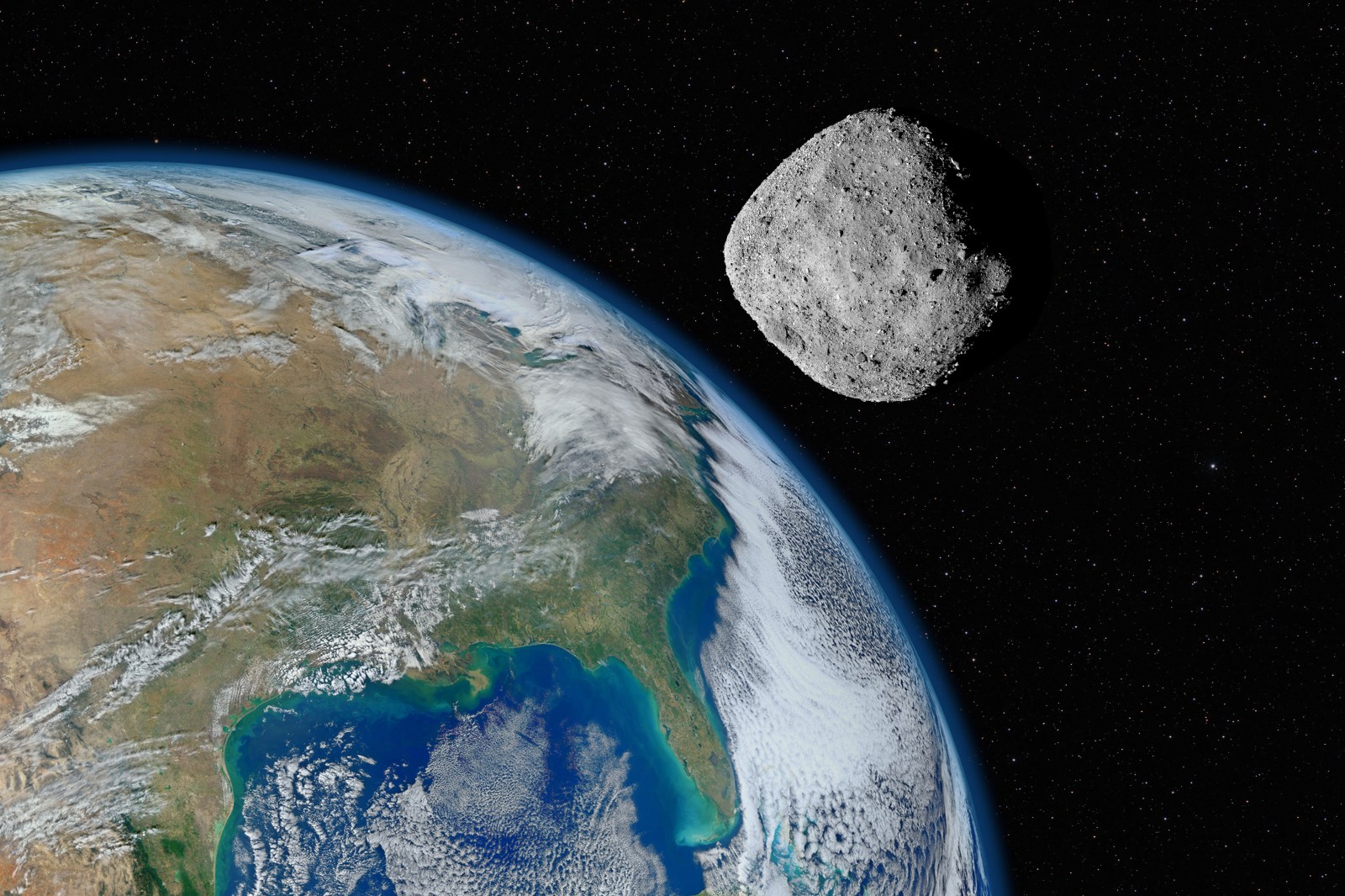

Survey Shortfall Leaves Thousands of 140‑Metre Objects Untracked NASA estimates roughly 25,000 asteroids about 140 m (460 ft) in diameter exist, yet only about 40 % have been catalogued, creating an unknown regional risk [1]. Kelly Fast emphasized that impacts from objects of this size could devastate a city‑scale area, while larger, well‑tracked bodies pose far less immediate danger [1]. The “potentially hazardous” label applies to long‑term orbital evolution rather than imminent threat, according to CNEOS manager Paul Chodas [1].
Car‑Sized 2026 CR2 to Fly Past Earth on Feb 17, Followed by Larger Objects NASA’s Jet Propulsion Laboratory will observe asteroid 2026 CR2, about 9.7 ft across, skimming Earth at 84,800 miles on Feb 17 at 12,616 mph [2]. Within the same week, a stadium‑sized 2026 BX4, an airplane‑sized 2026 AJ17, a 1,290,000‑mile‑distant 2026 CU, and a 110‑ft 2026 CA2 will also pass, all tracked by the agency [2]. These close approaches illustrate the routine monitoring of objects ranging from car‑size to stadium‑size.
2024 YR4 Impact Odds Dropped After Initial 3.1 % Estimate Early 2025 calculations gave asteroid 2024 YR4 a 3.1 % chance of striking Earth in 2032, the highest probability ever recorded for an object of its size [1][2]. Subsequent trajectory refinements lowered the Earth‑impact risk to negligible, shifting concern to a possible Moon impact in December 2032 and scheduling a follow‑up observation in 2028 [1][2]. Both reports note the object remains too distant for current observation, underscoring the fluid nature of impact assessments.
Detection Limits and Global Observation Network Remain Essential Small impacts from 30‑ft asteroids occur roughly every decade, producing fireballs and occasional window damage but no major harm [2]. Even the most powerful telescopes struggle to locate many 140‑m bodies, prompting reliance on a worldwide network of volunteers and professional observatories that feed data to the Minor Planet Center and NASA’s Small Bodies Node [1][2]. Continuous trajectory refinement by the Center for Near‑Earth Object Studies and the Planetary Defense Coordination Office aims to close the survey gap highlighted by Fast.
Sources
-
1.
Newsweek: NASA Warns of Undetected 140‑Metre Asteroids Threatening Earth: Highlights the incomplete catalog of 140‑m near‑Earth objects, regional damage potential, and clarifies the “potentially hazardous” designation with quotes from Kelly Fast and Paul Chodas
-
2.
Newsweek: NASA Tracks Car‑Sized Asteroid 2026 CR2 as It Nears Earth Tomorrow: Details the imminent 2026 CR2 flyby, lists additional near‑Earth passes that week, revisits the revised risk for 2024 YR4, and describes the global monitoring infrastructure
Related Tickers
Timeline
Feb 2025 – NASA’s CNEOS reports that asteroid 2024 YR4 shows a 3.1 % chance of impacting Earth in 2032, the highest probability ever recorded for an object of its size, prompting heightened monitoring and public attention [1].
Apr–May 2025 – The LSST camera at the Vera C. Rubin Observatory records light‑curve data that reveal asteroid 2025 MN45 rotating once every 1.88 minutes, making it the fastest‑spinning main‑belt asteroid larger than 0.3 mi and one of 19 super‑ or ultra‑fast rotators among ~1,900 newly detected bodies [7].
Dec 9, 2025 – NASA’s JPL tracks asteroid 2025 XM passing within about 295,000 miles (1.2 × the Moon’s distance) at ~9,753 mph; at 84 ft it falls well below the 150‑m (≈492 ft) “potentially hazardous” threshold [11].
Dec 11, 2025 – Asteroid 2025 XF1 (41 ft) flies by at ~195,000 miles and 2025 XK1 (≈33 ft) at ~624,000 miles, while larger objects 2020 WH20 and 2016 YH (airplane‑sized) approach at ~20,000 mph, all monitored with no impact risk [12].
Dec 15, 2025 – Near‑Earth asteroid 2025 XN4 (38 ft) misses Earth by a “cosmically slight” 123,000 miles on Tuesday, and 2025 XX2 (33 ft) passes at 580,000 miles on Monday; NASA reiterates that the earlier 3.1 % impact probability for 2024 YR4 has been dismissed after refined observations [10].
Dec 22, 2025 – Bus‑sized 2025 YH3 (32 ft) skims Earth at 284,000 miles, while larger rocks 2025 YC3 (≈260 ft) and 2025 XT7 (≈42 ft) pass within ~2.4 million miles, illustrating the routine close approaches of non‑hazardous NEOs [9].
Dec 29, 2025 – NASA announces tracking of a “plane‑sized” near‑Earth asteroid, underscoring the agency’s continuous surveillance of larger objects even when specific details are not yet public [8].
Jan 8, 2026 – Researchers publish the identification of 2025 MN45 as a 2,329‑ft asteroid spinning every 1.88 minutes, concluding that such ultra‑fast rotators must possess solid‑rock cohesion rather than being rubble piles [7].
Jan 12, 2026 – Bus‑sized 2026 AJ (≈40 ft) approaches within 961,000 miles, the closest of five tracked asteroids that day, while 2026 AO (≈73 ft) and 2022 GR3 (≈29 ft) also pass; the report again references the fast‑rotator 2025 MN45 as a recent discovery [6].
Jan 15, 2026 – Asteroid 2026 AZ2 (41 ft) will zip past at 217,000 miles and plane‑sized 2026 AR1 (69 ft) at 702,000 miles, and scientists note the “record‑fast” 2025 MN45 discovered the previous week as part of a broader surge in rapid‑rotator findings [5].
Jan 26, 2026 – NASA monitors 2026 BB4 (54 ft) projected to pass within 844,000 miles and larger 2026 BJ1 (≈220 ft) at 3.07 million miles; CNEOS manager Paul Chodas clarifies that the “potentially hazardous” label reflects centuries‑long orbital evolution, not imminent danger [4].
Jan 30, 2026 – Bus‑sized 2022 OC3 (≈24 ft) flies by at 311,000 miles on Jan 31, while NASA highlights the long‑term 1‑in‑2,700 chance that asteroid Bennu could strike Earth in Sep 2182, potentially causing global climate effects [3].
Feb 16, 2026 – NASA’s JPL tracks car‑sized 2026 CR2 (≈9.7 ft) for a Feb 17 flyby at 84,800 miles and lists several larger asteroids passing the same week; the agency schedules a revisit to 2024 YR4 in 2028 after current observations deem it too distant for detailed study [2].
Feb 18, 2026 – NASA warns that roughly 25,000 medium‑sized (≈140 m) asteroids exist, with only ~40 % surveyed, and quotes senior scientist Kelly Fast: “These objects can cause regional damage and are hard to detect even with the best telescopes.” Paul Chodas reiterates that “potentially hazardous” refers to long‑term orbit evolution, not an imminent threat, while noting that the 3.1 % impact risk for 2024 YR4 has been revised to negligible [1].
Dive deeper (3 sub-stories)
All related articles (12 articles)
-
Newsweek: NASA Warns of Undetected 140‑Metre Asteroids Threatening Earth
-
Newsweek: NASA Tracks Car‑Sized Asteroid 2026 CR2 as It Nears Earth Tomorrow
-
Newsweek: NASA Tracks Bus‑Sized Asteroid 2022 OC3 as It Nears Earth
-
Newsweek: NASA Monitors Two Near‑Earth Asteroids, Including 54‑Foot Rock 2026 BB4
-
Newsweek: NASA Tracks Bus-Sized Asteroid 2026 AZ2 and AR1 Near Earth
-
Newsweek: Bus-sized asteroid 2026 AJ to pass Earth among five approaching near-Earth objects
-
Newsweek: Astronomers identify 2,329-foot asteroid 2025 MN45 spinning once every 1.88 minutes
-
Newsweek: NASA tracks plane-sized asteroid nearing Earth
-
Newsweek: NASA tracks bus-sized asteroid 2025 YH3 near Earth as others approach
-
Newsweek: NASA Monitors Multiple Bus‑Sized Asteroids Near Earth This Week
-
Newsweek: NASA Tracks Bus‑Sized Asteroid 2025 XF1 Near Earth This Week
-
Newsweek: NASA Tracks 2025 XM Asteroid Near Earth on Dec 9, 2025
External resources (4 links)
- https://www.jpl.nasa.gov/asteroid-watch/ (cited 4 times)
- https://science.nasa.gov/solar-system/asteroids/2024-yr4-facts/ (cited 1 times)
- https://www.jpl.nasa.gov/asteroid-watch/next-five-approaches/ (cited 1 times)
- https://doi.org/10.3847/2041-8213/ae2a30 (cited 1 times)