DHS Launches Nationwide Review of Pre‑Naturalization Voting Cases Following Trump Executive Order
Updated (13 articles)
DHS Initiates Comprehensive Scan of Voter‑Fraud Files The Department of Homeland Security issued an internal memo directing Homeland Security Investigations to examine every open and closed voter‑fraud case for evidence of registration or voting before naturalization [1]. The directive explicitly ties the review to President Trump’s March executive order that labels such activity a felony [1]. The Identity and Benefit Fraud Unit within HSI leads the effort, tasked with identifying, investigating, and disrupting actions that threaten election integrity [1].
Idaho Data Highlights False‑Positive Rate in Voter Flagging Idaho’s use of federal immigration data initially flagged 760 possible non‑citizen voters among more than one million registered voters [1]. State officials subsequently narrowed the list to roughly a dozen individuals who were referred for possible federal criminal investigation [1]. The discrepancy underscores concerns about over‑inclusion in the DHS review process.
Justice Department Pursues Voter‑Roll Data Through Litigation The DOJ has filed 25 lawsuits seeking private voter‑roll information that may contain Social Security or driver’s‑license numbers [1]. Federal judges have so far ruled against the administration in the few cases that proceeded, limiting the department’s ability to obtain the data [1]. These legal setbacks contrast with the administration’s aggressive push to expand voter‑fraud investigations.
Congressional GOP Advances SAVE Act Requiring Citizenship Proof Republican leaders introduced the SAVE Act, which would mandate proof of citizenship for voter registration, securing a 50th Senate co‑sponsor and passing the House [2]. Lawmakers are urging Senate leadership to remove the filibuster to accelerate the bill’s enactment [2]. The proposal aligns with the administration’s broader agenda to tighten voting eligibility requirements.
Empirical Evidence Shows Non‑Citizen Voting Is Exceptionally Rare Heritage Foundation data record fewer than 100 alleged non‑citizen voting incidents from 2002‑2022 [2]. The Brennan Center identified only 30 suspected non‑citizen votes in the 2016 election out of 23 million votes cast [2]. Court records reveal just 39 non‑citizens registered between 1999‑2013, indicating that the phenomenon is statistically negligible [2].
State Implementation of Proof‑of‑Citizenship Tools Leads to Misidentifications and Disenfranchisement ProPublica investigations found hundreds of erroneous flags in Missouri, about 760 in Idaho (with only a dozen referred for charges), and 55 of 84 flagged voters in Texas failed to respond [2]. Recent state proof‑of‑citizenship laws have disenfranchised thousands: New Hampshire turned away 244 voters in 2025, Arizona’s bifurcated system created “federal‑only” voter rolls disproportionately affecting people of color, and Kansas’s 2011 law blocked over 30,000 citizens before courts struck it down [2]. Kansas Secretary of State Scott Schwab warned that the state’s earlier proof‑of‑citizenship law “didn’t work out so well,” cautioning against similar measures elsewhere [2].
Sources
-
1.
CNN: DHS Reviews Voter‑Fraud Cases for Naturalized Citizens: details the DHS memo, HSI’s lead role, Idaho false‑positive findings, and DOJ lawsuits, linking the review to the Trump executive order .
-
2.
CNN: GOP Pushes Proof‑of‑Citizenship Voting Bill Amid Sparse Fraud Evidence: outlines the SAVE Act’s legislative progress, public support, rarity of non‑citizen voting, state misidentifications, disenfranchisement impacts, and Kansas’s cautionary stance .
Related Tickers
Primary Data (1)
Timeline
2020 – Trump repeatedly claims he won the 2020 election “in a landslide” and alleges widespread illegal voting by non‑citizens, despite numerous courts rejecting the fraud narrative [1][12].
Jan 6, 2021 – House Speaker Mike Johnson leads the failed effort to overturn the 2020 results by urging states to send alternate slates of electors, a plot later condemned as an attack on democracy [8].
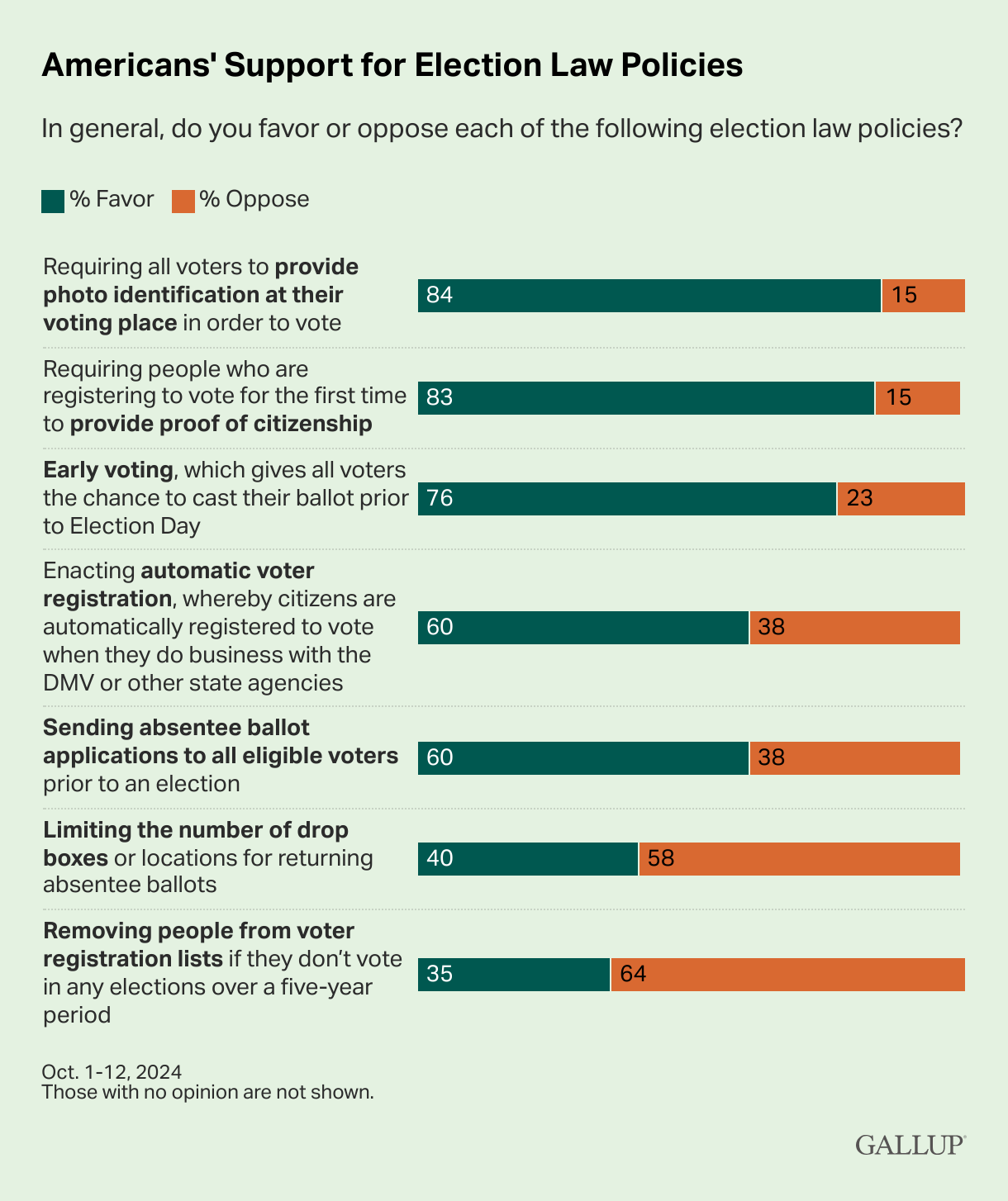
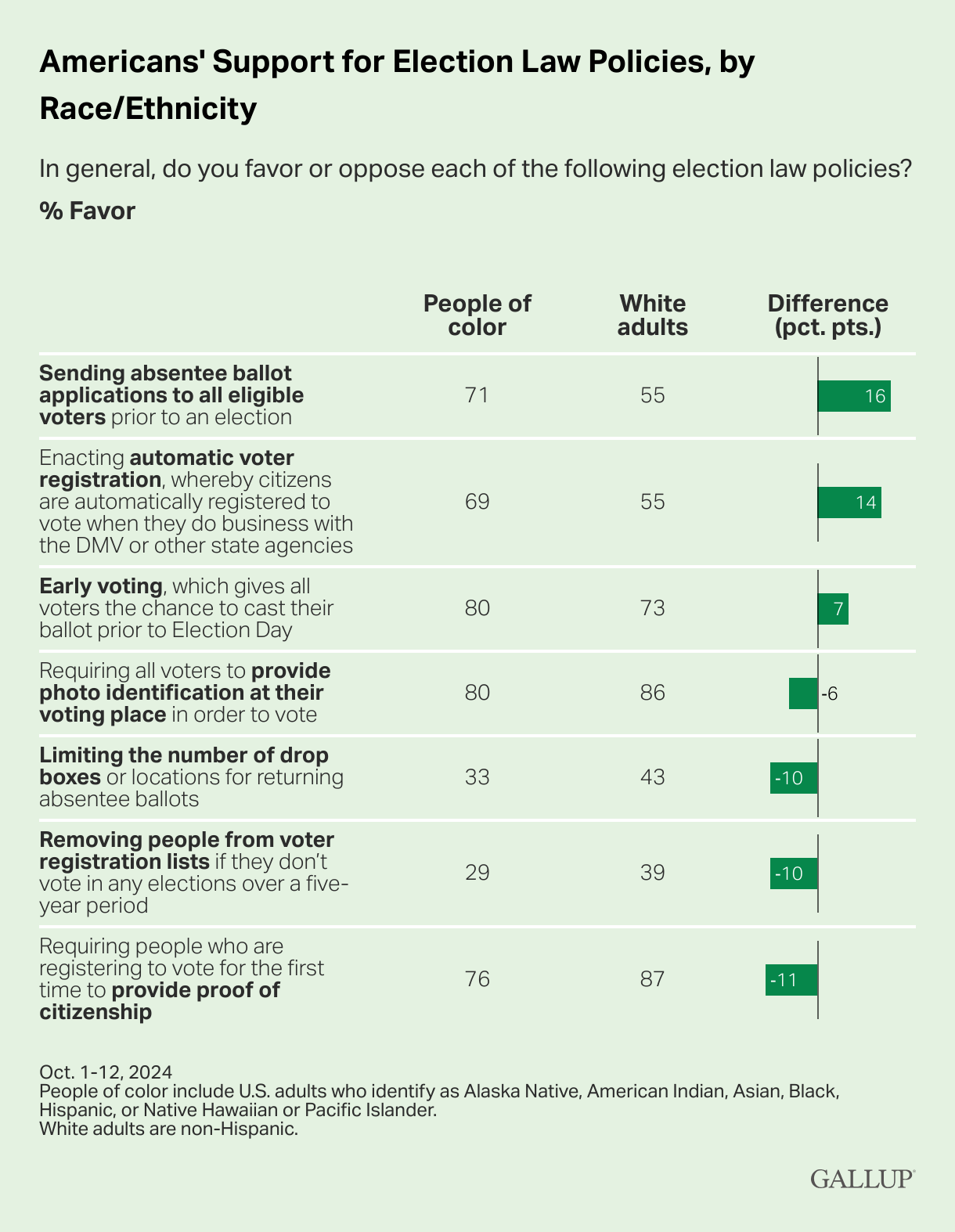
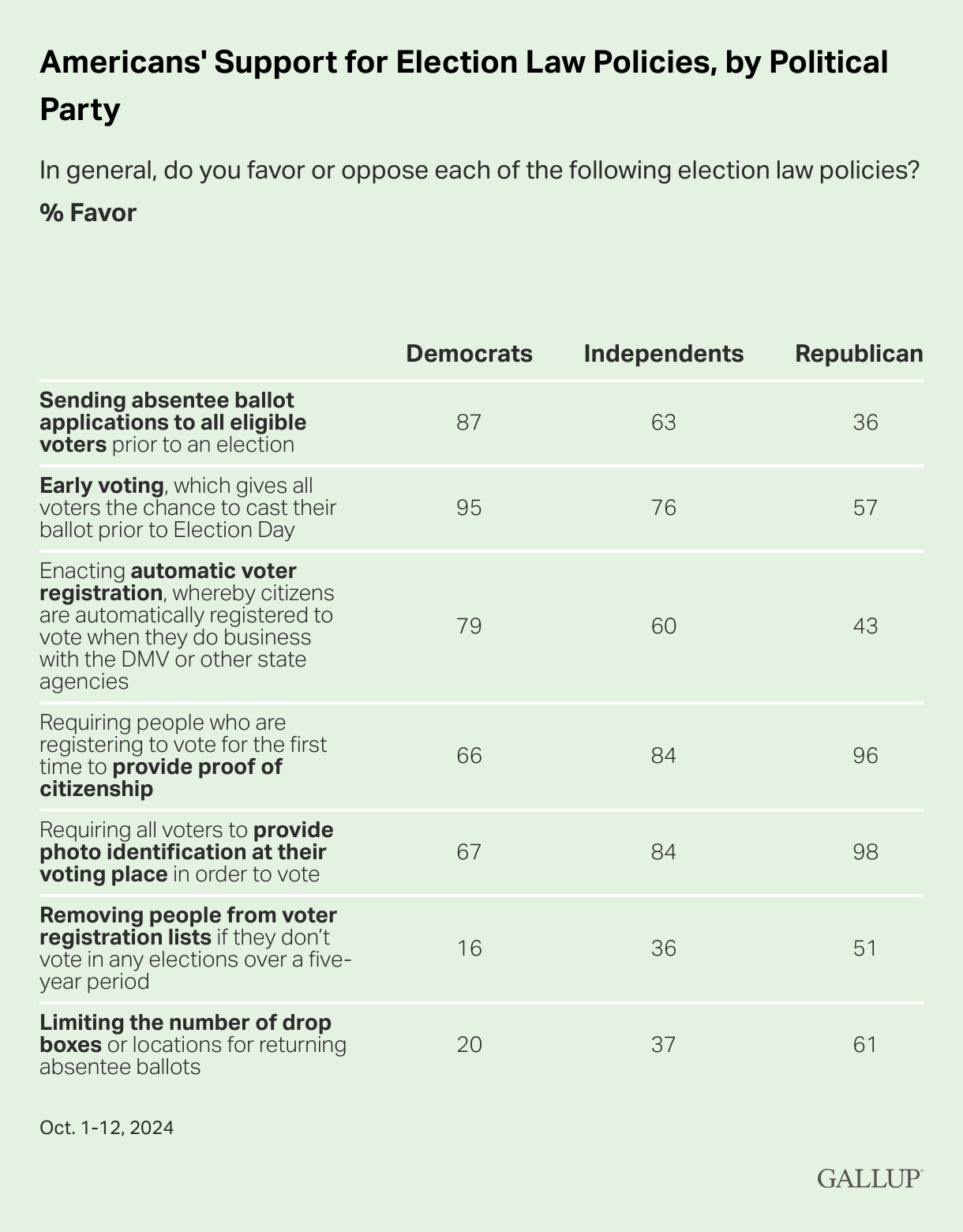
2024 – Nationwide polls show 67 %–83 % of voters support requiring proof of citizenship to register, giving the SAVE Act broad popular backing [3].
2024 – New Hampshire’s proof‑of‑citizenship law turns away 244 voters in 2025, illustrating the disenfranchising impact of such measures [3].
2025 – Idaho’s use of DHS immigration data flags 760 possible non‑citizens among over a million voters, but state officials narrow the list to about a dozen cases for possible federal investigation [2].
2025 – Gov. Gavin Newsom signs a California law that speeds county tabulation of mail‑in ballots without changing the Election Day voting deadline, a response to concerns about prolonged counts [5].
Jan 2026 – Federal agents execute a court‑authorized FBI raid on Fulton County’s election hub in Georgia, seizing 2020 election records and prompting Trump to label the city “corrupt” [7][10].
Jan 30, 2026 – House Republicans unveil the 120‑page “Make Elections Great Again Act,” mandating voter photo ID, citizenship verification at registration, bans on universal vote‑by‑mail and ranked‑choice voting, and requiring auditable paper ballots by fall [13].
Feb 2, 2026 – On The Dan Bongino Show, Trump urges Republicans to “take over the voting in at least 15 jurisdictions,” arguing state‑run elections are corrupt and need a national system [12].
Feb 3, 2026 – Trump repeats the “nationalize” call on a Dan Bongino podcast, saying Republicans should “take over the voting in at least 15 places” and linking the idea to deporting undocumented immigrants [1].
Feb 3, 2026 – The White House ties Trump’s remarks to the Safeguard American Voter Eligibility (SAVE) Act, describing it as a “national voter ID requirement” that would require documentary proof of citizenship [7][10].
Feb 3, 2026 – Senate Minority Leader Chuck Schumer condemns Trump’s proposal as “outlandishly illegal,” warning it would violate the Constitution’s allocation of election administration to the states [12][10].
Feb 3, 2026 – Rep. Bryan Steil introduces the Make Elections Great Again (MEGA) Act (H.R. 7300) during a pro‑forma House session, proposing nationwide photo ID, citizenship checks, mail‑in ballot deadlines, and a ban on ranked‑choice voting [9].
Feb 3, 2026 – After Trump’s “nationalize” plea, 14 additional Republicans, including Byron Donalds and Claudia Tenney, sign onto the MEGA Act, raising its co‑sponsor count to 38 [11].
Feb 4, 2026 – Trump again urges a federal takeover of state‑run elections, claiming “a state is an agent for the federal government in elections” and citing the Fulton County raid as evidence of “horrible corruption” [7].
Feb 4, 2026 – Constitutional scholars cite Article I, §4 of the U.S. Constitution to explain that only state legislatures—not the president—control election administration, rendering Trump’s nationalization idea unconstitutional [6][10].
Feb 4, 2026 – House Speaker Mike Johnson repeats Trump’s claim that California “holds elections open for weeks after Election Day,” asserting that “new tranches of ballots magically whittled away” from GOP leads, though he admits he cannot prove fraud [5][8].
Feb 4, 2026 – Johnson acknowledges he cannot substantiate his fraud allegations, noting that the “upstream” nature of the alleged misconduct prevents proof [8].
Feb 5, 2026 – Trump reiterates his “nationalize” demand on Dan Bongino’s show, while White House press secretary Karoline Leavitt mischaracterizes the comment as support for the SAVE Act rather than a call for federal takeover [4].
Feb 5, 2026 – Senator Lindsey Graham publicly doubts Trump’s consistency with his own staff, reflecting broader Republican unease about the president’s election rhetoric [4].
Feb 18, 2026 – The SAVE Act secures a 50th Senate co‑sponsor, passes the House, and moves toward a filibuster‑removal vote, despite evidence that non‑citizen voting is extremely rare (fewer than 100 cases from 2002‑2022) [3].
Feb 19, 2026 – DHS issues an internal memo directing Homeland Security Investigations to scan all voter‑fraud files for pre‑naturalization voting, linking the review to Trump’s March executive order that labels such activity a felony [2].
Nov 2026 (future) – The 2026 midterm elections loom as the GOP seeks to protect its slim congressional majorities, while Trump’s “nationalize” agenda and the pending SAVE and MEGA Acts shape the political battlefield [10].
2027 (future) – The SAVE Act and the MEGA Act both schedule the rollout of citizenship‑verification requirements for voter registration, setting a nationwide deadline for implementation [3][9].
Dive deeper (6 sub-stories)
-
CNN: DHS Reviews Voter‑Fraud Cases for Naturalized Citizens
-
CNN: GOP Pushes Proof‑of‑Citizenship Voting Bill Amid Sparse Fraud Evidence
-
Trump Reiterates Call for Federal Takeover of Voting, Press Secretary Misstates Intent
(6 articles)
-
CNN: House Speaker Mike Johnson Echoes Trump’s Election‑Fraud Claim About California Vote Counting
-
Newsweek: House Speaker Mike Johnson Says He Cannot Prove Election Fraud Claims
-
House Republicans Advance “Make Elections Great Again” Bill After Trump Calls for Nationalized Voting
(3 articles)
All related articles (13 articles)
-
CNN: DHS Reviews Voter‑Fraud Cases for Naturalized Citizens
-
CNN: GOP Pushes Proof‑of‑Citizenship Voting Bill Amid Sparse Fraud Evidence
-
CNN: Trump Reiterates Call to “Nationalize” Voting, Undermining Press Secretary’s Explanation
-
CNN: House Speaker Mike Johnson Echoes Trump’s Election‑Fraud Claim About California Vote Counting
-
Newsweek: House Speaker Mike Johnson Says He Cannot Prove Election Fraud Claims
-
CNN: Trump Calls for “Nationalized” Elections Amid Constitutional Pushback
-
CNN: Trump Calls for Federal Takeover of State‑Run Elections
-
BBC: Trump urges GOP to “nationalise” voting and repeats 2020 fraud claims
-
Newsweek: Trump’s Call to “Nationalize” Voting Meets Constitutional Pushback
-
Newsweek: Republican‑Led MEGA Act Proposes Federal Voting Rules Amid Congressional Divide
-
Newsweek: GOP Election Bill Gains Momentum After Trump Calls for “Nationalize” Voting
-
Newsweek: Trump urges Republicans to “nationalize” voting, sparking constitutional backlash
-
AP: House Republicans Unveil “Make Elections Great Again Act” Ahead of Midterms
External resources (34 links)
- https://www.youtube.com/watch?si=PzxiieZ42iZ-bi3t&t=376&v=aFPwK3BtVlw&feature=youtu.be (cited 1 times)
- http://www.congress.gov/bill/119th-congress/house-bill/7300?s=1&r=5 (cited 1 times)
- https://cha.house.gov/press-releases?id=460DC098-9C01-4F60-8BA5-E795D1501893 (cited 1 times)
- https://constitution.congress.gov/browse/article-1/section-4/ (cited 1 times)
- https://constitution.congress.gov/browse/article-1/section-4/clause-1/ (cited 1 times)
- https://steil.house.gov/media/press-releases/steil-introduces-election-reform-package (cited 1 times)
- https://steil.house.gov/sites/evo-subsites/steil.house.gov/files/evo-media-document/final-make-elections-great-again-act.pdf (cited 1 times)
- https://www.congress.gov/bill/119th-congress/house-bill/7300/cosponsors?s=1&r=1&q=%7B%22search%22%3A%22make+elections+great+again%22%7D (cited 1 times)
- https://www.congress.gov/bill/119th-congress/house-bill/7300/cosponsors?s=1&r=5 (cited 1 times)
- https://www.sos.ca.gov/administration/news-releases-and-advisories/2024-news-releases-and-advisories/secretary-state-shirley-n-weber-phd-has-certified-results-california-november-5-2024-general-election (cited 1 times)
- https://www.sos.ca.gov/elections/historical-absentee (cited 1 times)
- https://www.sos.ca.gov/elections/upcoming-elections/vote-counting-process (cited 1 times)
- https://www.sos.ca.gov/elections/voter-registration/vote-mail (cited 1 times)
- https://www.sos.ca.gov/elections/voter-registration/vote-mail/usps-frequently-asked-questions-faqs (cited 1 times)
- https://news.gallup.com/poll/652523/americans-endorse-early-voting-voter-verification.aspx (cited 1 times)
- https://apnorc.org/wp-content/uploads/2024/10/October-topline_final-2.pdf (cited 1 times)
- https://www.nytimes.com/2026/01/11/us/trump-voting-machines-2020-election.html (cited 1 times)
- https://www.nytimes.com/2026/02/17/us/politics/republicans-vote-fraud-id-midterms.html (cited 1 times)
- https://www.politico.com/news/2019/11/13/trump-troops-syria-oil-pentagon-070567 (cited 1 times)
- https://www.washingtonpost.com/news/monkey-cage/wp/2017/08/18/trump-says-theres-no-white-house-chaos-heres-why-john-kelly-will-have-trouble-making-that-so/ (cited 1 times)
- https://x.com/ECaliberSeven/status/1861565305224372535 (cited 1 times)
- https://x.com/stephen_richer/status/2018794161911267331 (cited 1 times)
- https://cases.justia.com/federal/appellate-courts/ca10/18-3133/18-3133-2020-04-29.pdf?ts=1588176048 (cited 1 times)
- https://files.constantcontact.com/e949222d701/ed164568-7c31-48e6-a03f-89f082080313.pdf (cited 1 times)
- https://laist.com/news/politics/california-voters-could-see-faster-election-results-under-new-state-law (cited 1 times)
- https://rollcall.com/factbase/trump/transcript/donald-trump-press-gaggle-air-force-one-november-14-2025/#162 (cited 1 times)
- https://www.brennancenter.org/our-work/analysis-opinion/arizonas-show-your-papers-requirement-hurts-voters (cited 1 times)
- https://www.brennancenter.org/our-work/research-reports/noncitizen-voting-missing-millions (cited 1 times)
- https://www.countyofmerced.com/directory.aspx?EID=696 (cited 1 times)
- https://www.ncsl.org/elections-and-campaigns/election-administration-at-state-and-local-levels (cited 1 times)
- https://www.ncsl.org/elections-and-campaigns/table-11-receipt-and-postmark-deadlines-for-absentee-mail-ballots (cited 1 times)
- https://www.ncsl.org/elections-and-campaigns/table-15-states-with-signature-cure-processes (cited 1 times)
- https://www.ncsl.org/elections-and-campaigns/table-16-when-absentee-mail-ballot-processing-and-counting-can-begin (cited 1 times)
- https://www.unionleader.com/news/politics/state/voting-rights-group-new-election-reforms-turned-away-hundreds-of-potential-voters/article_1b52efd5-0186-4544-9dba-3aab0caa6ec9.html (cited 1 times)