South Africa Declares National Disaster as Foot‑and‑Mouth Spreads to Eight Provinces
Updated (2 articles)
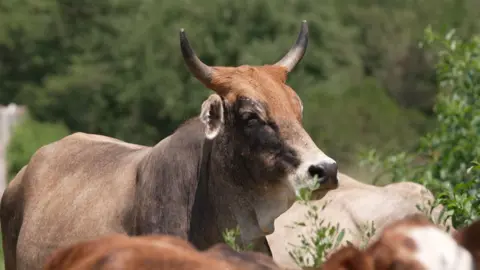
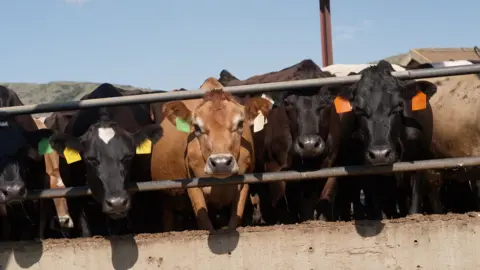
Outbreak Now Covers Eight of Nine Provinces The foot‑and‑mouth virus has been confirmed in eight of South Africa’s nine provinces as of 20 February 2026, prompting President Cyril Ramaphosa to declare a national disaster [1]. The disaster status unlocks emergency funding and accelerates import arrangements for vaccines [1]. Livestock exports, a major source of foreign exchange, are now at risk because of the rapid spread [1].
Milk Production Plummets on Large Dairy Farm Carol Houston’s 2,200‑head dairy herd experienced mastitis in 50 cows, each requiring roughly $380 in antibiotics [1]. Daily milk output fell from 14,000 L to 9,000 L and stayed low for two weeks before the infection cleared [1]. The sharp decline illustrates the broader economic strain on commercial producers [1].
Government Rolls Out Ten‑Year Eradication Plan Agriculture Minister John Steenhuisen announced a decade‑long strategy that includes mass vaccination in the hardest‑hit regions, later expanding to the estimated 14 million‑animal national herd [1]. Farmers report repeated delays in receiving the promised vaccine doses, undermining confidence in the rollout [1]. The plan aims to combine vaccination with surveillance and culling where necessary [1].
One Million Argentine Vaccine Doses Arrive Amid Local Production Gaps shipment of one million foot‑and‑mouth vaccine doses has arrived from Argentina, providing the first large‑scale import since the outbreak began [1]. Domestic production has restarted but will take months to reach capacity sufficient for the entire herd [1]. The Argentine doses still fall short of covering all 14 million animals, leaving a significant immunity gap [1].
Farmers Warn of Economic Collapse Without Timely Shots Smallholder Nompumelelo Ndlovu fears the loss of her 20‑animal business if vaccination delays persist [1]. Ntuthuko Shezi, head of Livestock Wealth, cites South Africa’s successful Covid‑19 vaccine rollout as a benchmark and urges swift action to avoid severe fallout [1]. The combined pressure from large commercial farms and vulnerable smallholders highlights the urgency of a full‑scale immunisation effort [1].
Timeline
2022 – The global cholera vaccine stockpile depletes severely after years of high demand and limited suppliers, leaving poorer nations scrambling for doses and setting the stage for later shortages in Africa [2].
Late 2025 – Unusually heavy rainfall sweeps across southern Africa, swelling rivers and flooding low‑lying communities, which health officials warn will heighten water‑borne disease risk and exacerbate malnutrition [2].
Nov 2025 – A South African pharmaceutical firm launches clinical trials for what it hopes will become the continent’s first locally produced cholera vaccine, signaling a push for regional self‑reliance in vaccine supply [2].
Jan 23, 2026 – Malawi initiates a three‑day cholera vaccination campaign in Blantyre’s Chilomoni township, aiming to immunize roughly 24,000 residents amid a rising death toll and mounting outbreak fears [2].
Jan 2026 – Health officials identify unsafe water sources—private tap fees and reliance on the contaminated Muluda stream—as the primary drivers of Chilomoni’s cholera surge, underscoring the urgent need for clean‑water interventions [2].
Feb 2026 – Foot‑and‑mouth disease spreads to eight of South Africa’s nine provinces, prompting President Cyril Ramaphosa to declare a national disaster, which unlocks emergency funding and accelerates vaccine procurement [1].
Feb 2026 – Agriculture Minister John Steenhuisen unveils a 10‑year eradication plan and orders mass vaccination in the worst‑affected regions, later extending the effort to the nation’s estimated 14 million‑animal herd [1].
Feb 2026 – One million foot‑and‑mouth vaccine doses land in South Africa from Argentina while domestic production restarts, though the shipment still falls short of covering the entire herd and local factories need time to scale up [1].
Feb 2026 – Smallholder farmer Nompumelelo Ndlovu warns she will lose her 20‑animal business without timely vaccination, and Livestock Wealth’s Ntuthuko Shezi cites South Africa’s successful Covid‑19 vaccine rollout as a benchmark for rapid response [1].
2026 (future) – South Africa plans to expand domestic vaccine manufacturing capacity and to complete a nationwide mass‑vaccination campaign covering all 14 million livestock, aiming to eradicate foot‑and‑mouth disease within the decade [1].
All related articles (2 articles)
External resources (6 links)
- http://ap.org/ (cited 1 times)
- http://bbcafrica.com/ (cited 1 times)
- https://www.ap.org/about/standards-for-working-with-outside-groups/ (cited 1 times)
- https://twitter.com/BBCAfrica (cited 1 times)
- https://www.facebook.com/BBCnewsafrica/ (cited 1 times)
- https://www.instagram.com/bbcafrica/ (cited 1 times)