NASA Classifies 2024 Starliner Flight as Type A Mishap, Highlights Boeing Oversight Failures
Updated (5 articles)
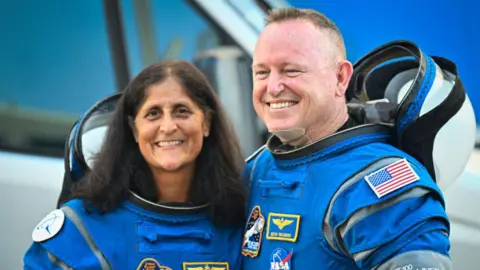

NASA Issues Final Type A Classification for Starliner NASA released a 312‑page report and classified the June 2024 crewed Starliner flight as a “Type A” mishap, the agency’s most severe rating. The classification applies to events causing over $2 million in damage, loss of a vehicle or control, or fatalities, placing the incident alongside Columbia and Challenger. Administrator Jared Isaacman announced the rating at a news conference on 19 February 2026 [1][2][3].
Leadership Blamed for Decision to Launch With Crew Isaacman blamed Boeing leadership and NASA managers for allowing the crewed launch. He said the decision‑making was “incompatible with human spaceflight.” The report cites poor leadership, cultural issues, and insufficient engineering oversight at Boeing [1][2][3].
Helium Leaks and Thruster Failures Extended Mission Helium leaks and thruster outages emerged shortly after launch, disabling the propulsion system. The failures forced astronauts Suni Williams and Butch Wilmore to remain on the International Space Station for more than nine months. They returned to Earth aboard a SpaceX crew capsule in March 2025 [1][2][3].
Boeing Commits to Technical Fixes and Cultural Reform Boeing issued a statement pledging technical fixes and a cultural overhaul over the past 18 months. The company committed to corrective actions but did not provide a new Starliner launch timeline. NASA has not scheduled a supply‑run test flight, leaving SpaceX as the only domestic crew transport provider [1][2][3].
Implications for Artemis II and U.S. Crew Transport Isaacman emphasized that the Starliner shortcomings do not jeopardize Artemis II, which relies on a separate NASA‑developed contract and multiple safety layers. SpaceX continues as the sole U.S. crew taxi, having completed 13 crewed missions since 2020. The Starliner incident highlights oversight questions ahead of Artemis lunar missions [2][3].
Sources
-
1.
BBC: NASA declares Starliner failure a “Type A” mishap, the agency’s highest severity rating: details the Type A classification, Isaacman’s criticism of Boeing and NASA leadership, nine‑month crew stranding, and NASA’s plan to adopt corrective actions .
-
2.
CNN: NASA Labels Boeing Starliner Test Flight a ‘Type A’ Mishap: emphasizes helium leaks, thruster failures, Boeing’s pledge of cultural change, and reassurance that Artemis II remains unaffected .
-
3.
AP: NASA Administrator Calls Starliner Failure a “Type A Mishap”: highlights the re‑classification, NASA’s 312‑page report released during Artemis fuel tests, Boeing’s lack of a launch timeline, and SpaceX’s sole crew‑taxi status .
Related Tickers
Timeline
1986 – The Challenger disaster sets a precedent for NASA’s highest‑severity “Type A” mishap classification, later applied to the Starliner incident [4].
2003 – The Columbia disaster reinforces the gravity of “Type A” ratings, underscoring the stakes of crewed launch failures [4].
2014 – NASA signs multi‑billion‑dollar commercial crew contracts with Boeing and SpaceX, establishing the two‑provider system still in use [4].
2020 – SpaceX completes its first crewed flight and goes on to deliver 13 crews to the ISS, becoming the sole U.S. crew taxi after the shuttle retirement [4].
June 2024 – Boeing’s first crewed Starliner test launches; shortly after liftoff the capsule suffers helium leaks and thruster outages, triggering an emergency response [2].
June 2024 – Mar 2025 – The propulsion failures force astronauts Suni Williams and Butch Wilmore to remain aboard the International Space Station for more than nine months, far beyond the planned 8‑to‑14‑day mission [2][4].
Mar 2025 – A SpaceX Crew Dragon rescue flight returns the stranded crew to Earth, ending their extended ISS stay [1].
Summer 2025 – Veteran test pilot Butch Wilmore departs NASA, concluding his career after the Starliner ordeal [5].
Late 2025 – Jared Isaacman assumes the role of NASA Administrator, positioning him to lead the agency’s response to the Starliner mishap [1].
Dec 2025 (effective) – Astronaut Suni Williams retires after a 27‑year career, ending with 608 days in space and a record 62 hours of EVA time [3][5].
Jan 21, 2026 – NASA publicly announces Williams’ retirement, with Director Vanessa Wyche praising her as a pioneering leader and Williams thanking colleagues for the ISS experience [3].
Feb 19, 2026 – Administrator Isaacman condemns the decision to launch Starliner with a crew, labeling the incident “incompatible with human spaceflight” and blaming Boeing leadership and NASA oversight [4][2].
Feb 20, 2026 – NASA issues a 312‑page report classifying the June 2024 Starliner flight as a “Type A” mishap, the agency’s most severe rating, and commits to corrective actions and full accountability [1].
2026 (later this year) – Boeing schedules a cargo‑only Starliner flight to validate thruster and system fixes before any crewed launch [5].
2026 (later this year) – NASA plans the next Starliner mission to be uncrewed, treating it as an additional safety test [3].
2026 – Artemis II, the first crewed lunar mission under NASA’s “cost‑plus” contract, remains on track for a 2026 launch, insulated from the Starliner issues [2].
2026 – NASA conducts a second hydrogen‑fuel test of the Artemis lunar launch vehicle at Kennedy Space Center, coinciding with the release of the Starliner mishap report [4].
All related articles (5 articles)
-
BBC: NASA declares Starliner failure a “Type A” mishap, the agency’s highest severity rating
-
CNN: NASA Labels Boeing Starliner Test Flight a ‘Type A’ Mishap
-
AP: NASA Administrator Calls Starliner Failure a “Type A Mishap”
-
CNN: NASA astronaut Suni Williams retires after Starliner mission
-
AP: NASA astronaut Suni Williams retires after nine-month Starliner mission.
External resources (3 links)
- https://nodis3.gsfc.nasa.gov/npg_img/N_PR_8621_001D_/N_PR_8621_001D__Chapter1.pdf (cited 1 times)
- https://www.nasa.gov/international-space-station/space-station-astronaut-record-holders/ (cited 1 times)
- https://www.nasa.gov/wp-content/uploads/2026/02/nasa-report-with-redactions-021926.pdf?emrc=76e561 (cited 1 times)