India Joins U.S. Pax Silica Coalition, Launches MANAV Vision, and Secures $50 B Global‑South AI Pledge at Feb 20‑21 Summit
Updated (14 articles)
-
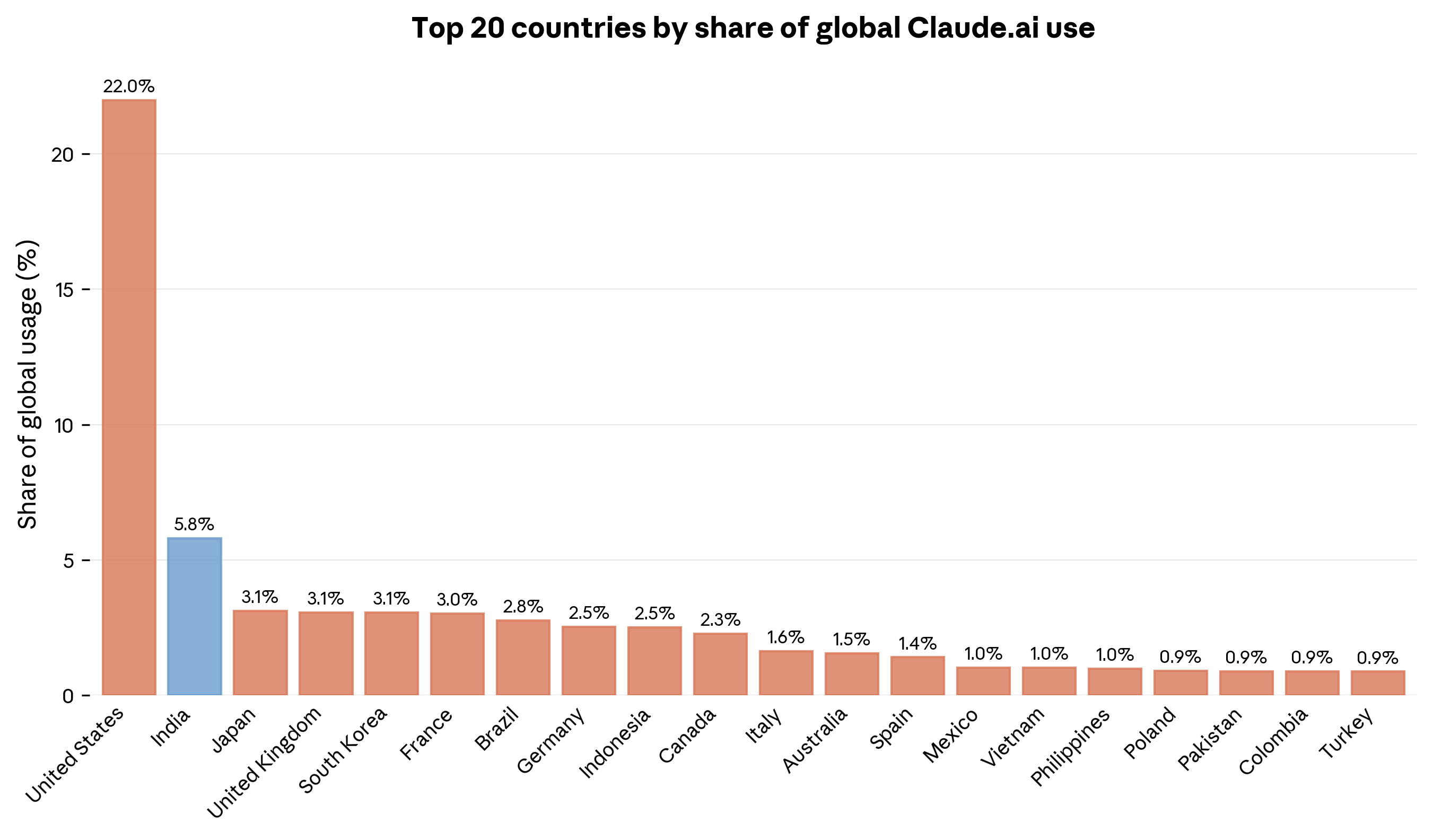 Image: AnthropicFigure 1. Top 20 countries by share of global Claude.ai use. India accounts for 5.8% of global Claude.ai consumer use, second only to the United States. Bars show each country’s share of total conversations observed November 13–20, 2025. India highlighted in blue; N = 975, 160 conversations globally. (Anthropic) Source Full size
 -
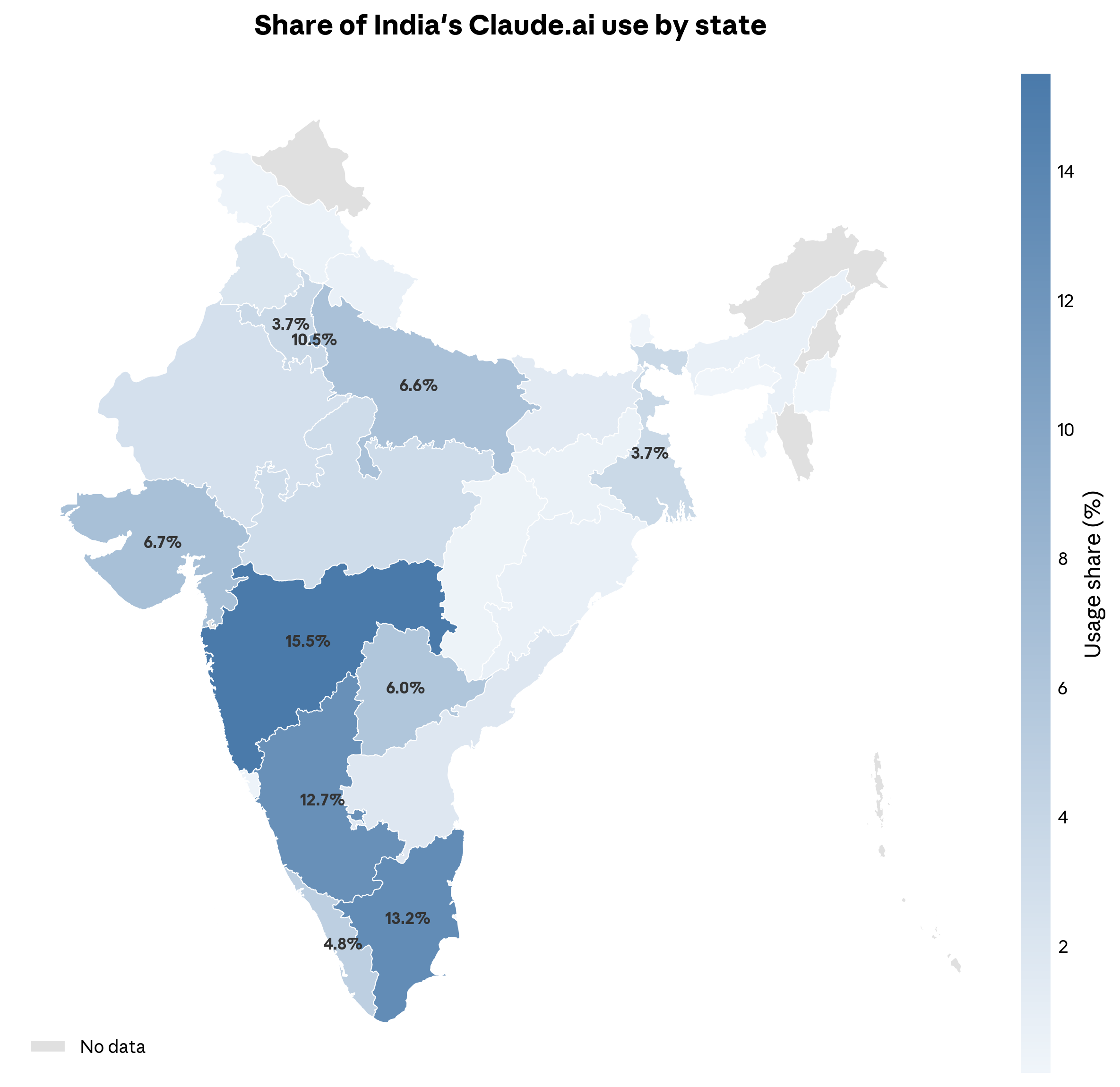 Image: AnthropicFigure 2. Share of India's Claude.ai use by state. Map shows each state’s share of India’s total Claude.ai use. Top states: Maharashtra (15.5%), Tamil Nadu (13.2%), Karnataka (12.7%), Delhi (10.5%). Gray regions indicate insufficient data. November 2025 data. Shapefile for the map from Natural Earth. (Anthropic) Source Full size
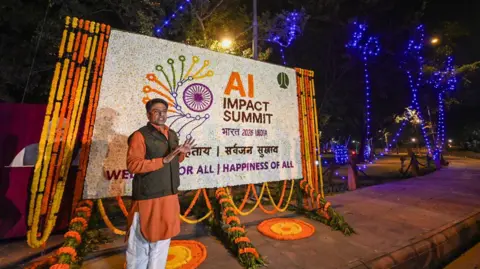
Summit convenes global AI leaders and formalizes security pact The AI Impact Summit opened in New Delhi on Feb 20 2026 and ran through Feb 21, drawing CEOs, ministers and UN officials; on the summit’s sidelines India signed the U.S.–led Pax Silica Declaration, committing to AI‑driven supply‑chain security and “coalition of capabilities” cooperation [1]. The ceremony featured U.S. Ambassador remarks and a one‑day expo extension to accommodate students and professionals under tightened security protocols [1].
Modi unveils MANAV Vision as India’s human‑centred AI framework Prime Minister Narendra Modi introduced the MANAV Vision on Feb 19, defining moral, accountable, sovereign, accessible and valid principles to guide ethical AI worldwide [2]. The framework aligns with the AI Mission, National Quantum Mission and new high‑powered education‑to‑employment committee announced in the Union Budget 2026‑27 [5]. International leaders, including France’s Emmanuel Macron and Brazil’s Luiz Inácio Lula da Silva, pledged a joint governance statement at the summit [4].
Tech giants pledge multibillion‑dollar infrastructure and AI projects Google announced a full‑stack AI hub in Visakhapatnam with gigawatt‑scale compute and a subsea cable gateway, part of a $15 billion India investment and four new U.S.–India fibre links [3][4]. Nvidia partnered with Indian cloud firms and L&T to build a gigawatt‑scale AI factory, while Reliance Industries pledged a ₹10 lakh crore (≈$120 billion) seven‑year AI fund [2]. Microsoft committed $50 billion to AI deployment in the Global South by 2030, focusing on data‑center construction and broadband expansion, a pledge made at the same summit [6][7].
India’s AI adoption fuels job growth forecasts and global competitiveness Analysts estimate AI could generate over three million new technology jobs by 2030 and reshape ten million existing roles, supported by e‑Shram’s expansion to 315 million informal workers and Microsoft’s $17.5 billion AI‑diffusion projects [5]. India now leads the world in monthly active ChatGPT users and accounts for 5.8 % of global Claude.ai conversations, though per‑capita adoption ranks low, concentrating usage in Maharashtra, Tamil Nadu, Karnataka and Delhi [9][5]. A Stanford study placed India third in global AI competitiveness, overtaking South Korea and Japan, despite infrastructure gaps behind the U.S. and China [4].
Sources
-
1.
The Hindu: India Signs U.S.-Led Pax Silica Declaration at AI Summit: details India’s Feb 20 signing of the Pax Silica coalition, summit extensions, and Google’s subsea cable pledge .
-
2.
The Hindu: India AI Summit 2026: Modi Unveils “MANAV Vision” as Leaders Commit Billions to AI: covers Modi’s MANAV framework, Reliance’s ₹10 lakh crore AI fund, OpenAI praise, Microsoft $50 billion pledge, and Tata AI chip plans .
-
3.
The Hindu: Google to Build Full‑Stack AI Hub in Vizag, Part of $15 B India Plan: announces Google’s Vizag hub, gigawatt compute, subsea cable gateway, and Pichai’s remarks on AI divide .
-
4.
The Hindu: US Tech Giants Unveil Major AI Infrastructure Deals in India at Summit: reports Google subsea cables, Nvidia‑L&T AI factory, $200 billion AI investment target, and India’s third‑place AI competitiveness ranking .
-
5.
The Hindu: India pushes human‑centred AI at Impact Summit, cites job growth and social‑protection goals: highlights AI Impact Summit’s alignment with social justice, job creation forecasts, ILO partnership, and e‑Shram expansion .
-
6.
CNN: Microsoft Commits $50 Billion to Narrow Global AI Gap: outlines Microsoft’s $50 billion Global South pledge, internal usage gap data, and summit attendance by top AI leaders .
-
7.
The Hindu: Microsoft Targets $50 B AI Investment in Global South by 2030: reiterates Microsoft’s $50 billion commitment and references prior $17.5 billion India projects .
-
8.
BBC: India’s AI Impact Summit Highlights Global‑South Shift and Ongoing Inequities: describes summit’s global participation, Bill Gates keynote, data‑labeler wage disparity, language coverage gaps, and skepticism about safety outcomes .
-
9.
Anthropic: India’s Claude.ai Use Shows High Volume but Low Per‑Capita Adoption, Driven by IT Hubs: provides usage statistics, regional concentration, task‑type dominance, and productivity gains from AI assistance .
Related Tickers
Timeline
Dec 9, 2025 – Microsoft announces a $17.5 billion investment in India over 2026‑2029, its largest in Asia, targeting AI infrastructure, sovereign‑cloud services and a mid‑2026 hyperscale data centre; the plan follows a prior $3 billion commitment and aims to double its skilling programme to 20 million people by 2030 [13].
Dec 10, 2025 – Amazon declares a $35 billion AI‑driven expansion in India through 2030, building on $40 billion already invested, to boost cloud services, digitisation and create about one million jobs while aiming to raise exports to $80 billion [11].
Dec 10, 2025 – Satya Nadella says he is thrilled about new data‑centre capacity in Pune, Chennai and Mumbai and confirms a $17.5 billion sovereign‑cloud investment, discussing the plan with Prime Minister Modi and targeting a Hyderabad region live by mid‑2026 [12].
Dec 10, 2025 – Amazon and Microsoft jointly pledge $52.5 billion for AI in India, with Amazon committing $35 billion by 2030 and Microsoft $17.5 billion that includes a new Hyderabad hyperscale cloud region slated for mid‑2026; Modi posts “When it comes to AI, the world is optimistic about India” after meeting Satya Nadella [2].
Dec 30, 2025 – The Principal Scientific Advisor releases a white paper urging open access to AI compute, datasets and tools, linking India’s AI Mission GPU pool and proposing integration of Aadhaar and UPI into AI systems; the paper warns that data‑centre footprints could reach 45‑50 million sq ft and consume up to 3 % of national electricity by 2030 [10].
Feb 16, 2026 – Data show India generates 5.8 % of global Claude.ai conversations, second only to the U.S., but per‑capita adoption ranks 101st of 116 countries, with half of activity concentrated in Maharashtra, Tamil Nadu, Karnataka and Delhi; users achieve roughly 15× speed‑ups on software tasks, indicating strong trust in autonomous AI [14].
Feb 17, 2026 – The AI Impact Summit convenes in New Delhi, gathering CEOs, politicians and activists; Bill Gates confirms his keynote, underscoring the event’s prominence, while Indian workers continue to label data for modest salaries and major chatbots cover only half of the nation’s 22 official languages [1].
Feb 18, 2026 – Microsoft pledges $50 billion to bring AI capabilities to the Global South by 2030, focusing on data‑centre construction and broadband expansion; Brad Smith and Natasha Crampton warn that AI adoption remains “profoundly uneven” and call for cross‑border partnerships [3].
Feb 18, 2026 – The summit aligns with the World Day of Social Justice, highlighting human‑centred AI; India leads global ChatGPT usage and projects over three million new AI jobs by 2030; the ILO partners with India to study AI exposure, and Microsoft’s $17.5 billion commitment powers the e‑Shram platform that now covers 64.3 % of informal workers [6].
Feb 19, 2026 – Prime Minister Modi unveils the MANAV Vision, a human‑centric AI governance framework defined by moral, accountable, national‑sovereign, accessible and valid principles, positioning India as a model for ethical AI [5].
Feb 19, 2026 – Sundar Pichai announces a full‑stack AI hub in Visakhapatnam with gigawatt‑scale compute and an international subsea‑cable gateway, part of Google’s $15 billion India plan and four new U.S.–India fibre systems, stressing that AI must be “hyper progress” that lets emerging economies leapfrog [7].
Feb 19, 2026 – U.S. tech giants reveal major AI infrastructure deals: Google commits subsea cables to Singapore, South Africa and Australia; Nvidia partners with three Indian cloud firms and L&T to build a gigawatt‑scale AI factory; India targets over $200 billion of AI investment through 2028, with roughly $90 billion already pledged [8].
Feb 19, 2026 – Reliance Industries chairman Mukesh Ambani pledges a ₹10 lakh crore (≈$120 billion) AI fund over seven years, describing AI as a path to “superabundance,” while Tata Group announces AI‑optimized automotive chips leveraging Indian data [5].
Feb 20, 2026 – India signs the U.S.-led Pax Silica declaration on AI and supply‑chain security at the summit, with the U.S. ambassador calling it a “coalition of capabilities”; Google CEO Sundar Pichai urges the partnership to make AI benefits universal and announces new subsea cables to boost South‑Asia connectivity [4].
Feb 20, 2026 – Maharashtra chief minister Devendra Fadnavis launches a statewide interoperable agriculture data exchange using open standards, linking it to the India AI Mission and a World Bank partnership to empower farmers [4].
Feb 20, 2026 – The AI Impact Summit’s expo extends to Feb 21, allowing students and professionals additional access under flexible security arrangements [4].
Mid‑2026 (future) – Microsoft’s Hyderabad hyperscale cloud region goes live, delivering sovereign public‑cloud services and supporting the AI Mission’s skill‑building targets [2][13].
2026‑27 (future) – India’s Union Budget creates a High‑Powered “Education to Employment and Enterprise” standing committee to assess AI’s impact on jobs, embed AI education from school level and enable AI‑driven worker‑job matching [6].
By 2028 (future) – India expects to attract more than $200 billion in AI‑related investments, with $90 billion already pledged by foreign and domestic firms, driving the country toward the third spot in global AI competitiveness rankings [8].
Dive deeper (4 sub-stories)
-
India Joins U.S.-Led Pax Silica AI Coalition While Google Unveils $15 B Vizag Hub
(4 articles)
-
India AI Summit 2026 Unveils MANAV Vision, Multibillion‑Dollar Pledges, and Global‑South AI Drive
(7 articles)
-
India’s AI Impact Summit Pushes Human‑Centred Policies While Highlighting Job Growth and Ongoing Inequities
(2 articles)
-
Anthropic: India’s Claude.ai Use Shows High Volume but Low Per‑Capita Adoption, Driven by IT Hubs
All related articles (14 articles)
-
The Hindu: India Signs U.S.-Led Pax Silica Declaration at AI Summit
-
The Hindu: India AI Summit 2026: Modi Unveils “MANAV Vision” as Leaders Commit Billions to AI
-
The Hindu: Google to Build Full‑Stack AI Hub in Vizag, Part of $15 B India Plan
-
The Hindu: US Tech Giants Unveil Major AI Infrastructure Deals in India at Summit
-
The Hindu: India pushes human‑centred AI at Impact Summit, cites job growth and social‑protection goals
-
CNN: Microsoft Commits $50 Billion to Narrow Global AI Gap
-
The Hindu: Microsoft Targets $50 B AI Investment in Global South by 2030
-
BBC: India’s AI Impact Summit Highlights Global‑South Shift and Ongoing Inequities
-
Anthropic: India’s Claude.ai Use Shows High Volume but Low Per‑Capita Adoption, Driven by IT Hubs
-
The Hindu: India PSA white paper calls for open access to AI infrastructure to widen participation
-
BBC: Amazon and Microsoft pledge $52.5 billion AI investments in India
-
The Hindu: Nadella says he’s thrilled about India data centre capacity and investment discussions with Modi
-
The Hindu: Amazon to invest $35 billion in India by 2030 across its businesses
-
The Hindu: Microsoft to invest US$17.5 billion in India over four years, largest in Asia
External resources (8 links)
- https://www.youtube.com/@bbcnewsindia/featured (cited 1 times)
- https://www.facebook.com/bbcindia/ (cited 1 times)
- https://www.instagram.com/bbcnewsindia/ (cited 1 times)
- https://x.com/BBCIndia (cited 1 times)
- https://blogs.microsoft.com/on-the-issues/2025/01/03/the-golden-opportunity-for-american-ai/#:~:text=None%20of%20this%20progress%20would,confidence%20in%20the%20American%20economy. (cited 1 times)
- https://blogs.microsoft.com/on-the-issues/2026/02/17/acting-with-urgency-to-address-the-growing-ai-divide/ (cited 1 times)
- https://www.worldbank.org/en/results/2023/06/27/from-connectivity-to-services-digital-transformation-in-africa (cited 1 times)