Top Headlines

Feeds

Scientists Map Uncharted Deep‑Water Mountains and Reefs in Britain’s Caribbean Territories

Updated Published Cached
  • None
    None
    Image: BBC
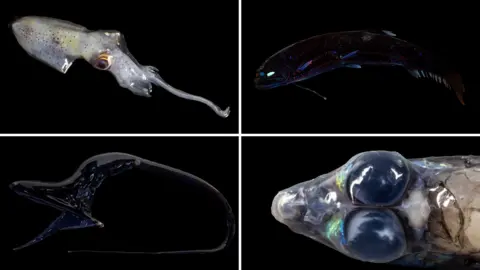
  • An enope squid (Enoploteuthidae squid), dragonfish (Neonesthes), pelican eel (Eurypharynx pelecanoides) and barreleye (Opisthoproctus soleatus)
    An enope squid (Enoploteuthidae squid), dragonfish (Neonesthes), pelican eel (Eurypharynx pelecanoides) and barreleye (Opisthoproctus soleatus)
    Image: BBC
    An enope squid (Enoploteuthidae squid), dragonfish (Neonesthes), pelican eel (Eurypharynx pelecanoides) and barreleye (Opisthoproctus soleatus) (Lawrence Eagling and the Blue Belt Programme) Source Full size
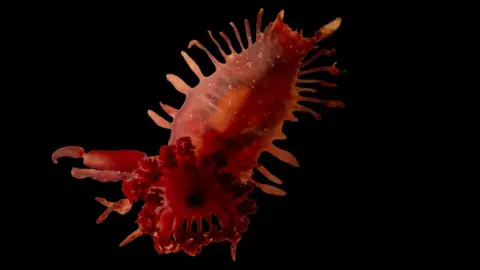
  • Scientists initially thought this sea cucumber was a species known as the headless chicken monster (Enypniastes) - but it's not
    Scientists initially thought this sea cucumber was a species known as the headless chicken monster (Enypniastes) - but it's not
    Image: BBC
    Scientists initially thought this sea cucumber was a species known as the headless chicken monster (Enypniastes) - but it's not (CEFAS) Source Full size
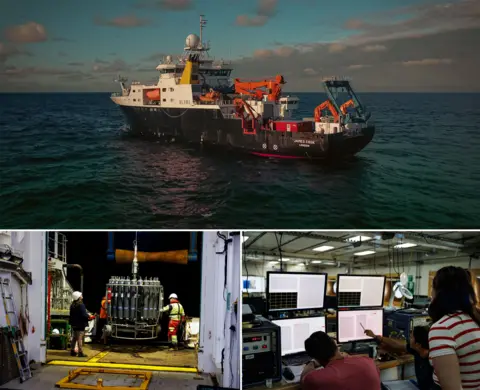
  • Deep-sea cameras and echo-sounders were lowered off the side of the research vessel to gather material
    Deep-sea cameras and echo-sounders were lowered off the side of the research vessel to gather material
    Image: BBC
    Deep-sea cameras and echo-sounders were lowered off the side of the research vessel to gather material (CEFAS) Source Full size
  • Scientists used specialist deep sea equipment to survey marine biodiversity on the sea-floor
    Scientists used specialist deep sea equipment to survey marine biodiversity on the sea-floor
    Image: BBC
    Scientists used specialist deep sea equipment to survey marine biodiversity on the sea-floor (CEFAS) Source Full size
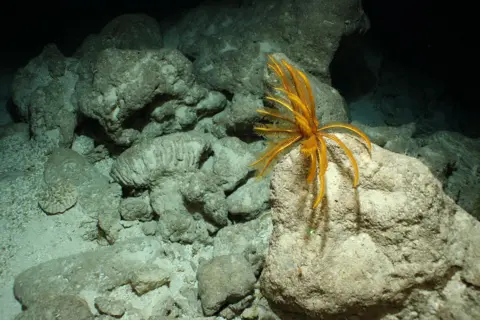
  • An example of Mesophotic coral photographed on the sea-floor in Anguilla
    An example of Mesophotic coral photographed on the sea-floor in Anguilla
    Image: BBC
    An example of Mesophotic coral photographed on the sea-floor in Anguilla (CEFAS) Source Full size
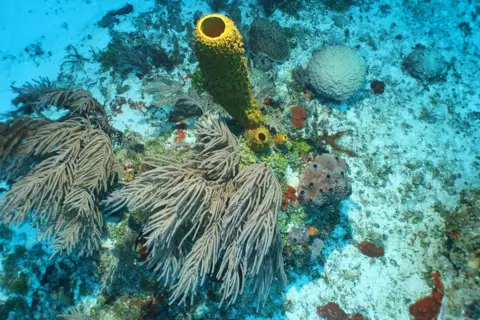
  • Coral in Pickle Bank shallows, Cayman
    Coral in Pickle Bank shallows, Cayman
    Image: BBC
    Coral in Pickle Bank shallows, Cayman (CEFAS) Source Full size
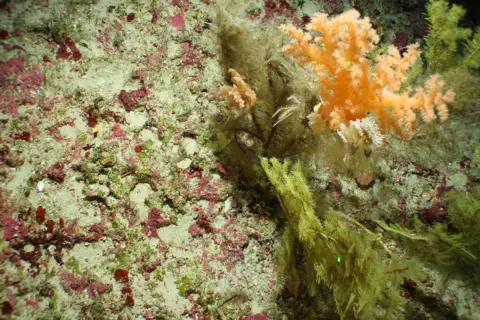
  • Pickle Bank Ancient Reef, Cayman
    Pickle Bank Ancient Reef, Cayman
    Image: BBC
    Pickle Bank Ancient Reef, Cayman (CEFAS) Source Full size
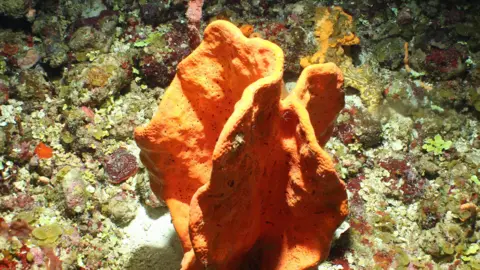
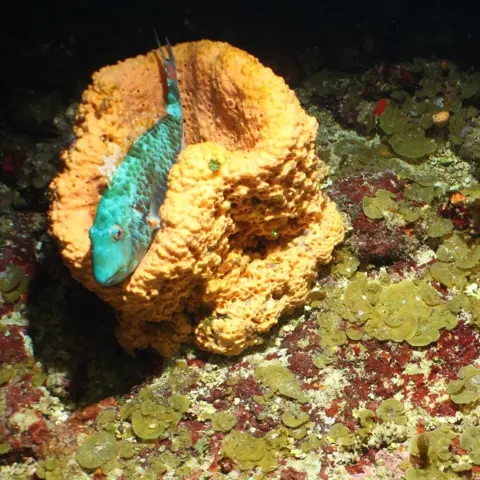
  • Mesophotic coral in Turks and Caicos
    Mesophotic coral in Turks and Caicos
    Image: BBC
    Mesophotic coral in Turks and Caicos (CEFAS) Source Full size

First deep‑sea expedition beyond Caribbean shallows reveals new features – Researchers spent six weeks operating 24 hours a day, using cameras to dive to 6,000 m, discovering an underwater mountain range, a massive blue hole, and pristine coral reefs around the Cayman Islands, Anguilla and Turks and Caicos [1].

Survey covered ~25,000 sq km, documenting 14,000 specimens – The team recorded 20,000 photos, identified 290 marine taxa and nearly 14,000 individual organisms, including rare pelican eel, barreleye, and dragonfish, though further taxonomic work is pending [1].

Pickle Bank mountain rises from 2,500 m to within 20 m of surface – The uncharted ridge north of Little Cayman climbs steeply, its sides teeming with bright coral, gorgonian whip coral, and black coral, forming one of the region’s healthiest reefs protected by depth [1].

A 300 m‑wide, 550 m‑deep blue hole discovered near Grand Turk – The vertical sinkhole, possibly the Caribbean’s deepest, hosts sponges, large spatangoid urchins and diverse fish, contrasting typical barren interiors of such features [1].

Ancient black coral and 4 km reef confirmed off Anguilla – Local fishers’ reports led to verification of a 4 km reef with sponge gardens and millennia‑old black coral, indicating exceptionally pristine conditions [1].

Findings will inform UK’s marine‑protected‑area targets – CEFAS and island environmental agencies will use the data for biodiversity management and to meet the UN‑mandated goal of protecting 30 % of oceans by 2030 under the Blue Belt Programme [1].

  • Dr James Bell, expedition leader on the RRS James Cook, said the mission was “the first step into environments people have never seen” and described the diversity as “really, really astonishing,” noting the discovery of a new type of sea cucumber [1].
  • Kelly Forsythe, Cayman Islands Department of Environment, remarked that the islands “were literally born from the sea” and highlighted the significance of offshore exploration through the Blue Belt Programme [1].

Links