Chernobyl’s New Safe Confinement Faces Uncertain Future After Drone Strike
Updated Published Cached
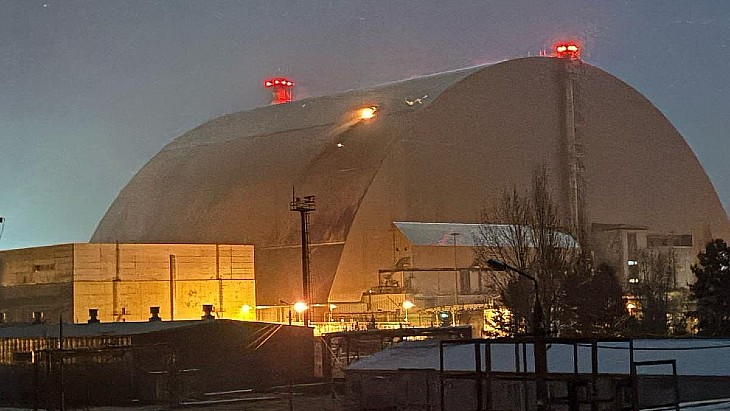
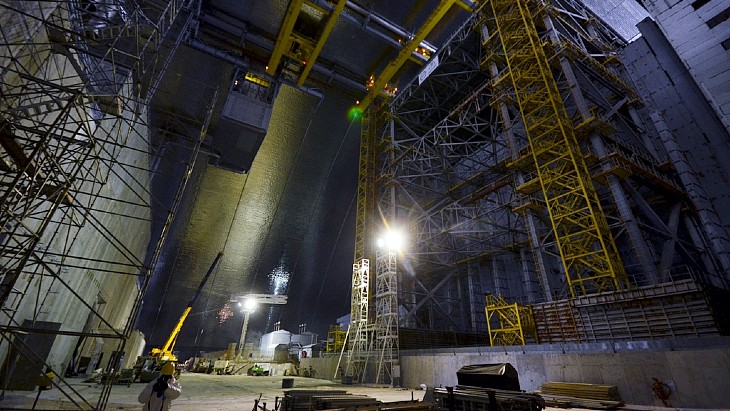
Drone strike in February severely damaged the New Safe Confinement, threatening its 100‑year design life. The impact created a 15 m² breach, ignited fires over 200 m² of cladding, forced firefighters to cut more than 340 holes, and harmed steel arches and crane systems, leaving the structure unable to perform its confinement function [1].
The NSC was built to replace the 1986 emergency shelter and contain 200 tonnes of highly radioactive material. Spanning 257 m, 162 m long, 108 m high and weighing 36,000 t, it was completed in 2019 to protect the original sarcophagus and enable future dismantling of the unstable shelter [1].
Damage assessment reveals extensive structural and equipment loss. Drone fragments and blast waves destroyed power supply, ventilation and control systems, while the internal and external cladding—12 m apart—were both breached, compromising the membrane that ensures environmental tightness [1].
IAEA officials confirm loss of confinement capability but no rise in radiation levels. Martin Gajdos stated the NSC cannot currently contain the site, yet measurements show radiation remains at pre‑strike levels, indicating no immediate increase in environmental risk [1].
Repair costs are projected to exceed €100 million, and full restoration to original specifications is unlikely. Steven White of the European Bank for Reconstruction and Development described the damage as “severe and complex,” warning that difficult choices will be required to prioritize temporary weather protection over complete refurbishment [1].
Funding for the shelter comes from the Chernobyl Shelter Fund, which amassed €1.6 billion from 45 donor countries, with the EBRD contributing €480 million; recent aid includes the EU, France and the UK. This financial base underpins both the original construction and the urgent repair efforts now demanded [1].
- Maksym Protsenko, head of Chernobyl’s engineering centre: Explained that pre‑strike plans to dismantle the 1986 shelter and retrieve fuel‑containing materials were halted, and detailed the scale of damage, including the 15 m² breach and 340 holes cut for firefighting.
- Martin Gajdos, IAEA Technical Coordinator for Nuclear Safety and Security: Stated the NSC is currently unable to perform its confinement function, while emphasizing that radiation levels have not increased since the strike.
- Steven White, European Bank for Reconstruction and Development: Reported repair cost estimates above €100 million, described the damage as “severe and complex,” and warned that full restoration to original design is unlikely, urging continued international support.
- Oleg Korikov, Director General of Ukraine’s State Nuclear Regulatory Inspectorate: Noted that emergency stabilisation measures installed between 2005‑2008 for the original shelter have become impossible to implement due to the NSC’s current condition.