Nuclear Propulsion Gains Momentum as DNV Highlights Path Forward
Published Cached
_43508.jpg)
Environmental pressure revives nuclear propulsion interest, but challenges remain. DNV says stricter decarbonisation requirements are “reigniting interest” in nuclear power for ships, yet significant technical, regulatory and commercial hurdles must be overcome before it becomes viable [1].
Shipping accounts for 3 % of global CO₂, IMO targets net‑zero by 2050. The industry burns about 350 million tonnes of fossil fuel each year; in July 2023 the International Maritime Organization approved greenhouse‑gas reduction goals aiming for net‑zero around 2050 [1].
DNV white paper outlines needed tech, safety and regulatory steps. It stresses that maritime reactors differ from land‑based ones, and that automation, digitalisation and modular design are critical enablers for safety, security and public acceptance [1].
A proven maritime fuel cycle and spent‑fuel management are essential. DNV calls for a cost‑effective supply chain with clear roles from fuel production to disposal, noting that storage and disposal of spent fuel are fundamental before any operating licence can be granted [1].
International regulatory framework must be predictable and coordinated. The IMO and International Atomic Energy Agency should lead standards‑setting, while classification societies will help harmonise fragmented nuclear regulations across jurisdictions [1].
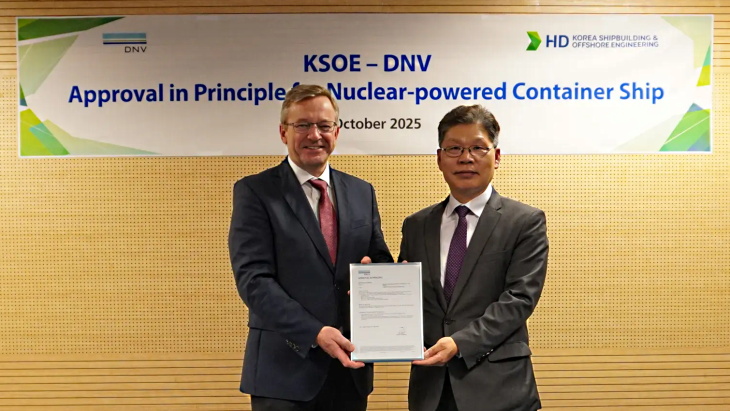
DNV grants Approval in Principle to HD KSOE for a 15,000‑TEU SMR‑powered container ship. The design uses a small modular reactor with a supercritical CO₂ power system, includes novel shielding and underwent a HAZID safety workshop, marking a first technical verification step for nuclear cargo vessels [1].
- Ole Christen Reistad, DNV Senior Principal Researcher: “Nuclear propulsion, once regarded as a distant prospect, is now under active consideration as a real option for the commercial maritime fleet.”
- Chang Kwangpil, HD KSOE Chief Technology Officer: Described the SMR‑powered container vessel as a “key milestone” focused on safety, shielding and survivability even in collisions or sinkings.
- Geir Dugstad, DNV Technical Director: Called the Approval in Principle “an important first step” in building a technical verification process for nuclear‑powered vessels.