Iran Offers Conditional Nuclear Talks as Trump Deploys Carrier Group to Gulf
Updated (18 articles)
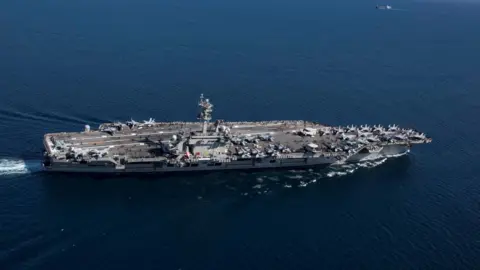
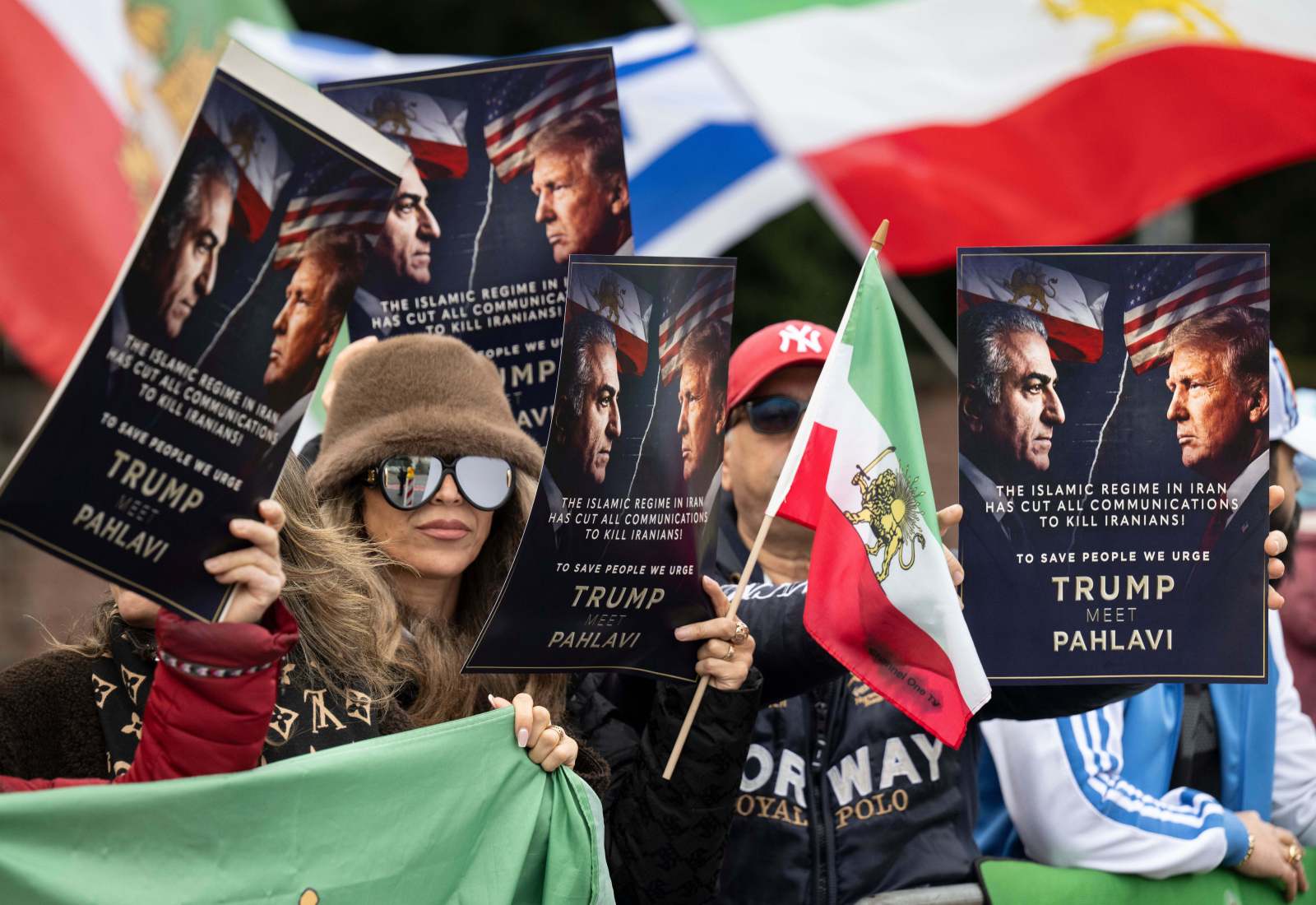
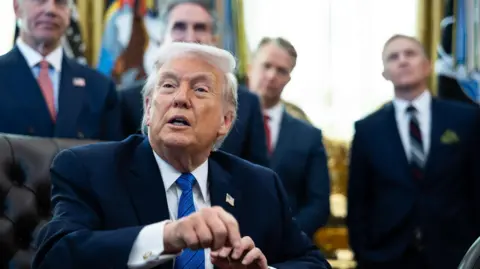
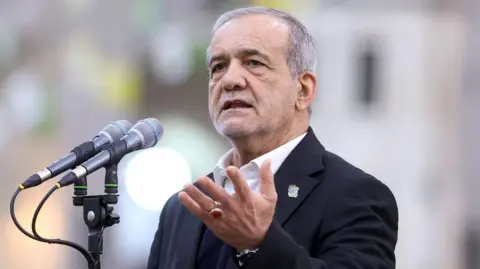
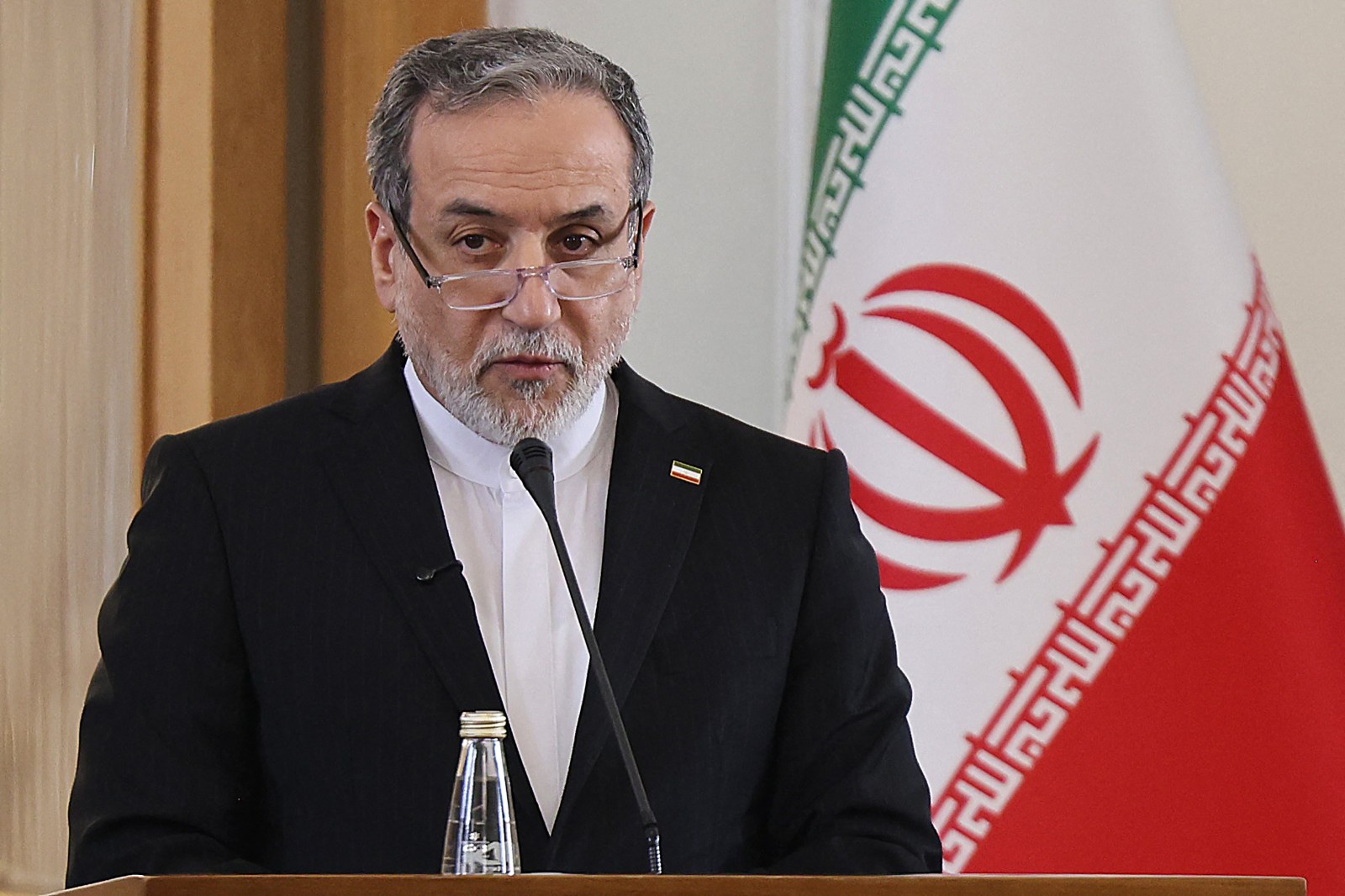
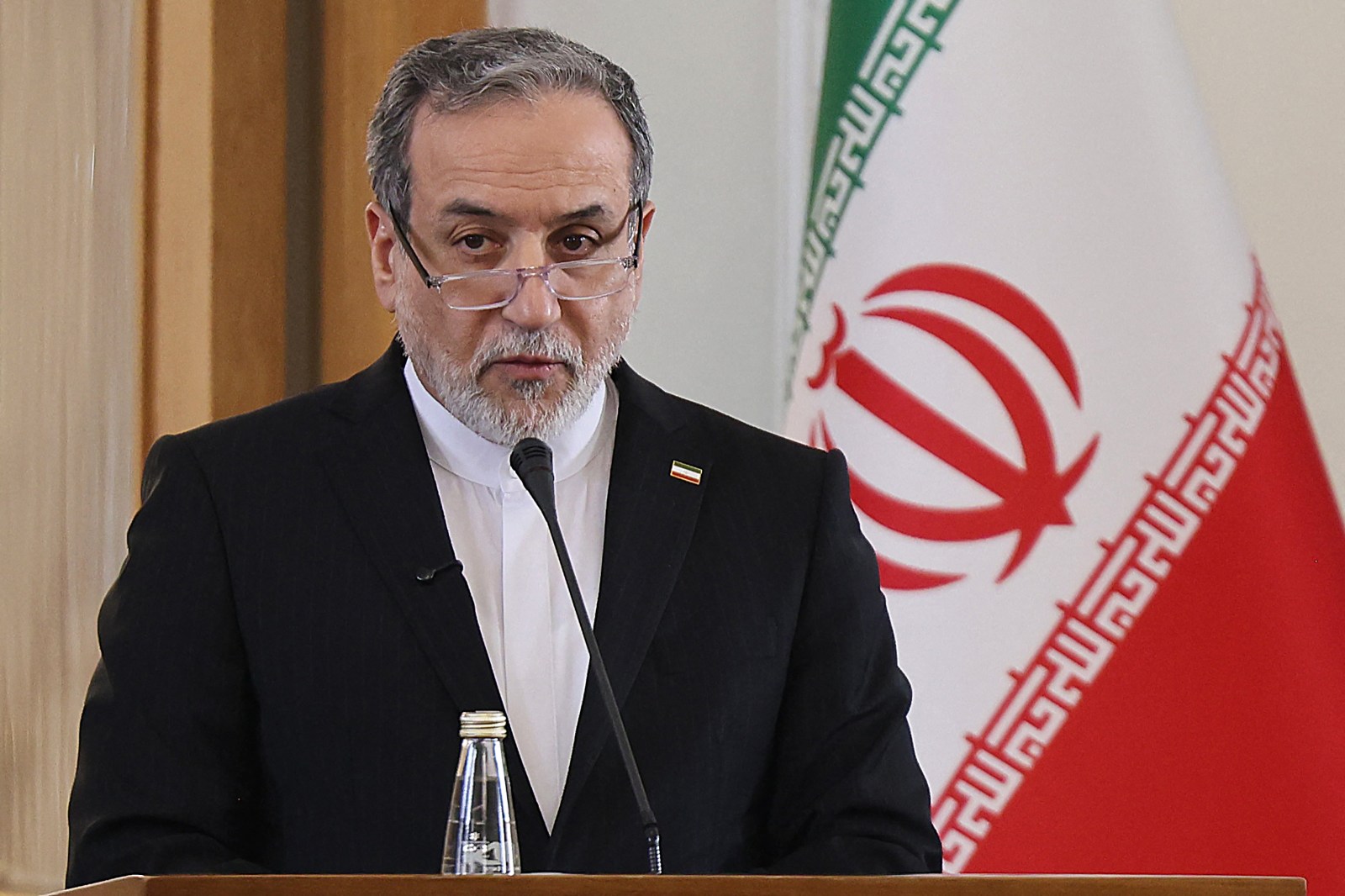
Iran Signals Willingness to Negotiate Under Threat‑Free Conditions President Masoud Pezeshkian announced on February 2‑3 that Tehran will engage in nuclear talks with Washington only if a “threat‑free environment” is guaranteed, directing Foreign Minister Abbas Araghchi to pursue negotiations accordingly [1][2][4]. He emphasized flexibility on uranium enrichment, offering up to 400 kg of highly enriched uranium, while insisting the ballistic‑missile programme remains off‑limits [1][6]. The statement marks a reversal from years of outright refusal to negotiate under pressure [2][5].
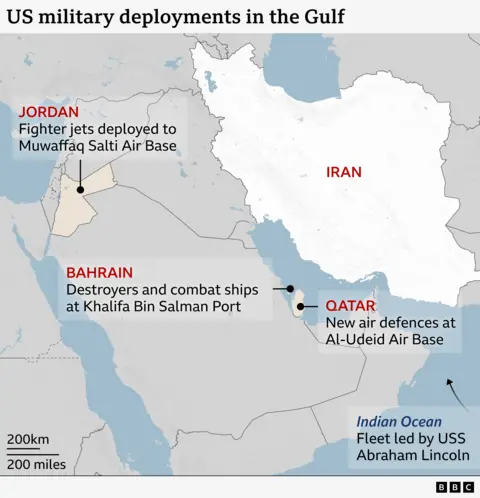
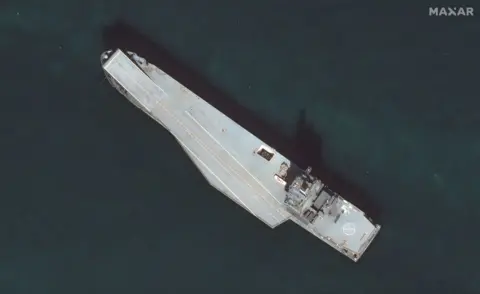
Trump Escalates Military Posture While Pressuring Iran for a Deal President Donald Trump has repeatedly warned that “time is running out,” posting ultimata on Truth Social and ordering the carrier strike group led by USS Abraham Lincoln, accompanied by Tomahawk‑armed destroyers, into the Gulf [1][7][10][11]. He framed the buildup as leverage to compel Iran to halt its nuclear program and stop killing protesters, while also hinting at a “massive Armada” and “far worse” strike if demands are unmet [7][8][9]. U.S. defense officials, including Secretary of Defense Pete Hegseth, affirmed readiness but ruled out immediate regime‑change plans [3][5].
Regional Diplomacy Attempts to Bridge the Gap Turkey announced plans to convene U.S. envoy Steve Witkoff with Iranian leaders by week’s end, and media reports suggest a possible Istanbul meeting on February 3 that would include ministers from Egypt, Oman, Pakistan, Qatar, Saudi Arabia and the UAE [1][3]. Both Turkey’s President Recep Tayyip Erdogan and Russia’s President Vladimir Putin offered to facilitate de‑escalation, while the EU moved to label the IRGC a terrorist organization, prompting Tehran to retaliate diplomatically [3][6]. Saudi Arabia and the United Arab Emirates have explicitly refused to allow U.S. forces to use their airspace for any strike on Iran [11][8].
Domestic Unrest Fuels International Pressure Human‑rights monitors report between 6,300 and 6,848 deaths from the crackdown on protests that began in late December 2025, with tens of thousands detained, intensifying global criticism of Tehran and providing additional leverage for U.S. demands [1][3][7][10][11]. Iran’s leadership, including Supreme Leader Ayatollah Ali Khamenei, has been warned of a tipping point in public anger, while Iranian officials stress that any diplomatic process must be free from coercion [2][9][12].
Contradictory Claims on Negotiation Initiation Newsweek (Jan 28) reported that Iran’s foreign minister denied any request for talks, stating “this request does not exist” [12], whereas Newsweek (Feb 3) and BBC (Feb 3) cite a direct order from President Pezeshkian for the foreign minister to open negotiations [2][1]. The discrepancy reflects Tehran’s attempt to balance internal political signaling with external diplomatic overtures.
Sources
-
1.
BBC: Iran Signals Readiness for US Negotiations Amid Heightened Regional Tensions — Details Iran’s conditional openness to talks, Trump’s “tremendous force” threat, and possible Istanbul meeting .
-
2.
Newsweek: Trump’s Nuclear Pressure Prompts Iran to Seek Talks — Highlights Pezeshkian’s reversal, June 2025 strikes, and U.S. political reactions .
-
3.
AP: Turkey Pushes for US‑Iran Talks Amid Rising Tensions — Reports Turkey’s facilitation effort, carrier deployment, and EU IRGC designation .
-
4.
The Hindu: Iranian President Orders Nuclear Talks Amid U.S. Military Threats — Notes Pezeshkian’s announcement, Trump’s optimism, and protest‑related tensions .
-
5.
CNN: Trump’s Iran Options Remain Limited Amid Naval Buildup and Regime Weakness — Analyzes naval shift, Iranian military weakness, and limited strike options .
-
6.
CNN: Iran Signals Openness to US Nuclear Talks While Rejecting Dictation and Missile Negotiations — Features Araghchi’s conditions, missile exclusion, and regional diplomatic offers .
-
7.
BBC: Trump Claims Iran Wants Nuclear Deal as U.S. Buildup Continues — Shows Trump’s claim Iran prefers a deal, Araghchi’s missile stance, and protest death counts .
-
8.
CNN: Trump Considers Major New Strike on Iran Amid Stalled Nuclear Talks — Describes Trump’s strike deliberations, carrier movement, and allied airspace refusals .
-
9.
Newsweek: Iran Threatens Unprecedented Retaliation After Trump Revives Strike Threat — Covers Iran’s retaliation warning, Rubio’s troop range comment, and regime‑change speculation .
-
10.
BBC: Trump warns Iran “time is running out” as US forces surge in Gulf — Details “massive Armada,” Iranian armed‑forces readiness, and HRANA death figures .
-
11.
CNN: US Air Drills Intensify as Trump Threatens Iran Over Protest Crackdown — Reports multi‑day air drills, carrier arrival, and regional allies’ airspace bans .
-
12.
Newsweek: Iran Says It Has Not Requested Negotiations After Trump Claims Deal Is Possible — Shows Iranian denial of negotiation request and Trump’s claim of Iranian readiness .
Timeline
June 2025 – The United States and Israel conduct a 12‑day campaign that destroys three Iranian enrichment sites, crippling Tehran’s nuclear capacity for roughly two years [15][13].
Dec 12, 2025 – President Donald Trump warns that the United States “would attack any new Iranian nuclear facility” if Tehran restarts its program without a deal [15].
Dec 30, 2025 – President Masoud Pezeshkian posts that “cruel aggression would be met with a harsh and discouraging response,” signaling Tehran’s readiness to retaliate [14][17].
Dec 30, 2025 – Iran declares it is not enriching uranium and that its last organized nuclear‑weapons program ended more than 20 years ago [14].
Dec 31, 2025 – The IRGC advances a program to mount chemical or biological warheads on ballistic missiles, raising regional deterrence concerns [13].
Dec 31, 2025 – Trump warns the United States could back further Israeli strikes if Iran rebuilds long‑range missiles or revives its nuclear effort [13].
Dec 31, 2025 – Iranian leadership characterizes the confrontation as a “full‑scale war” with the West and Israel, vowing a harsh response to any attack [13].
Jan 13, 2026 – Trump hints at “very strong options” against Iran after the regime’s crackdown on protesters [12].
Jan 13, 2026 – Iran’s parliamentary speaker Mohammad Bagher Qalibaf says all U.S. military centers, bases and ships in the region would be legitimate targets if Tehran is attacked [12].
Jan 13, 2026 – President Pezeshkian promises a “harsh and discouraging response” to any Iranian attack [12].
Jan 15, 2026 – Experts assess that the U.S. weapons stockpile is depleted yet remains powerful, noting recent drawdowns for allies and operations [11].
Jan 15, 2026 – Trump orders military assets to be prepared for a potential strike on Iran, according to the Wall Street Journal [11].
Jan 28, 2026 – Iran’s foreign minister Abbas Araghchi denies any request for negotiations, stating “this request does not exist on our side” [10].
Jan 28, 2026 – Trump claims Iran is ready for a deal that would prevent U.S. strikes [10].
Jan 28, 2026 – U.S. warships move into the region as a pressure tactic amid Iran’s violent protest crackdown [10].
Jan 28, 2026 – U.S. Air Forces Central Command launches multi‑day drills to sharpen rapid deployment and sustain operations with a minimal footprint [7].
Jan 28, 2026 – Trump posts “Time is running out” on Truth Social, warning that a “massive Armada” is heading toward Iran [7].
Jan 28, 2026 – Iran’s foreign minister warns its armed forces have “fingers on the trigger” and can respond “immediately and powerfully” to any aggression [7].
Jan 28, 2026 – The USS Abraham Lincoln carrier group arrives in the region, though no final decision on action is made [7].
Jan 28, 2026 – HRANA reports more than 5,800 protesters killed since late December [7].
Jan 28, 2026 – Saudi Arabia and the UAE refuse U.S. use of their airspace; the EU prepares to consider designating the IRGC as a terrorist organization [7].
Jan 29, 2026 – Trump warns “time is running out” for a nuclear deal and announces a “massive Armada” moving toward Iran [3][9].
Jan 29, 2026 – U.S. military presence surges with at least 15 fighter jets in Jordan, carrier‑group ships, drones and P‑8 Poseidons operating near Iranian airspace [3].
Jan 29, 2026 – Iran’s foreign minister Abbas Araghchi says Iran’s forces have “fingers on the trigger” and stand ready to respond [3].
Jan 29, 2026 – Deputy foreign minister Kazem Gharibabadi says no negotiations are underway despite “exchanges of messages” [3].
Jan 29, 2026 – Ali Shamkhani warns any U.S. attack will be “the start of a war” and promises “immediate, comprehensive, and unprecedented” retaliation against the U.S., Israel and supporters [9].
Jan 29, 2026 – Trump posts an ultimatum on Truth Social demanding a “fair and equitable deal – NO NUCLEAR WEAPONS” and warns the next strike will be “far worse” [6].
Jan 29, 2026 – Trump weighs a major new strike on Iran after preliminary talks stall, citing the nearby carrier strike group as expanding his options [6].
Jan 29, 2026 – The USS Abraham Lincoln carrier strike group enters the Indian Ocean, moving closer to Iran to support potential strikes [6].
Jan 29, 2026 – The United States adds Patriot air‑defense batteries and plans THAAD deployments to guard against Iranian retaliation [6].
Jan 30, 2026 – Iran signals openness to “fair and just” nuclear talks but rejects any dictation and excludes missile negotiations, insisting talks be “meaningful, logical and fair” [5].
Jan 30, 2026 – Trump says Iran prefers a deal over war and sets two conditions: halt the nuclear program and stop killing protesters [2].
Jan 30, 2026 – Iran’s foreign minister Abbas Araghchi says talks are possible but missiles are excluded, emphasizing “mutual respect” [2].
Jan 30, 2026 – Iran’s security chief Ali Larijani meets Russian President Vladimir Putin to discuss regional issues [2].
Jan 30, 2026 – The United States schedules a multi‑day air exercise in the Middle East, while Iran’s IRGC plans live‑fire drills in the Strait of Hormuz next week [5].
Jan 30, 2026 – Turkey’s President Erdogan and Russia’s President Putin offer to facilitate de‑escalation between the U.S. and Iran [5].
Jan 31, 2026 – Trump signals a possible Iran strike for 19 days, now backed by a carrier group after earlier firepower shortfalls [4].
Jan 31, 2026 – U.S. naval presence shifts from two carrier strike groups to a single carrier group plus additional assets, maintaining pressure [4].
Jan 31, 2026 – Iran’s armed forces remain weakened after Israel’s 12‑day campaign, limiting missile stocks and command structure [4].
Jan 31, 2026 – U.S. options narrow to precise strikes on IRGC leaders or a broader bombardment, each carrying escalation risks [4].
Feb 2, 2026 – President Masoud Pezeshkian orders the start of nuclear negotiations with the United States [18].
Feb 2, 2026 – Trump expresses optimism that a deal could prevent military action against Iran [18].
Feb 2, 2026 – The United States threatens military action and moves the USS Abraham Lincoln carrier group toward West Asia [18].
Feb 2, 2026 – Turkey arranges a meeting between U.S. envoy Steve Witkoff and senior Iranian officials by week’s end [16].
Feb 2, 2026 – The U.S. positions the carrier USS Abraham Lincoln and guided‑missile destroyers in the region as a show of force [16].
Feb 2, 2026 – Trump says the United States is “talking to Iran” about a nuclear deal, warning “bad things” if talks fail [16].
Feb 2, 2026 – Defense Secretary Pete Hegseth rules out immediate regime‑change plans for Iran [16].
Feb 2, 2026 – The EU votes to designate the IRGC as a terrorist organization, prompting Iran to summon EU ambassadors [16].
Feb 2, 2026 – Protests have left at least 6,848 dead and 49,930 arrested, with the IRGC’s Basij militia central to the crackdown [16].
Feb 3, 2026 – President Masoud Pezeshkian states Iran is ready for U.S. talks if a “threat‑free environment” exists and directs Foreign Minister Abbas Araghchi to pursue negotiations under those conditions [1].
Feb 3, 2026 – Trump threatens “tremendous force,” demanding Iran halt its nuclear program and stop killing protesters, while a carrier‑led fleet readies to act [1].
Feb 3, 2026 – Media report a potential Istanbul meeting on Friday, inviting U.S. envoy Steve Witkoff and foreign ministers from Egypt, Oman, Pakistan, Qatar, Saudi Arabia and the UAE [1].
Feb 3, 2026 – Recent U.S.–Israel strikes on Iranian nuclear facilities in June and over 6,400 protest deaths raise the stakes for any agreement [1].
Feb 3, 2026 – Iran offers to hand over 400 kg of highly enriched uranium and accept zero enrichment under a consortium, but cites its missile programme as the main hurdle [1].
Feb 3, 2026 – Trump posts on Truth Social about a “massive Armada” and warns “time is running out,” echoing earlier threats [8].
Feb 3, 2026 – Analysts note June 2025 bunker‑buster strikes set Iran’s nuclear program back roughly two years, influencing Tehran’s shift toward talks [8].
Feb 3, 2026 – Sources say Iran’s leadership feels cornered by internal unrest, economic strain and U.S. threats, fearing a tipping point [8].
Feb 3, 2026 – Republican officials back Trump’s hard line while Democrats raise constitutional concerns over potential strikes [8].
Feb 3, 2026 – Analysts argue U.S. brinkmanship may have forced Iran’s negotiation move but carries a miscalculation risk [8].
Dive deeper (17 sub-stories)
-
BBC: Iran Signals Readiness for US Negotiations Amid Heightened Regional Tensions
-
Newsweek: Trump’s Nuclear Pressure Prompts Iran to Seek Talks
-
AP: Turkey Pushes for US‑Iran Talks Amid Rising Tensions
-
The Hindu: Iranian President Orders Nuclear Talks Amid U.S. Military Threats
-
CNN: Trump’s Iran Options Remain Limited Amid Naval Buildup and Regime Weakness
-
CNN: Iran Signals Openness to US Nuclear Talks While Rejecting Dictation and Missile Negotiations
-
BBC: Trump Claims Iran Wants Nuclear Deal as U.S. Buildup Continues
-
CNN: Trump Considers Major New Strike on Iran Amid Stalled Nuclear Talks
-
Newsweek: Iran Threatens Unprecedented Retaliation After Trump Revives Strike Threat
-
BBC: Trump warns Iran “time is running out” as US forces surge in Gulf
-
CNN: US Air Drills Intensify as Trump Threatens Iran Over Protest Crackdown
-
Newsweek: Iran Says It Has Not Requested Negotiations After Trump Claims Deal Is Possible
-
Newsweek: US weapons stockpile examined amid potential war with Iran
-
Newsweek: Iran's military assessed against US as Tehran vows retaliation amid Trump threats
-
Newsweek: Iran developing chemical and biological warheads for long-range missiles, report says
-
Iran President Vows Harsh Retaliation After Trump Threat, Protests Intensify
(2 articles)
-
Newsweek: Trump Threatens to Strike Iran if It Re‑starts Nuclear Program Without Deal
All related articles (18 articles)
-
BBC: Iran Signals Readiness for US Negotiations Amid Heightened Regional Tensions
-
Newsweek: Trump’s Nuclear Pressure Prompts Iran to Seek Talks
-
AP: Turkey Pushes for US‑Iran Talks Amid Rising Tensions
-
The Hindu: Iranian President Orders Nuclear Talks Amid U.S. Military Threats
-
CNN: Trump’s Iran Options Remain Limited Amid Naval Buildup and Regime Weakness
-
CNN: Iran Signals Openness to US Nuclear Talks While Rejecting Dictation and Missile Negotiations
-
BBC: Trump Claims Iran Wants Nuclear Deal as U.S. Buildup Continues
-
CNN: Trump Considers Major New Strike on Iran Amid Stalled Nuclear Talks
-
Newsweek: Iran Threatens Unprecedented Retaliation After Trump Revives Strike Threat
-
BBC: Trump warns Iran “time is running out” as US forces surge in Gulf
-
CNN: US Air Drills Intensify as Trump Threatens Iran Over Protest Crackdown
-
Newsweek: Iran Says It Has Not Requested Negotiations After Trump Claims Deal Is Possible
-
Newsweek: US weapons stockpile examined amid potential war with Iran
-
Newsweek: Iran's military assessed against US as Tehran vows retaliation amid Trump threats
-
Newsweek: Iran developing chemical and biological warheads for long-range missiles, report says
-
Newsweek: Iran warns of harsh response to any attack after Trump threat
-
AP: Iranian president pledges harsh response to aggression in apparent rebuke to Trump warning
-
Newsweek: Trump Threatens to Strike Iran if It Re‑starts Nuclear Program Without Deal
External resources (3 links)
- https://x.com/alishamkhani_ir/status/2016582565390655585?s=20 (cited 1 times)
- https://x.com/drpezeshkian/status/2018551558959710505?s=20 (cited 1 times)