Delcy Rodríguez Navigates US Oil Deal After January 3 Maduro Ouster
Updated (88 articles)
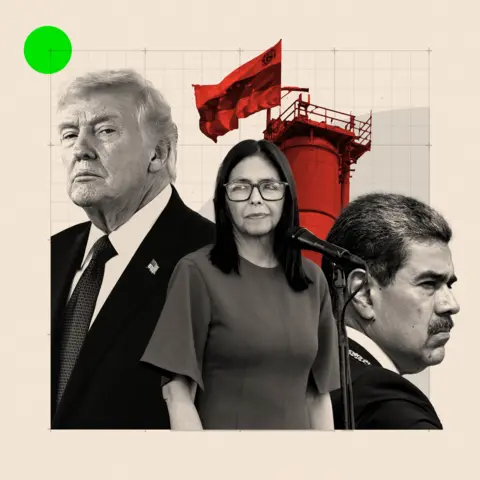

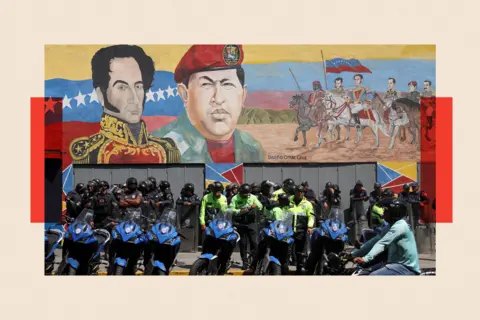
Rodríguez Assumes Acting Presidency Amid US‑Backed Coup On 3 January 2026 the United States carried out a “lightning operation” that forced deposed President Nicolás Maduro and First Lady Cilia Flores out of Venezuela; both are now detained at Brooklyn’s Metropolitan Detention Center awaiting trial on drug‑trafficking charges they deny [1]. Delcy Rodríguez, a longtime Maduro loyalist, was installed as acting president the same day, inheriting a nation in political turmoil and a shattered economy [1]. She immediately faced the dual challenge of legitimizing her rule while responding to intense U.S. pressure for cooperation [1].
Trump Offers Oil Incentives While Rodríguez Balances Chavista Base President Donald Trump pledged up to 50 million barrels of Venezuelan oil and promised to oversee the proceeds, creating a potential lifeline for the cash‑strapped regime [1]. Rodríguez delivered an anti‑imperialist speech to the National Assembly on 16 January, then met CIA Director John Ratcliffe in Caracas, underscoring her diplomatic tightrope between socialist supporters and the Trump administration [1]. Trump publicly praised her as “a wonderful person,” while Rodríguez worked to assure Chavista factions that the oil deal would not betray socialist principles [1].
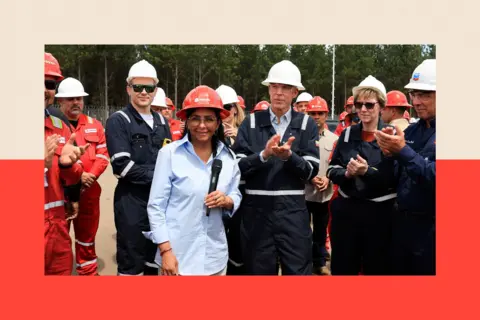
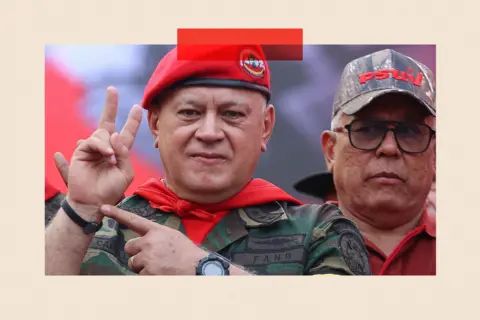
Technocratic Cabinet and Prison Releases Signal Pragmatic Shift Rodríguez appointed a slate of technocrats and passed legislation allowing U.S. oil firms to operate in Venezuela, marking a departure from previous hard‑line policies [1]. She ordered the release of several political prisoners, a move the opposition attributes to U.S. pressure rather than genuine reform [1]. These limited reforms aim to attract foreign investment and stabilize the regime without alienating powerful military leader Diosdado Cabello, who commands the armed forces and paramilitary “colectivos” [1].
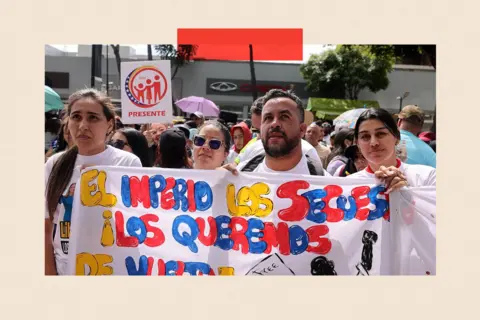
Economic Crisis Persists Despite Prospects of US Investment Venezuela continues to suffer the world’s highest inflation, with 86 % of the population living in poverty in 2024 and a basic food basket costing $526.83 in 2025 [1]. While the promised U.S. oil partnership could ease fiscal strain, analysts note that focusing solely on oil leaves broader economic recovery uncertain [1]. Rodríguez must also keep Cabello, who carries a $25 million U.S. bounty, satisfied to maintain internal security and investor confidence [1].
Timeline
Dec 16‑17, 2025 – President Nicolás Maduro tells a Caracas crowd that President Donald Trump’s claim the U.S. “stole oil, land and other assets” proves Washington seeks to topple Venezuela, while Trump posts on Truth Social demanding the return of those assets and warns a naval buildup will continue until Caracas complies [25].
1986 – 2025 (historical background) – Nicolás Maduro rises from a bus driver to union leader, joins the Chávez movement in 1986, ascends to the presidency, presides over hyperinflation, severe shortages and a 2024 election widely deemed fraudulent, and faces an International Criminal Court investigation for crimes against humanity [23].
Jan 3, 2026 – U.S. forces conduct a night‑long “snatch‑and‑grab” raid, seizing President Nicolás Maduro and First Lady Cilia Flores from their Caracas compound, transporting them aboard a U.S. warship to New York where they face narco‑terrorism charges; the operation involves more than 150 aircraft, 20 bases and roughly 200 personnel, and leaves dozens dead, including Cuban and Venezuelan security personnel [19][21][30].
Jan 3, 2026 – President Trump declares the United States will “run” Venezuela temporarily, tap its oil reserves and sell the crude to fund the operation, while Secretary of State Marco Rubio says the U.S. will not govern day‑to‑day but will enforce a naval oil quarantine as leverage [13][16][20].
Jan 4, 2026 – Rubio outlines a three‑stage U.S. plan: stabilise Venezuela and market 30‑50 million barrels of oil, pursue reconciliation measures, then transition to a new government; he also stresses dismantling drug networks, expelling Hezbollah, Iran and other foreign actors, and rebuilding the oil sector with outside investment [15].
Jan 4, 2026 – The Venezuelan Supreme Court orders Vice‑President Delcy Rodríguez to assume the role of acting president under the constitutional line of succession, while Rodríguez condemns the U.S. raid as an “illegal kidnapping” and vows accountability [17][15].
Jan 5, 2026 – The National Assembly swears in Delcy Rodríguez as interim president; she describes taking the oath “with pain” and frames her mandate as a response to the “illegitimate military aggression” that removed Maduro, while Maduro appears in a New York courtroom, pleads not guilty to four charges and a next hearing is set for Mar 17 2026 [5][5].
Jan 5, 2026 – The U.S. Justice Department labels Rodríguez the “so‑called Acting President” in a court filing, noting the fluid situation in Venezuela and the sensitivity of U.S. relations with her regime [6].
Jan 6, 2026 – Gunfire and drone lights are reported near Miraflores Palace; Defense Secretary Pete Hegseth confirms nearly 200 U.S. personnel were on the ground in Caracas during the operation, while Trump reiterates that the United States is “in charge” of Venezuela [9].
Jan 7, 2026 – Acting President Rodríguez sacks General Javier Marcano Tábata, head of the presidential honour guard, and appoints former intelligence chief Gustavo González López as his successor, signaling a consolidation of loyal security forces after the raid [3].
Jan 7, 2026 – U.S. Delta Force operatives execute the “snatch‑and‑grab” seizure, and Trump publicly threatens Rodríguez with a “fate worse than Maduro’s” if she does not cooperate, while also discussing the transfer of up to 50 million barrels of Venezuelan oil to U.S. firms [8][3].
Jan 8, 2026 – The Trump administration formally recognises Delcy Rodríguez as Venezuela’s interim leader, stating the priority is short‑term stability rather than immediate regime change, and outlines a staged approach that begins with oil‑revenue supervision [2].
Jan 13, 2026 – In a DOJ filing, the United States again refers to Rodríguez as the “so‑called Acting President,” while Trump posts a mock‑up image on Truth Social claiming the U.S. will run Venezuela during a transition [6].
Feb 18, 2026 – Acting President Rodríguez balances her Chavista base with U.S. demands, meeting CIA Director John Ratcliffe on Jan 16, installing technocratic ministers, passing legislation for U.S. oil firms to operate, and ordering the release of political prisoners; she must also placate military strongman Diosdado Cabello while the promise of up to 50 million barrels of oil from the Trump administration offers uncertain relief to a population with 86 % in poverty [1].
Future (by mid‑March 2026) – A scheduled New York hearing on Mar 17 2026 will address the next phase of the U.S. case against Maduro and his wife, while the Venezuelan constitution requires a presidential election within a month of the president’s absence, though experts doubt its applicability given the extraordinary U.S. intervention [5][13].
Dive deeper (57 sub-stories)
-
BBC: Venezuela’s Acting President Delcy Rodríguez Juggles US Pressure and Chavista Loyalty
-
CNN: Venezuela’s Acting President Pushes Back on U.S. Pressure
-
AP: Trump’s midterm turmoil widens with foreign moves, immigration raids and Fed probe
-
CNN: Venezuelan officials return to X in apparent end to Maduro-era ban on platform
-
Newsweek: US labels Venezuela's Delcy Rodríguez 'so-called Acting President' in court papers
-
Newsweek: Trump posts image claiming to be acting president of Venezuela
-
The Hindu: Rodriguez takes interim Venezuela role with U.S. backing amid economic crisis
-
Newsweek: U.S. raid captures Nicolás Maduro, undercuts China’s influence in Venezuela
-
BBC: US backs Delcy Rodríguez as Venezuela's interim leader, prioritising stability over immediate regime change
-
CNN: US raid seized Nicolás Maduro but Washington still struggles to 'run' Venezuela
-
Newsweek: U.S. raid captures Nicolás Maduro as Washington moves to control Venezuelan oil and counter China
-
BBC: Interim president Delcy Rodríguez sacks head of presidential honour guard after US seizure of Maduro
-
U.S. Seizes Maduro, Installs Rodríguez as Interim Leader Amid Global Tension
(6 articles)
-
CNN: US captures Nicolás Maduro as Venezuela reels; White House pursues Venezuelan oil and weighs taking Greenland
-
AP: Delcy Rodríguez’s 2017 outreach to Trump aides helped forge her path to interim presidency after Maduro’s capture
-
Newsweek: Venezuelan opposition backs U.S.-led transition despite Trump questioning Machado
-
AP: Trump’s vague assertion that the U.S. will “run” Venezuela fuels questions about post-Maduro planning
-
CNN: Trump’s administration dispatched Delta Force to seize Nicolás Maduro and signals U.S. control over Venezuela’s resources
-
Maduro Pleads Not Guilty as Caracas Erupts in Gunfire and U.S. Plans Oil Revival
(2 articles)
-
Delcy Rodriguez Assumes Interim Presidency After U.S. Capture of Nicolás Maduro
(2 articles)
-
King5 (Seattle, WA): U.S. removal of Maduro sparks international law debate
-
AP: Venezuela’s government moves to show independence after U.S. seizure of Nicolás Maduro
-
Newsweek: Trump says he will personally oversee U.S. involvement in Venezuela after Maduro's capture
-
CNN: Trump threatens other countries as Maduro makes US court appearance
-
Delcy Rodríguez Assumes Interim Presidency After Maduro Capture, Signals US Cooperation
(3 articles)
-
Trump Declares U.S. Control After Detaining Maduro, Rodriguez Named Interim President
(2 articles)
-
BBC: Trump warns Rodríguez as Maduro faces New York court
-
Interim Venezuelan Leader Invites Trump, U.S. Maintains Oil Quarantine Amid Indictments
(2 articles)
-
Newsweek: Maduro captured in U.S. raid; Rodríguez named acting president as U.S. plans to run Venezuela's oil
-
CNN: US aims to run Venezuela via pliant interim government after Maduro's capture
-
CNN: Trump outlines plans for Venezuela as Maduro faces court appearance
-
U.S. Captures Maduro, Sends Him to New York; Rubio Sets Conditions for Venezuela Transition
(2 articles)
-
AP: Maduro deposed and captured in U.S. operation; Caracas braces for what comes next
-
AP: Rubio says US won’t govern Venezuela but will press changes through oil blockade
-
U.S. Declares Temporary Control of Venezuela Following Maduro’s Ouster, Emphasizes Oil Quarantine
(2 articles)
-
AP: Trump's Venezuela intervention tests GOP cohesion in election year
-
BBC: Trump's Maduro raid could set precedent for authoritarian powers worldwide
-
U.S. Captures Maduro, Announces Temporary Governance and Oil Extraction Plans
(12 articles)
-
Maduro Captured in New York, Trump Announces U.S. Control of Venezuela’s Oil
(4 articles)
-
The Hindu: Supreme Court names Delcy Rodriguez interim president after Maduro's seizure
-
WBNS (Columbus, OH): Maduro removed from power in U.S. operation; Ohio professor outlines fallout
-
CNN: Trump ousts Maduro in Venezuela, triggering war-power debate and regime-change questions
-
Newsweek: Venezuela's vice president may be in Russia after Maduro capture, Reuters reports
-
AP: Maduro captured by U.S. forces; Trump vows temporary rule and oil taps
-
Newsweek: Trump pledges U.S. involvement in Venezuela oil after Maduro's capture
-
BBC: Trump captures Maduro in Venezuela, pledges to run the country and rebuild
-
King5 (Seattle, WA): Trump pledges to run Venezuela after Maduro ouster following U.S. operation
-
U.S. Captures Maduro, Announces Temporary Governance of Venezuela After Overnight Strike
(5 articles)
-
CNN: Trump says US will run Venezuela after Maduro capture as oil embargo remains in place
-
AP: Maduro captured; Trump touts successful Venezuela operation as U.S. weighs next steps
-
AP: Maduro captured in Caracas during U.S. forces attack
-
The Hindu: U.S. strikes Venezuela as Maduro capture claim surfaces
-
The Hindu: White House orders focus on quarantine of Venezuelan oil
-
The Hindu: Trump says it would be smart for Maduro to leave power
-
Newsweek: Maduro denounces Trump’s threats as warmongering, vows resistance
-
CNN: Maduro says Trump’s “oil, land” claim exposes U.S. agenda
-
CNN: Trump Administration Prepares Day‑After Plans for Venezuela if Maduro Ousted
All related articles (88 articles)
-
BBC: Venezuela’s Acting President Delcy Rodríguez Juggles US Pressure and Chavista Loyalty
-
CNN: Venezuela’s Acting President Pushes Back on U.S. Pressure
-
AP: Trump’s midterm turmoil widens with foreign moves, immigration raids and Fed probe
-
CNN: Venezuelan officials return to X in apparent end to Maduro-era ban on platform
-
Newsweek: US labels Venezuela's Delcy Rodríguez 'so-called Acting President' in court papers
-
Newsweek: Trump posts image claiming to be acting president of Venezuela
-
The Hindu: Rodriguez takes interim Venezuela role with U.S. backing amid economic crisis
-
Newsweek: U.S. raid captures Nicolás Maduro, undercuts China’s influence in Venezuela
-
BBC: US backs Delcy Rodríguez as Venezuela's interim leader, prioritising stability over immediate regime change
-
CNN: US raid seized Nicolás Maduro but Washington still struggles to 'run' Venezuela
-
Newsweek: U.S. raid captures Nicolás Maduro as Washington moves to control Venezuelan oil and counter China
-
BBC: Interim president Delcy Rodríguez sacks head of presidential honour guard after US seizure of Maduro
-
AP: U.S. seizes Nicolás Maduro; vice president Delcy Rodríguez installed as leader while opposition remains exiled or jailed
-
BBC: Venezuelans confront uncertainty after US seizure of Nicolás Maduro
-
CNN: US captures Nicolás Maduro as Venezuela reels; White House pursues Venezuelan oil and weighs taking Greenland
-
AP: Delcy Rodríguez’s 2017 outreach to Trump aides helped forge her path to interim presidency after Maduro’s capture
-
Newsweek: Venezuelan opposition backs U.S.-led transition despite Trump questioning Machado
-
AP: Trump’s vague assertion that the U.S. will “run” Venezuela fuels questions about post-Maduro planning
-
CNN: Trump’s administration dispatched Delta Force to seize Nicolás Maduro and signals U.S. control over Venezuela’s resources
-
CNN: After US capture of Nicolás Maduro, he and his wife plead not guilty in New York as Caracas sees gunfire and Washington grapples with next steps
-
The Hindu: Delcy Rodriguez sworn in as interim president after U.S. forces seize Nicolas Maduro
-
King5 (Seattle, WA): U.S. removal of Maduro sparks international law debate
-
AP: Venezuela’s government moves to show independence after U.S. seizure of Nicolás Maduro
-
CNN: Gunfire near Miraflores palace as Maduro faces court after US capture
-
Newsweek: Trump says he will personally oversee U.S. involvement in Venezuela after Maduro's capture
-
BBC: Delcy Rodríguez sworn interim president after US arrests Nicolás Maduro, who is arraigned in New York
-
CNN: Trump threatens other countries as Maduro makes US court appearance
-
CNN: Maduro's capture prompts Rodríguez interim leadership in Venezuela
-
CNN: Trump asserts US control of Venezuela after Maduro detention
-
BBC: Trump warns Rodríguez as Maduro faces New York court
-
CNN: Trump’s plan to run Venezuela via regime remnants carries high risks
-
WBNS (Columbus, OH): Interim Venezuelan leader invites Trump to collaborate, seeks respectful relations
-
King5 (Seattle, WA): Interim Venezuelan leader invites Trump to collaborate, seeks respectful relations
-
Newsweek: Maduro captured in U.S. raid; Rodríguez named acting president as U.S. plans to run Venezuela's oil
-
CNN: US aims to run Venezuela via pliant interim government after Maduro's capture
-
CNN: Trump outlines plans for Venezuela as Maduro faces court appearance
-
King5 (Seattle, WA): Delcy Rodríguez named interim president of Venezuela after Maduro's ouster
-
AP: Rubio says US won’t govern Venezuela but will press for changes through oil quarantine
-
AP: Maduro deposed and captured in U.S. operation; Caracas braces for what comes next
-
The Hindu: Maduro captured by U.S. forces; Rodríguez named interim president as Venezuela crisis triggers global reaction and oil questions
-
AP: Rubio says US won’t govern Venezuela but will press changes through oil blockade
-
AP: Delcy Rodríguez named interim president of Venezuela after Maduro's capture
-
WBNS (Columbus, OH): U.S. to run Venezuela temporarily after Maduro removal, using oil quarantine as leverage
-
King5 (Seattle, WA): Trump says U.S. will run Venezuela after Maduro's ouster
-
AP: Trump's Venezuela intervention tests GOP cohesion in election year
-
Newsweek: Rubio lays out U.S. conditions for engaging Venezuela's new leadership after Maduro capture
-
BBC: Trump's Maduro raid could set precedent for authoritarian powers worldwide
-
WBNS (Columbus, OH): U.S. to run Venezuela and tap its oil after Maduro's removal
-
CNN: Maduro captured on US soil as Trump vows to run Venezuela and seize oil
-
The Hindu: Supreme Court names Delcy Rodriguez interim president after Maduro's seizure
-
AP: U.S. capture of Maduro sparks leadership crisis as Rodríguez named interim president
-
The Hindu: Maduro detained; Delcy Rodríguez named acting president as world reacts to U.S. strikes on Venezuela
-
AP: US plans to run Venezuela and tap its oil reserves after Maduro's capture
-
WBNS (Columbus, OH): Maduro removed from power in U.S. operation; Ohio professor outlines fallout
-
Newsweek: Delcy Rodríguez named acting president after Maduro detention
-
CNN: Maduro captured in US operation; Trump vows to run Venezuela and seize oil reserves
-
King5 (Seattle, WA): U.S. plans to run Venezuela and tap its oil reserves after Maduro's capture
-
King5 (Seattle, WA): Trump vows U.S. to run Venezuela and tap its oil after Maduro's capture
-
AP: Maduro captured in overnight U.S. operation; Trump says U.S. will run Venezuela and tap its oil reserves
-
CNN: Trump ousts Maduro in Venezuela, triggering war-power debate and regime-change questions
-
Newsweek: Venezuela's vice president may be in Russia after Maduro capture, Reuters reports
-
AP: Maduro captured by U.S. forces; Trump says the U.S. will run Venezuela
-
AP: U.S. captures Maduro, vows to run Venezuela and tap its oil reserves
-
AP: Maduro captured by U.S. forces; Trump vows temporary rule and oil taps
-
Newsweek: Trump pledges U.S. involvement in Venezuela oil after Maduro's capture
-
BBC: Trump captures Maduro in Venezuela, pledges to run the country and rebuild
-
CNN: Trump vows to run Venezuela indefinitely after Maduro capture
-
CNN: Trump says US will run Venezuela after Maduro capture as indictment and regional reactions unfold
-
AP: Trump says US will run Venezuela temporarily after Maduro capture, tapping oil reserves
-
King5 (Seattle, WA): Trump says U.S. will run Venezuela and tap its oil after Maduro capture
-
King5 (Seattle, WA): US plans to run Venezuela and tap its oil after Maduro's capture
-
King5 (Seattle, WA): Trump pledges to run Venezuela after Maduro ouster following U.S. operation
-
AP: Trump says US will run Venezuela; no immediate signs of control after Maduro capture
-
AP: Maduro captured and flown out as Trump says U.S. will run Venezuela temporarily
-
The Hindu: Trump vows to run Venezuela after Maduro capture, signaling transition and oil aims
-
AP: Trump Captures Maduro, vows U.S. to run Venezuela temporarily
-
AP: Trump captures Maduro, vows to run Venezuela as international tensions rise
-
CNN: Trump says US will run Venezuela after Maduro capture as oil embargo remains in place
-
AP: Trump says US will run Venezuela after Maduro capture; no immediate signs of control
-
AP: Maduro captured; Trump touts successful Venezuela operation as U.S. weighs next steps
-
AP: Maduro captured in Caracas during U.S. forces attack
-
The Hindu: U.S. strikes Venezuela as Maduro capture claim surfaces
-
WBNS (Columbus, OH): US plans to 'run' Venezuela and tap its oil reserves, Trump says, after operation to oust Maduro
-
The Hindu: White House orders focus on quarantine of Venezuelan oil
-
The Hindu: Trump says it would be smart for Maduro to leave power
-
Newsweek: Maduro denounces Trump’s threats as warmongering, vows resistance
-
CNN: Maduro says Trump’s “oil, land” claim exposes U.S. agenda
-
CNN: Trump Administration Prepares Day‑After Plans for Venezuela if Maduro Ousted
External resources (72 links)
- https://www.justice.gov/opa/media/1422326/dl (cited 5 times)
- https://history.state.gov/historicaldocuments/frus1917/d881 (cited 2 times)
- https://home.treasury.gov/news/press-releases/sm719 (cited 2 times)
- https://www.cdc.gov/nchs/nvss/vsrr/drug-overdose-data.htm (cited 2 times)
- https://www.eia.gov/international/analysis/country/VEN (cited 2 times)
- https://www.justice.gov/archives/opa/pr/nicol-s-maduro-moros-and-14-current-and-former-venezuelan-officials-charged-narco-terrorism (cited 2 times)
- https://www.justice.gov/file/151131/dl?inline= (cited 2 times)
- https://www.justice.gov/usao-sdny/pr/former-venezuelan-general-sentenced-260-months-prison-providing-material-support-farc (cited 2 times)
- https://2001-2009.state.gov/r/pa/ho/time/ip/108629.htm (cited 1 times)
- https://2001-2009.state.gov/r/pa/ho/time/wwi/108649.htm (cited 1 times)
- https://history.state.gov/milestones/1914-1920/haiti (cited 1 times)
- https://www.state.gov/secretary-rubios-call-with-the-rightful-president-of-venezuela-gonzalez-urrutia-and-venezuelan-democratic-opposition-leader-machado (cited 1 times)
- https://storage.courtlistener.com/recap/gov.uscourts.nysd.376123/gov.uscourts.nysd.376123.11.0.pdf (cited 2 times)
- https://storage.courtlistener.com/recap/gov.uscourts.nysd.376124/gov.uscourts.nysd.376124.2.0.pdf (cited 2 times)
- https://storage.courtlistener.com/recap/gov.uscourts.nysd.534996/gov.uscourts.nysd.534996.150.0.pdf (cited 2 times)
- https://en.wikipedia.org/wiki/Donald_Trump (cited 1 times)
- https://en.wikipedia.org/wiki/Venezuela (cited 1 times)
- https://nsarchive2.gwu.edu/NSAEBB/NSAEBB4/ (cited 1 times)
- https://cnnespanol.cnn.com/eeuu/live-news/noticias-maduro-capturado-venezuela-trump-orix (cited 6 times)
- https://www.globaltimes.cn/page/202601/1352205.shtml (cited 3 times)
- https://cnnespanol.cnn.com/venezuela/live-news/explosiones-caracas-venezuela-en-vivo-orix?t=1767453910168 (cited 2 times)
- https://cnnespanol.cnn.com/venezuela/live-news/noticias-maduro-detenido-venezuela-hoy-orix (cited 2 times)
- https://us.cnn.com/world/live-news/venezuela-maduro-court-trump-01-05-26 (cited 2 times)
- https://us.cnn.com/world/live-news/venezuela-trump-maduro-01-04-26?post-id=cmjzsiojv00003b6qwe6142ce (cited 2 times)
- https://www.politico.com/news/2026/01/03/trump-venezuela-oil-us-companies-return-00709782 (cited 2 times)
- https://www.theatlantic.com/national-security/archive/2025/09/fentanyl-trump-venezuela-caribbean-boats/684373/ (cited 2 times)
- https://apnorc.org/ (cited 1 times)
- https://thehill.com/people/nicolas-maduro/ (cited 1 times)
- https://www.theatlantic.com/national-security/2026/01/trump-venezuela-maduro-delcy-rodriguez/685497/ (cited 1 times)
- https://x.com/MariaCorinaYA/status/2007473689583829046?s=20 (cited 4 times)
- https://x.com/AGPamBondi/status/2007880312345202859 (cited 3 times)
- https://x.com/CancilleriaCol/status/2007850172991381728/photo/1 (cited 3 times)
- https://x.com/elonmusk/status/2007680660446892528 (cited 3 times)
- https://x.com/evanhill/status/2007540323770118226 (cited 3 times)
- https://x.com/petrogustavo/status/2007387712454562220 (cited 3 times)
- https://www.facebook.com/share/p/17rq4h6d5f/ (cited 2 times)
- https://x.com/ChicagosMayor/status/2007533827107795267?s=20 (cited 2 times)
- https://x.com/Claudiashein/status/2007424768845185274?s=20 (cited 2 times)
- https://x.com/DanielNoboaOk/status/2007421352719069620?s=20 (cited 2 times)
- https://x.com/DiazCanelB/status/2007359344829141372?s=20 (cited 2 times)
- https://x.com/GabrielBoric/status/2007408703922696253?s=20 (cited 2 times)
- https://x.com/GovKathyHochul/status/2007487851819086176 (cited 2 times)
- https://x.com/GregAbbott_TX/status/2007497900453245038 (cited 2 times)
- https://x.com/MariaCorinaYA/status/2008194629200498801?s=20 (cited 2 times)
- https://x.com/ORIGINBJJ/status/2007668255322976695 (cited 2 times)
- https://x.com/RapidResponse47/status/2007631142200189289 (cited 2 times)
- https://x.com/RepMTG/status/2007485346913607836 (cited 2 times)
- https://x.com/SpeakerJohnson/status/2007468765718384961?s=20 (cited 2 times)
- https://x.com/mfa_china/status/2007460580089868702?s=46&t=-6Dgd1yrgnFc1NBOzYEtyA (cited 2 times)
- https://x.com/petrogustavo/status/2007356950514729388?s=20 (cited 2 times)
- https://x.com/repdonbacon/status/2007462335242289166?s=46&t=0kSbRS3cR7LAmIrwwezTmQ (cited 2 times)
- https://t.co/nHDqtsqRFh (cited 1 times)
- https://x.com/NicolasMaduro/status/2011232368145637422?s=20 (cited 1 times)
- https://x.com/dcabellor/status/2011150562499444966 (cited 1 times)
- https://x.com/delcyrodriguezv/status/2011243016011592041?s=20 (cited 1 times)
- https://x.com/jorgerpsuv/status/2011261197803557033?s=20 (cited 1 times)
- http://flightradar24.com/ (cited 10 times)
- https://youtu.be/oNCn9oeQwfc?si=MWpc5TyVknYsfm0F&t=781 (cited 4 times)
- https://www.ukrinform.net/rubric-polytics/4076473-zelensky-on-venezuela-us-knows-what-to-do-with-dictators.html (cited 3 times)
- https://arkivalieronline.rigsarkivet.dk/da/billedviser?epid=20072706#51739154118464 (cited 2 times)
- https://news.delta.com/delta-restarts-caribbean-service (cited 2 times)
- https://news.un.org/en/story/2025/12/1166565 (cited 2 times)
- https://observatoriodeviolencia.org.ve/ (cited 2 times)
- https://www.asambleanacional.gob.ve/diputado/maduro-guerranicolas-ernesto (cited 2 times)
- https://www.bloomberg.com/news/articles/2026-01-05/us-to-meet-with-oil-executives-this-week-on-venezuela-revival?embedded-checkout=true (cited 2 times)
- https://www.chevron.com/worldwide/venezuela (cited 2 times)
- https://www.icpr.org.uk/people/helen-fair (cited 2 times)
- https://www.unrefugees.org/news/venezuela-crisis-explained/ (cited 2 times)
- https://www.belfercenter.org/publication/lessons-libya-how-not-intervene (cited 1 times)
- https://www.google.com/search?q=newsweek+china+peru&oq=newsweek+china+peru&gs_lcrp=EgRlZGdlKgYIABBFGDkyBggAEEUYOTIHCAEQABjvBTIKCAIQABiABBiiBDIHCAMQABjvBTIKCAQQABiABBiiBNIBCDQyNDVqMGo0qAIAsAIB&sourceid=chrome&ie=UTF-8 (cited 1 times)
- https://www3.nhk.or.jp/nhkworld/en/news/20260107_N02/#:~:text=It%20says%20the%20dead%20were,the%20US%20attack%2C%20including%20civilians. (cited 1 times)
- https://xn--venezuelan%20leader%20nicols%20maduro-dbd/ (cited 1 times)