ICE Out Protests Surge Nationwide as Courts Issue Mixed Rulings and Funding Standoff Escalates
Updated (4 articles)
-
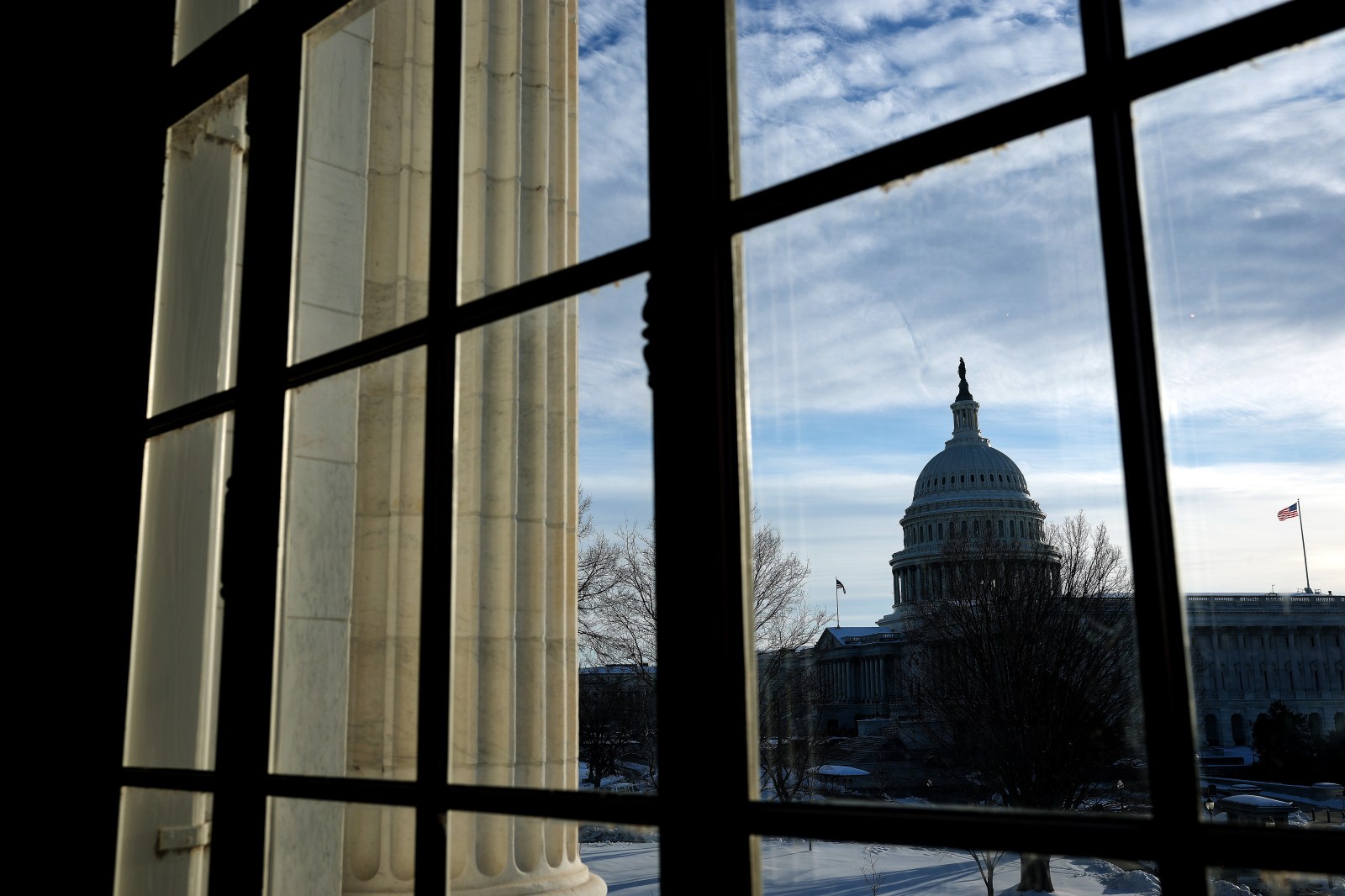 Image: NewsweekWASHINGTON, DC – JANUARY 29: The U.S. Capitol Building is seen as the Senate continues negotiations on a government funding bill on January 29, 2026 in Washington, DC. The Senate is currently negotiating federal government funding legislation to prevent a partial shutdown at midnight on Friday. (Photo by Kevin Dietsch/Getty Images) Source Full size
-
Image: NewsweekWASHINGTON, DC – JANUARY 29: The U.S. Capitol Building is seen as the Senate continues negotiations on a government funding bill on January 29, 2026 in Washington, DC. The Senate is currently negotiating federal government funding legislation to prevent a partial shutdown at midnight on Friday. (Photo by Kevin Dietsch/Getty Images) Source Full size
Mass Walkouts and Rallies Ignite Across Major Cities Protesters shut down schools, workplaces and businesses on Friday, Jan 31, and marched Saturday, Feb 1, in Minneapolis, New York, Los Angeles, Portland and Austin, coordinating a nationwide “ICE Out” strike [1][2]. Student walkouts in New York City and large rallies in Minneapolis were highlighted as the most visible actions [2]. Law enforcement presence varied, with local officials in some cities requesting federal assistance while others declined [1].
Minneapolis Shooting of Officer Pretti and Immigrant Good Sparks Backlash Federal officer Alex Pretti and immigrant Renee Good were killed during an ICE operation in Minneapolis on Jan 26, igniting national outrage and shifting White House rhetoric on immigration enforcement [1][2][3]. President Donald Trump labeled Pretti an “agitator” on social media and later softened his tone, calling for de‑escalation and assigning border “tsar” Tom Homan to oversee Operation Metro Surge [3][1]. Republican lawmakers publicly criticized ICE’s tactics while continuing to support broader deportation goals [3].
Federal Courts Deliver Conflicting Decisions on ICE Operations three‑judge appeals panel on Jan 27 upheld ICE’s authority to respond to protests, overturning a Minneapolis judge’s order that had limited agency actions [2]. Conversely, U.S. District Judge Fred Biery ordered the release of 5‑year‑old Liam Conejo Ramos and his father from a Texas detention center, condemning the deportation quota system as “ill‑conceived” [1]. The same district court denied Minnesota’s request to halt Operation Metro Surge, allowing thousands of agents to remain active while litigation proceeds [1].
Senate Approves Two‑Week DHS Funding Amid Shutdown Threat Senate leaders, led by Chuck Schumer, passed a bipartisan stopgap on Jan 30 that funds the Department of Homeland Security for two weeks while broader appropriations remain unresolved [2]. The measure separates DHS funding from a larger defense and domestic spending package, aiming to avert a partial government shutdown slated for Jan 31 [2]. Republican senators simultaneously demanded oversight hearings on ICE’s Minneapolis actions, signaling intra‑party tension over the agency’s conduct [3].
Local Officials Target ICE Misconduct While Journalists Gain Release Chicago Mayor Brandon Johnson signed an executive order directing police to document alleged ICE wrongdoing, and nine district attorneys formed a coalition to pursue state prosecutions of violating officers [1]. Former CNN anchor Don Lemon and journalist Georgia Fort were released after being charged with conspiracy and FACE‑Act violations, with Deputy Attorney General Todd Blanche defending the charges as having probable cause [1]. President Trump instructed Homeland Security Secretary Kristi Noem not to intervene in the protests unless local officials formally request federal assistance [1].
Sources
-
1.
CNN: Nationwide “ICE Out” protests intensify as courts deliver mixed rulings: Details the nationwide “ICE Out” strike, Minneapolis shootings, court orders releasing a detained child, continuation of Operation Metro Surge, Chicago’s executive order, and journalist arrests .
-
2.
Newsweek: Senate Secures Two‑Week DHS Stopgap as Anti‑ICE Protests Loom Friday: Reports the bipartisan two‑week DHS funding deal, scheduled anti‑ICE protests, appellate court support for ICE, journalist arrests, and Trump’s social‑media attack on Alex Pretti .
-
3.
BBC: Republican Lawmakers React to Minneapolis Immigration Shootings: Covers Republican criticism of ICE and DHS, calls for agency testimony, Trump’s reshuffling of operation leadership, and public opinion poll on ICE tactics .
Timeline
2025 – Congress approves roughly $45 billion for border security and interior enforcement, underscoring continued legislative support for Trump’s deportation agenda[1].
Jan 12, 2026 – Protests erupt nationwide after the Minneapolis ICE shooting of Renee Good, with demonstrators in major cities demanding accountability and ICE reform[3].
Jan 12, 2026 – DHS Secretary Kristi Noem bars lawmakers from visiting ICE detention facilities without a week’s notice, citing safety amid escalating protests[3].
Jan 12, 2026 – Senator Tina Smith says ICE should be reformed rather than abolished and signals she may withhold support for a key DHS funding bill until reforms are addressed[3].
Jan 28, 2026 – Republican lawmakers publicly criticize ICE and DHS actions in Minneapolis while still backing Trump’s immigration record; Rand Paul schedules ICE and two other agencies to testify before his Homeland Security committee next month[1].
Jan 28, 2026 – Rep. Max Miller declares “serious unanswered questions” about federal force require accountability; Rep. Andrew Garbarino urges agency heads to testify; Sen. Ted Cruz says the administration framed the incident as “guns blazing” against a “violent terrorist”[1].
Jan 28, 2026 – President Trump softens his rhetoric, calling the Minneapolis incident a situation that needs de‑escalation and appoints White House border “tsar” Tom Homan to lead Operation Metro Surge[1].
Jan 30, 2026 – The Senate passes a bipartisan two‑week DHS stopgap, separating DHS funding from the larger appropriations package and averting an immediate shutdown[4].
Jan 30, 2026 – Anti‑ICE protests are scheduled for Friday, with student walkouts in New York City and rallies in Minneapolis, adding pressure on immigration enforcement[4].
Jan 30, 2026 – A three‑judge appeals panel blocks a Minneapolis judge’s order limiting ICE response to peaceful protesters, reinforcing the administration’s broad enforcement authority[4].
Jan 30, 2026 – President Trump posts that nurse Alex Pretti is “an agitator” and claims his “stock has gone way down,” sparking controversy over his portrayal of the shooting victim[4].
Jan 30, 2026 – If Congress fails to pass further appropriations, a partial government shutdown looms on Jan 31 at 12:01 a.m., threatening non‑essential services[4].
Feb 1, 2026 – Nationwide “ICE Out” protests follow a Friday strike, with demonstrations in Minneapolis, New York, Los Angeles, Portland, and Austin; Trump tells Noem not to intervene unless local officials formally request federal assistance[2].
Feb 1, 2026 – U.S. District Judge Fred Biery orders the release of 5‑year‑old Liam Conejo Ramos and his father from a Texas detention center, condemning the “ill‑conceived and incompetently‑implemented” deportation quota system[2].
Feb 1, 2026 – Operation Metro Surge continues after a federal judge denies Minnesota’s request to halt the sweep, allowing thousands of ICE agents to remain active in the Twin Cities[2].
Feb 1, 2026 – Chicago Mayor Brandon Johnson signs an executive order directing city police to document alleged federal immigration officer wrongdoing, and nine district attorneys form a coalition to pursue state prosecutions[2].
Feb 1, 2026 – Former CNN anchor Don Lemon and journalist Georgia Fort are released after charges; Deputy Attorney General Todd Blanche defends the charges as having probable cause and announces a standard FBI civil‑rights probe into the shooting of Alex Pretti[2].
All related articles (4 articles)
-
CNN: Nationwide “ICE Out” protests intensify as courts deliver mixed rulings
-
Newsweek: Senate Secures Two‑Week DHS Stopgap as Anti‑ICE Protests Loom Friday
-
BBC: Republican Lawmakers React to Minneapolis Immigration Shootings
-
CNN: Outrage over Minneapolis ICE shooting sparks nationwide protests and policy responses
External resources (3 links)
- https://truthsocial.com/@realDonaldTrump/posts/115876460615555838 (cited 4 times)
- https://x.com/JoaquinCastrotx/status/2017984200444412025 (cited 1 times)