Senegal Desert Farms Supply Millions of UK Winter Vegetables via New River‑Irrigated Operations
Updated (2 articles)
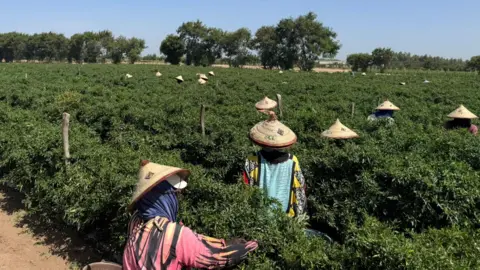
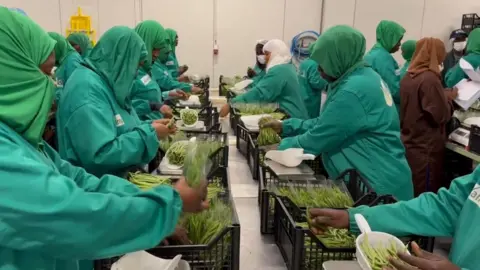
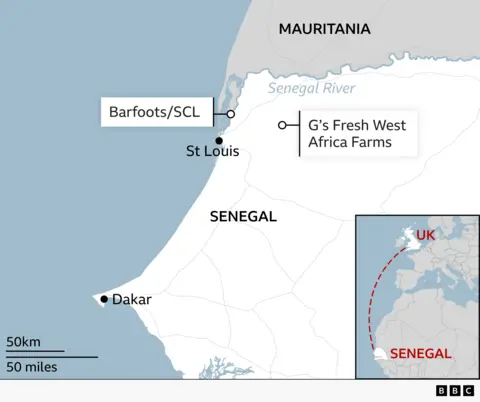
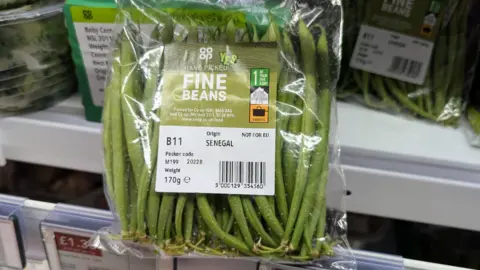
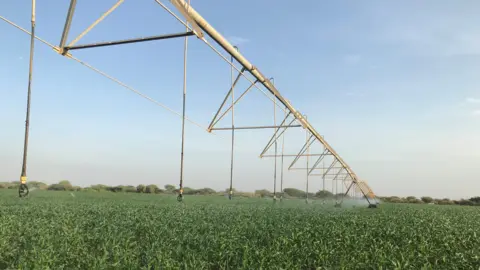
British‑Run Ventures Transform Senegal’s Saint‑Louis Region Two British‑operated farms, G’s Fresh and Barfoots, now occupy the Saint‑Louis region, employing roughly 9,000 workers—predominantly women—to grow corn, spring onions, green beans, radishes and other vegetables for UK supermarkets each winter [1].
Two‑Thousand Hectares Powered by Senegal River Irrigation A canal network draws water from the 1,600 km Senegal River to irrigate about 2,000 ha, enabling G’s Fresh’s 500‑ha West African Farms subsidiary to ship two million spring‑onion bunches, 100 t of green beans and 80 t of radishes to the UK weekly [1].
Barfoots Joint Venture Delivers Tens of Millions of Crops Annually The Barfoots‑SCL partnership supplies 55 million corn cobs, along with chillies and butternut squash, moving produce five hours by road to Dakar’s deep‑water port before a weekly container ship completes the 3,000‑mile journey to Poole, reaching shelves in about six days [1].
UK Winter Produce Imports Near 90 % Amid Mediterranean Shortages While the UK imports roughly 40 % of its total food, winter fresh‑produce imports can climb to 90 %; droughts in Spain and post‑Brexit trade shifts have pushed retailers toward West African sources, which also generate lower shipping emissions than air freight [1].
£70 Million Investment Generates 9,000 Low‑Wage Jobs Barfoots’ £70 million stake created 9,000 jobs paid at the Senegalese minimum wage of about 2,500 CFA (~$4.50) per day plus speed bonuses, a labour cost less than one‑third of that for UK‑grown spring onions [1].
Environmental Debate Centers on Food‑Miles Versus Seasonal Eating Maritime shipping accounts for about 3 % of global greenhouse gases; academic Tim Lang argues that even sea‑borne imports undermine seasonal consumption, while G’s Fresh’s Derek Wilkinson contends that economics may soon favor year‑round Senegalese imports, leaving the choice to consumers [1].
Related Tickers
Timeline
2020‑2021 (post‑Brexit) – After the UK leaves the EU, trade shifts make West African produce more attractive, prompting investment in large‑scale desert farms that later supply winter vegetables to Britain [1].
2023 – The World Food Programme launches a youth‑farming initiative across Africa, aimed at improving land access and supporting young entrepreneurs; the programme is scheduled to run until early 2027 [2].
2025 – As urban rents and food prices in Dakar climb to near‑European levels, 33‑year‑old Filly Mangassa abandons a planned academic career and starts a 32‑acre farm in Tambacounda, earning about 2 million CFA ($3,500) a year and mentoring peers who return from migration attempts; “I left Dakar because the cost of living and scarce jobs rose,” he says [2].
2025 – Senegal’s agriculture minister Mabouba Diagne declares farming “the sole sector capable of creating the hundreds of thousands of jobs Africa’s youth need,” aligning with the WFP programme that has already helped over 61 000 Senegalese, with more than 80 % launching farms [2].
2025 – The WFP initiative reports that it has supported roughly 380 000 participants region‑wide, providing land and inputs that enable a shift toward high‑value crops and modern irrigation, which could lower staple prices locally [2].
Feb 19, 2026 – Two British‑run farms in Senegal’s Saint‑Louis region, G’s Fresh and Barfoots, employ about 9 000 workers—mostly women—and ship millions of spring‑onion bunches, green beans, radishes, corn cobs and other veg each week to UK supermarkets, covering a 3 000‑mile sea route that delivers produce to shelves in about six days [1].
Feb 19, 2026 – Barfoots’ Julian Marks confirms a £70 million investment in the Senegal venture, noting that labour costs are roughly one‑third of UK‑grown equivalents, which drives the economic case for year‑round imports [1].
Feb 19, 2026 – Academic Tim Lang warns that “importing vegetables, even by sea, undermines seasonal eating,” raising ethical concerns about food‑mile reductions versus local consumption patterns [1].
Feb 19, 2026 – Derek Wilkinson of G’s Fresh argues that “economics may soon favour Senegalese imports year‑round,” suggesting that consumer choice, not policy, will determine the future of UK winter produce sourcing [1].
Early 2027 (planned) – The WFP youth‑farming programme is set to conclude, after having facilitated land access for over 380 000 young farmers across Africa, potentially leaving a legacy of increased local production and reduced reliance on imports [2].
All related articles (2 articles)
External resources (2 links)
- http://ap.org/ (cited 1 times)
- https://www.ap.org/about/standards-for-working-with-outside-groups/ (cited 1 times)