US Reinstates 15% Global Tariff, UK Threatens Reciprocal Measures
Updated (2 articles)
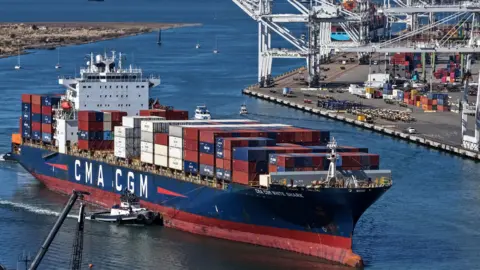
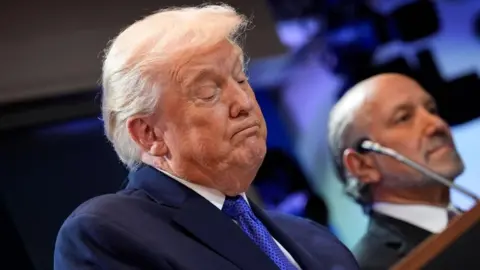
Trump Reimposes 15% Tariff After Supreme Court Ruling On Saturday President Donald Trump announced a 15% tariff on imports from all countries, following a Supreme Court decision that blocked his earlier reliance on the International Emergency Economic Powers Act of 1977. He first issued a 10% levy under Section 122 of the 1974 Trade Act and then raised it to 15% the same day[2]. The move reverses the temporary 10% rate and applies to goods not covered by existing bilateral agreements[1].
UK Warns Retaliation If Tariff Deal Violated Downing Street stated that any breach of the UK‑US tariff pact could trigger reciprocal actions, saying no measure “is off the table”[1]. Business and Trade Secretary Peter Kyle emphasized that sector‑specific tariffs on cars, steel and pharmaceuticals remain unchanged, limiting the 15% levy to goods outside those agreements[1]. The government’s warning follows the EU’s suspension of its own US‑EU tariff arrangement on Monday[1].
Analysts Project £2‑3 bn Cost Surge for British Exporters The British Chambers of Commerce estimate the 15% tariff will add £2‑3 bn to costs for UK exporters, affecting roughly 40,000 firms[2]. Global Trade Alert predicts the United Kingdom will be among the hardest‑hit nations, while countries like China and Brazil face comparatively milder impacts[1]. Business leaders such as Andy Haldane and Richard Rumbelow have called for immediate guidance on how the new levy will be applied to UK goods[1].
Refund Uncertainty Persists for Previously Collected Tariff Revenues The Supreme Court decision opened the possibility for companies to seek refunds on levies collected since April 2025, but the administration has not detailed a process and lawsuits are already pending[2]. The New York Federal Reserve reported that nearly 90% of additional tariffs are ultimately borne by businesses and consumers, underscoring the financial stakes of any refund mechanism[2]. No official statement has clarified whether the US will return the estimated $130 bn already collected under the earlier tariff regime[2].
Sources
-
1.
BBC: UK Signals Possible Retaliation as US Raises Global Tariff to 15%: Details UK government’s warning of reciprocal measures, EU suspension, sector‑specific tariff exemptions, and analyst forecasts of UK impact.
-
2.
BBC: Trump Raises Global Tariff to 15% Amid Legal Ruling, Sparking Business Uncertainty: Covers Supreme Court‑driven shift to Section 122, cost estimates for UK exporters, consumer‑business burden, and unresolved refund prospects.
Related Tickers
Timeline
Feb 20 2026 – The U.S. Supreme Court blocks the administration’s reliance on the International Emergency Economic Powers Act for worldwide tariffs, forcing a shift to Section 122 of the 1974 Trade Act for any new levies [2].
Feb 21 2026 – President Trump issues a proclamation that imposes a 10% temporary global tariff on all imports under Section 122 and, via social media, pledges to raise the rate to 15% later that day [2].
Feb 21 2026 – Trump follows through and raises the global tariff to 15% on the same Saturday, expanding the levy to goods not covered by existing sector‑specific agreements [2].
Feb 22 2026 – The British Chambers of Commerce estimates the 15% tariff will add £2‑3 bn in costs for UK exporters, affecting roughly 40,000 firms and likely being passed to U.S. customers [2].
Feb 22 2026 – Yale’s Budget Lab finds that 31‑63% of prior tariff costs were shifted to U.S. consumers, while the New York Fed reports nearly 90% of additional tariffs are borne by businesses and shoppers [2].
Feb 22 2026 – Trade officials warn that volatile U.S. tariffs could push exporters to diversify into Europe and the Indo‑Pacific, reducing product choice for U.S. shoppers [2].
Feb 22 2026 – Companies consider seeking refunds for the $130 bn in duties collected since April, but the administration has offered no clear process and lawsuits are already filed [2].
Feb 23 2026 – The European Union suspends its U.S.–EU tariff agreement, citing legal uncertainty after Trump’s 15% global levy announcement [1].
Feb 23 2026 – Downing Street warns that any U.S. breach of the UK‑U.S. tariff deal could trigger reciprocal measures, stating “no action is ‘off the table’” and “no one wants a trade war” [1].
Feb 23 2026 – The UK prime minister’s spokesperson and Business and Trade Secretary Peter Kyle stress that existing sector‑specific tariffs on cars, steel, pharmaceuticals and other negotiated goods remain untouched; the 15% levy applies only to products outside those agreements [1].
Feb 23 2026 – Global Trade Alert predicts the 15% levy will hit the United Kingdom hardest among all nations affected by the new U.S. tariff regime [1].
Feb 23 2026 – Andy Haldane of the British Chamber of Commerce and Richard Rumbelow of Make UK call for urgent clarity on how U.S. tariffs will treat UK exports, warning of potential disruption without immediate guidance [1].
External resources (5 links)
- https://budgetlab.yale.edu/research/tracking-economic-effects-tariffs (cited 1 times)
- https://libertystreeteconomics.newyorkfed.org/2026/02/who-is-paying-for-the-2025-u-s-tariffs/ (cited 1 times)
- https://x.com/berndlange/status/2025945751197524466 (cited 2 times)