India’s AI Impact Summit Pushes Human‑Centred Policies While Highlighting Job Growth and Ongoing Inequities
Updated (2 articles)
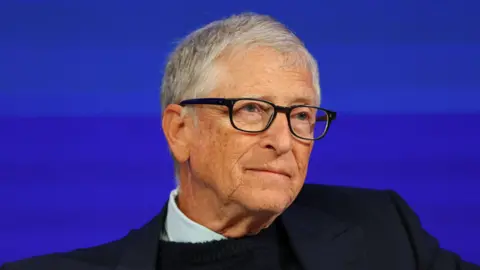
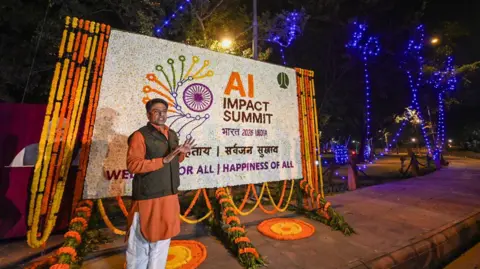
Summit Aligns With World Day of Social Justice The AI Impact Summit opened in New Delhi on 20 February 2026, coinciding with the World Day of Social Justice, and positioned human‑centred AI as a tool for decent work and shared prosperity [1][2]. Organizers gathered tech CEOs, politicians, scientists and activists to steer AI development from a Global‑South perspective [2]. The event marked the first large‑scale AI forum of its kind in the region, underscoring India’s ambition to shape global AI governance [1].
India Leads Global AI Adoption and Projects Millions of Jobs India now holds the world’s largest share of monthly active ChatGPT mobile users, reflecting deep penetration of generative‑AI services [1]. Analysts estimate AI could create more than three million new technology jobs by 2030 and reshape over ten million existing positions [1]. The BBC noted that while major cities host projects from Google, Nvidia and Amazon, many Indian workers earn roughly 480,000 rupees annually labeling data, illustrating a stark wage gap within the ecosystem [2].
Government Launches AI Mission and Partners With International Bodies The Union Budget 2026‑27 created a High‑Powered “Education to Employment and Enterprise” Standing Committee to assess AI’s impact on jobs and embed AI education from school level [1]. The AI Mission, funded with $1.2 billion, aims for digital sovereignty and economic transformation, though progress lags behind better‑funded rivals [2]. The International Labour Organization, together with India and the Global Coalition for Social Justice, is gathering evidence on AI exposure and supporting the e‑Shram platform, now covering 64.3 % of informal workers after a $17.5 billion Microsoft AI‑diffusion commitment [1].
Experts Flag Uneven Exposure, Language Gaps and Safety Concerns The Hindu highlighted that only about 11.5 % of jobs in low‑income countries face generative‑AI exposure, compared with one‑third in high‑income economies, calling for targeted public investment [1]. The BBC emphasized language barriers, noting major US chatbots cover only half of India’s 22 official languages, and warned that safety discussions were sidelined by prominent ethicists and scholars [2]. These differing emphases reveal both optimism about job creation and persistent worries about inequitable benefits and insufficient safety safeguards.
Sources
-
1.
The Hindu: India pushes human‑centred AI at Impact Summit, cites job growth and social‑protection goals: Details the summit’s alignment with social‑justice themes, AI‑driven job projections, ILO partnership, and government AI Mission funding .
-
2.
BBC: India’s AI Impact Summit Highlights Global‑South Shift and Ongoing Inequities: Focuses on the summit’s high‑level attendance, Bill Gates’ keynote, low‑paid data‑labeling labor, language accessibility gaps, sovereign AI platform ambitions, and expert skepticism about safety outcomes .
Related Tickers
Timeline
2015 – The e‑Shram scheme registers only 19 % of India’s informal workers, highlighting the need for broader social‑protection coverage [2].
2025 – e‑Shram coverage expands to 64.3 % of informal workers and Microsoft pledges a $17.5 billion AI‑diffusion investment to embed AI in e‑Shram and the National Career Service portal [2].
2025 – India launches its AI Mission with a $1.2 bn budget, aiming for digital sovereignty but falling behind better‑funded US and Chinese rivals [1].
Feb 20, 2026 – The AI Impact Summit opens in New Delhi on the World Day of Social Justice, convening CEOs, politicians, scientists and activists to promote human‑centred AI, decent work and shared prosperity [2].
Feb 20, 2026 – Bill Gates confirms he will deliver the summit keynote after earlier doubts, underscoring the event’s global prominence [1].
Feb 20, 2026 – IIT Mumbai professor Pushpak Bhattacharyya warns that major US chatbots cover only about half of India’s 22 official languages, urging multilingual tech to avoid excluding millions from education, health and banking [1].
Feb 20, 2026 – Experts such as Dame Wendy Hall, AI ethicist Gina Neff and OpenUK chief Amanda Brock caution that safety discussions are being sidelined and that the summit may yield limited concrete outcomes [1].
Feb 2026 (Union Budget 2026‑27) – The government creates a High‑Powered “Education to Employment and Enterprise” Standing Committee to assess AI’s impact on jobs, embed AI education from school level and enable AI‑driven worker‑job matching [2].
By 2030 (projection) – Analysts project AI will generate more than three million new technology jobs in India and reshape over ten million existing positions, driving a major transformation of the labour market [2].