Supreme Court Clears California’s Voter‑Approved Democratic Map, Paving Way for Seat Shifts
Updated (5 articles)
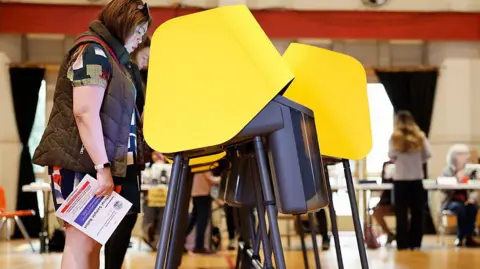

Supreme Court Issues Unanimous Emergency Order On Feb 4, 2026 the Court issued an unsigned, non‑dissenting order that rejected the emergency challenge filed by California Republicans and the Trump administration, thereby allowing the new congressional map to be used for the 2026 elections. The order provided no rationale, following standard practice for emergency docket motions. The decision removed the last legal obstacle after a lower‑court 2‑1 ruling had already upheld the map’s legality [1][2][3].
Voter‑Approved Proposition 50 Drives New Districts California voters adopted Proposition 50 on Nov 4, 2025, with 64% approval, mandating the state legislature to draw new congressional districts for the 2026, 2028 and 2030 cycles. The map, now cleared, is designed to favor Democrats and could turn up to five currently Republican‑held seats Democratic, shifting the state’s House delegation from 43 Democrats, eight Republicans and one vacancy to a potentially larger Democratic majority. The referendum was intended as a counter‑measure to Republican gains in Texas’s mid‑decade redistricting [2][1][3].
Political Leaders Trade Blame Over Redistricting War Governor Gavin Newsom publicly blamed former President Donald Trump for initiating the “redistricting war,” accusing him of seeking five extra Republican seats in Texas and vowing that Trump will lose again in November. Attorney General Pam Bondi denounced Newsom’s move as a “brazen” power grab, alleging the maps are racially gerrymandered, while GOP officials warned the new lines will further shrink California’s already small Republican delegation. Justice Alito, in a December filing, noted both states appear to redraw lines for partisan advantage, a motive the Court says cannot ground a federal lawsuit [1][2][3].
Candidate Filing Opens Immediately After Decision The Supreme Court’s order triggers the opening of filing for California’s 2026 congressional primaries on Feb 9, 2026, as announced by state election officials, giving candidates a narrow window to register under the new district boundaries. Newsweek highlighted that former California GOP executive director Jon Fleishman warned the new map will further reduce the Republican delegation, while the AP noted the filing period begins the Monday following the decision, marking the start of a campaign season dominated by the revised lines [2][3].
Sources
-
1.
BBC: Supreme Court Clears Way for California’s New Democratic‑Favored Map: Details the unsigned order, rejection of Republican/Trump emergency request, voter‑approved referendum results, Newsom’s attack on Trump, and Bondi’s accusation of a power grab.
-
2.
Newsweek: Supreme Court Clears Way for California’s New Democratic‑Favored Congressional Map: Stresses the unsigned order, 64% support for Proposition 50, potential flip of five seats, Newsom’s blame on Trump, lower‑court 2‑1 ruling, and Feb 9 filing deadline with GOP warning.
-
3.
AP: Supreme Court Clears Democratic‑Favored California Map for 2026 Elections: Focuses on the unsigned order without dissent, possible five‑seat flip, Justice Alito’s comment on partisan motives, dismissal of Republican/Trump challenges, and Monday filing start for primaries.
Timeline
Aug 2025 – Gov. Gavin Newsom launches a campaign to suspend California’s independent redistricting process as retaliation against Texas’s mid‑decade map, signaling a new partisan redistricting battle ([1]).
Nov 4, 2025 – Voters approve Proposition 50 with 64% support, authorizing the state legislature to draw new congressional districts for the 2026, 2028 and 2030 elections ([3]).
Jan 2026 – A lower federal court denies an emergency request by California Republicans and the U.S. Justice Department to block the Proposition 50 map, leaving the map in place pending appeal ([1]).
Jan 14, 2026 – A three‑judge federal panel in Los Angeles rules 2‑1 to allow the voter‑approved map for future elections, rejecting Republican and DOJ claims that the districts are race‑based ([2], [5]).
Feb 4, 2026 – The U.S. Supreme Court issues an unsigned order rejecting the last‑minute Republican/Trump challenge, clearing the way for California’s new Democratic‑favored congressional map ([1], [3], [4]).
Feb 4, 2026 – Gov. Newsom declares that former President Trump “started this redistricting war” and predicts he will lose again in November, framing the map as a political counter‑offensive ([1]).
Feb 4, 2026 – Attorney General Pam Bondi accuses Newsom of a “brazen” power grab that uses racially gerrymandered maps, intensifying the partisan clash ([1]).
Feb 4, 2026 – Justice Alito, in a December filing, notes that both California and Texas redraw lines for partisan advantage, underscoring the Court’s reluctance to intervene in political gerrymandering ([4]).
Feb 9, 2026 – Candidate filing opens for California’s 2026 congressional primaries; former GOP executive director Jon Fleishman warns the new lines will further shrink the Republican delegation ([3]).
Nov 2026 – The midterm elections will be conducted under the new districts, with analysts estimating the map could flip up to five Republican‑held seats, shifting the state’s delegation to roughly 43 Democrats, 8 Republicans and 1 vacancy ([1], [2]).
2028 (planned) – Gov. Newsom eyes a presidential run, positioning the 2025 redistricting effort as part of his broader national political strategy ([5]).
Ongoing context – The Supreme Court’s longstanding precedent treats partisan gerrymandering as a political question beyond federal‑court review, a framework that shapes the legal battles over both California and Texas maps ([2]).
All related articles (5 articles)
-
BBC: Supreme Court Clears Way for California’s New Democratic‑Favored Map
-
Newsweek: Supreme Court Clears Way for California’s New Democratic‑Favored Congressional Map
-
AP: Supreme Court Clears Democratic‑Favored California Map for 2026 Elections
-
CNN: Federal judges allow California to use new Democrat-friendly map ahead of 2026 election
-
AP: Federal panel allows California's voter-approved House map for 2026 midterms