Deep Fission Signs Urenco LEU Supply Deal, Begins Kansas SMR Pilot
Updated (2 articles)
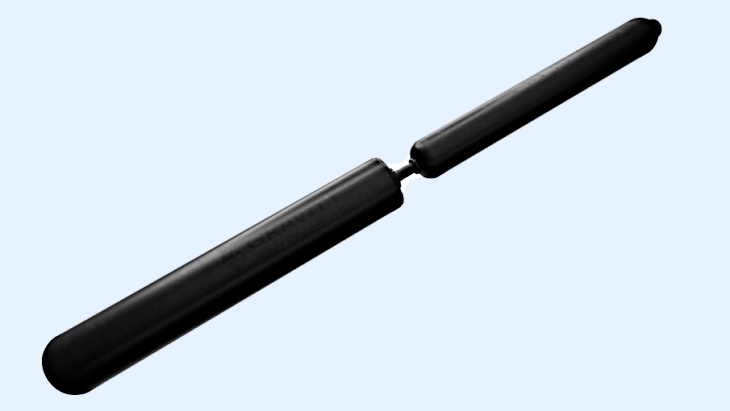
Deep Fission Secures Urenco LEU Fuel for Gravity Reactor On 25 February 2026 Deep Fission signed a contract to purchase low‑enriched uranium from Urenco USA’s Eunice, New Mexico enrichment plant, enabling fuel for its underground Gravity reactor testing and early commercial operation [1]. The agreement guarantees a domestic supply chain for advanced reactors, a priority highlighted by Urenco’s managing director [1]. This deal marks the latest step in Deep Fission’s roadmap toward commercial deployment [1].
Gravity Reactor Design Targets One‑Mile Borehole, 15 MWe Output The Gravity reactor employs conventional pressurised water reactor technology with LEU fuel, delivering 15 megawatts electric per unit within a one‑mile deep borehole [1]. Ten units would provide 150 MWe and a hundred could generate 1.5 GW, leveraging passive geological shielding and off‑the‑shelf components for cost‑effective scaling [1]. The design aims to combine deep‑borehole safety with modular small‑reactor flexibility [1].
Pilot Construction Launched at Great Plains Industrial Park Deep Fission broke ground in December 2025 at the Great Plains Industrial Park in Parsons, Kansas, to build a test Gravity reactor [1]. The pilot site will host a single 15 MWe unit, after which the company plans a full commercial plant on the same location [1]. Site selection emphasizes existing industrial infrastructure and proximity to the U.S. power grid [1].
DOE Program Inclusion and Founders’ Expertise Accelerate Timeline The U.S. Department of Energy added Deep Fission to its Nuclear Reactor Pilot Program in August 2025, supporting the firm to achieve criticality for at least three designs by 4 July 2026 [1]. Founders Elizabeth and Richard Muller, who also co‑founded Deep Isolation in 2016, bring experience in deep‑borehole waste disposal to the project [1]. Urenco’s commitment to supplying enriched uranium underscores the domestic supply strategy for advanced reactors [1].
Timeline
2016 – Deep Isolation is founded by Elizabeth and Richard Muller, pioneering deep‑borehole disposal concepts that later inform their 2023 creation of Deep Fission to develop underground SMRs. [1]
Apr 2022 – X‑Energy’s subsidiary TRISO‑X files a Category II Special Nuclear Material licence application, launching a fast‑track review that later finishes three months ahead of schedule. [2]
2023 – Elizabeth and Richard Muller launch Deep Fission, leveraging their Deep Isolation experience to design the Gravity reactor, a 15 MWe underground SMR intended for one‑mile boreholes. [1]
Aug 2025 – The U.S. Department of Energy selects Deep Fission for the Nuclear Reactor Pilot Program, pledging support to achieve criticality for at least three designs by 4 July 2026. [1]
Nov 2025 – Construction of TX‑1 begins at the Oak Ridge Horizon Center, targeting annual production of 5 tonnes of HALEU (≈700,000 TRISO pebbles) to fuel up to eleven Xe‑100 SMRs. [2]
Dec 2025 – Deep Fission breaks ground at the Great Plains Industrial Park in Parsons, Kansas, commencing a test Gravity reactor and planning a subsequent commercial plant on the same site. [1]
Feb 16, 2026 – The Nuclear Regulatory Commission issues the first Category II fuel licence to TRISO‑X, authorising 40‑year commercial fabrication of TRISO fuel at TX‑1 and the planned TX‑2 facility. [2]
Feb 25, 2026 – Deep Fission signs a low‑enriched uranium supply agreement with Urenco USA, securing domestic fuel for its Gravity reactor and early commercial operations; Urenco’s managing director says the deal “provides reliable LEU to innovative reactor developers, underscoring the role of advanced reactors in the future energy mix.” [1]
2026 (by 4 July) – Deep Fission aims to achieve criticality of its Gravity reactor under the DOE pilot program, a milestone that would validate the underground SMR concept before scaling to multiple units. [1]
Post‑2026 (planned) – TX‑2 design advances to expand TRISO‑X capacity, targeting fuel production sufficient for 144 Xe‑100 reactors and other advanced SMR developers. [2]
Post‑2026 (planned) – A final NRC inspection will verify safety and security compliance before TX‑1 receives HALEU and commences operations, marking the start of continuous HALEU supply for the U.S. advanced reactor fleet. [2]