Netanyahu Intensifies Private Lobbying for U.S.-Led Regime Change in Iran
Updated (6 articles)
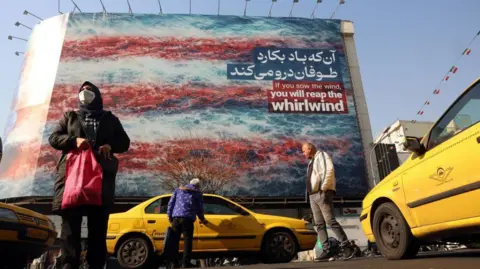
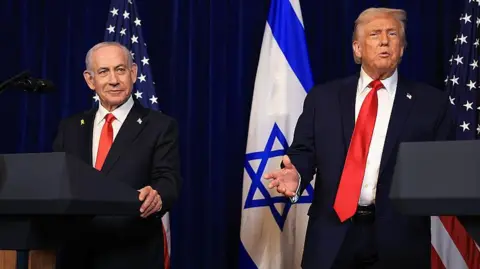

Netanyahu’s covert campaign targets U.S. decision‑making Prime Minister Benjamin Netanyahu has privately urged President Donald Trump to delay a “too small” U.S. strike on Iran, while publicly remaining silent on the issue [1]. Former defence intelligence officer Danny Citrinowicz reports Netanyahu sees the current U.S. Gulf buildup as a “golden moment” for a larger operation [1]. Repeated Israeli polls show a solid majority of Jewish voters backing military action against Iran, reinforcing Netanyahu’s security‑focused political narrative [1].
Israeli intelligence coordinates target lists with Washington Israel’s military intelligence chief Shlomi Binder traveled to Washington this week for high‑level talks with U.S. intelligence agencies [1]. The meetings focused on identifying specific Iranian strike targets, indicating close operational coordination despite Netanyahu’s muted public stance [1]. Israeli media describe the trip as a signal that Israel is preparing for possible joint action [1].
U.S. president weighs spectrum from limited strikes to full regime change President Trump is reported to be considering options ranging from symbolic limited attacks to a comprehensive effort to topple Tehran’s leadership [1]. Any broader deal would be conditioned on ending Iran’s uranium enrichment, proxy support, and ballistic‑missile program [1]. Public statements alternate between military threats and offers of fresh negotiations [1].
Regime‑change strategy aims to undermine Hezbollah missile arsenal Israeli analysts argue that removing Iran’s government would cripple Hezbollah, which the Alma research institute estimates possesses up to 25,000 missiles and rockets in Lebanon [1]. A weakened Tehran would reduce the flow of weapons to the Lebanese militia, lowering the missile threat to Israel [1]. This rationale underpins the push for regime change as a means to neutralize regional missile capabilities [1].
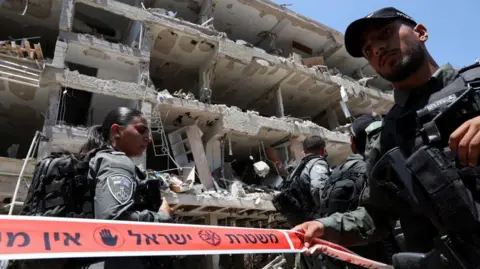
Recent conflict demonstrated Iran’s missile reach and re‑armament The 12‑day war last year saw Iran fire hundreds of ballistic missiles at Israeli towns, killing at least 28 people and striking apartment blocks in Tel Aviv [1]. The episode revealed how quickly Iranian missiles can evade Israel’s air defenses [1]. Tehran is now rebuilding its missile stockpiles, raising concerns about a more intense response to future strikes [1].
Timeline
2024 – The 12‑day war between Israel and Iran sees Iran launch hundreds of ballistic missiles at Israeli towns, killing at least 28 people and exposing Tehran’s rapid missile‑evasion capability, which it later rebuilds [1].
June 2025 – A brief but intense clash erupts among Iran, Israel and the United States, underscoring the volatility of regional security and foreshadowing future confrontations over Iran’s missile and proxy activities [5].
Dec 28, 2025 – Protests ignite in Tehran’s Grand Bazaar over economic hardship, quickly spreading to dozens of Iranian cities, prompting clashes, property damage and dozens of reported fatalities, marking the start of a nationwide unrest that draws regional attention [4].
Jan 5, 2026 – President Trump warns Iran it will be “hit very hard” if more protesters die, while Netanyahu approves a new military plan called Operation Iron Strike and publicly backs Iranian protesters’ aspirations for freedom, linking domestic unrest to potential Israeli action [5].
Jan 5, 2026 – Protests expand to 222 locations across 26 provinces, with HRANA reporting at least 19 demonstrators and one security member killed, intensifying internal pressure on Tehran and raising the stakes for external powers [5].
Jan 5, 2026 – Tehran’s foreign ministry accuses the United States and Israel of inciting violence and violating international norms, with spokesman Esmaeil Baqaei asserting that external remarks constitute unlawful interference [5].
Jan 9, 2026 – Iran’s UN ambassador Amir Saeid Iravani sends a letter to UN leaders condemning the United States and Israel for “interfering” and “encouraging instability,” warning that such rhetoric could turn peaceful demonstrations into violent disorder [4].
Jan 9, 2026 – President Trump signals a possible U.S. intervention if Iranian security forces kill more protesters, framing the issue as preventing violence and warning Tehran not to escalate [4].
Jan 9, 2026 – Netanyahu tells his cabinet that Israel identifies with the Iranian people’s struggle for freedom, offering moral support without direct threats, reflecting a restrained public posture amid rising tensions [4].
Jan 11, 2026 – Netanyahu tells a weekly cabinet meeting that Israel closely monitors the Iranian protests, hails the demonstrators as heroes, and hopes for a post‑tyranny relationship, while the IDF says no new civilian shelter guidelines are needed [6].
Jan 11, 2026 – Netanyahu holds an overnight call with U.S. Secretary of State Marco Rubio to discuss Iran, underscoring high‑level coordination despite limited public detail [6].
Jan 11, 2026 – Former Israeli intelligence officials caution that Israel is unlikely to rush an attack on Iran, preferring to watch how the protests evolve before deciding on any military move [6].
Jan 11, 2026 – Iranian parliament speaker Mohammad Bagher Qalibaf warns that any U.S. or Israeli strike would create “legitimate targets,” and anti‑American chants echo in the parliamentary chamber, signaling Tehran’s readiness to retaliate [6].
Jan 13, 2026 – Israel adopts a quiet stance as Iranian protests spread to over 180 cities, with Netanyahu’s office instructing ministers to remain silent to avoid giving Tehran a pretext for rallying domestic support [2].
Jan 13, 2026 – At a weekly government meeting, Netanyahu publicly says Israel monitors the Iranian situation and supports the protesters’ fight for freedom, offering no threats toward Tehran and reinforcing a restrained diplomatic tone [2].
Jan 13, 2026 – The IDF downplays any immediate risk of an Iranian missile attack, keeping municipal shelters open as a precaution while stating updates will follow if conditions change, aiming to prevent public alarm [2].
Jan 13, 2026 – Analysts highlight that the United States’ forthcoming decision on Iran will shape Israel’s calculus, noting that a shift in U.S. policy could prompt Israeli intervention or retaliation [2].
Jan 15, 2026 – President Trump threatens direct strikes against Iran if the regime rebuilds its military, while the White House and Pentagon refrain from confirming any attack plans, and regional flight cancellations and aircraft refueling hint at possible preparations [3].
Jan 15, 2026 – Retired IDF Lt. Gen. Amir Avivi says Israel would likely join a U.S.-led Iran strike in defense and intelligence roles, and could take on a larger role if Washington leads, emphasizing coordination and timing [3].
Jan 15, 2026 – Netanyahu continues to view a decisive Iran‑related victory as a way to bolster his legacy amid domestic political challenges, suggesting that toppling Tehran could reshape his public image [3].
Jan 15, 2026 – Analysts argue Israel is unlikely to fire first, preferring the United States to lead any strike, and warn that post‑regime scenarios could range from a new protest‑driven leadership to an insurgency, underscoring uncertainty about Iran’s future [3].
Jan 31, 2026 – Netanyahu privately urges the United States to pursue a maximalist strike on Iran, describing the Gulf buildup as a “golden moment” he cannot forgo, while publicly remaining silent to preserve diplomatic flexibility [1].
Jan 31, 2026 – Israeli military intelligence chief Shlomi Binder meets U.S. intelligence officials in Washington to discuss potential strike targets inside Iran, signaling deep coordination despite Netanyahu’s muted public comments [1].
Jan 31, 2026 – President Trump weighs a spectrum of options from limited symbolic attacks to a full regime‑change effort, linking any deal to the cessation of Iran’s uranium enrichment, proxy support, and ballistic‑missile program [1].
Jan 31, 2026 – Israeli analysts argue that removing Iran’s government would cripple Hezbollah’s missile arsenal—estimated at up to 25,000 rockets—thereby neutralizing a major regional threat [1].
Jan 31, 2026 – Recent polls show a solid majority of Jewish Israelis support military action against Iran, reinforcing Netanyahu’s security narrative ahead of upcoming elections [1].
Early Feb 2026 (expected) – The United States is anticipated to announce its decision on the scope of action against Iran, a move that analysts say will dictate whether Israel proceeds with a U.S.-led strike or pursues independent options [2].
All related articles (6 articles)
-
BBC: Israel’s Quiet Push for U.S.‑Led Regime Change in Iran
-
Newsweek: Trump threatens Iran strikes, Netanyahu sees golden opportunity
-
CNN: Israel stays quiet as Iran protests expand and Trump decision looms
-
AP: Iranian protests intensify; Israel watching closely
-
Newsweek: Iran accuses Trump and Netanyahu of inciting violence as protests grow
-
Newsweek: Iran fears new US attack as protests grip nation
External resources (1 links)
- https://x.com/MonitorX99800/status/2007867930957226216?s=20 (cited 1 times)