Trump Cuts India Tariffs to 18% After Modi’s Russian Oil Halt Promise
Updated (3 articles)
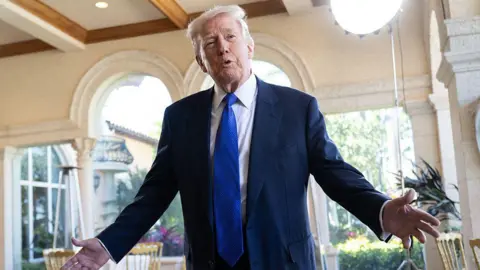

Tariff Rate Slashed From 50% to 18% Effective Immediately President Donald Trump announced on February 2‑3 that the United States will lower the duty on Indian goods from the combined 50% rate (25% base plus a 25% penalty) to 18% [1][2][3]. The reduction applies to all “Made in India” products and is paired with a promise that India will remove U.S. non‑tariff barriers [2][3]. Trump framed the move as a step toward ending the Ukraine war, noting that “thousands are dying each week” [1].
India Commits to End Russian Oil Imports and Boost U.S. Purchases In a phone call on February 2, Prime Minister Narendra Modi pledged to halt Russian crude purchases, a condition tied to the tariff cut [1][2][3]. The agreement includes a commitment to buy more than $500 billion of American goods across energy, technology, agriculture and coal sectors [2][3]. Trump also suggested India might increase oil imports from the United States and Venezuela [1][2].
Political Reactions Highlight Domestic Opposition and Business Concerns Modi thanked Trump on X, calling his leadership “vital for global peace, stability and prosperity” [1][3]. Congress general secretary Jairam Ramesh criticized the concession as a capitulation [3]. A U.S. small‑business coalition, “We Pay the Tariffs,” warned the 18% rate remains six times higher than the 2.5% average previously paid by many firms [2].
Diplomatic Context Includes EU Deal and Critical Minerals Talks The tariff reduction follows the EU‑India free‑trade pact announced a week earlier, which aims to double EU exports to India by 2032 [2]. External Affairs Minister S. Jaishankar arrived in Washington on February 2 for a three‑day Critical Minerals Ministerial chaired by Secretary of State Marco Rubio, focusing on supply‑chain resilience and clean‑energy cooperation [3]. A non‑binding document is expected to be signed at the summit [3].
Foreign Ministry Yet to Confirm Details of Russian Oil Halt While Trump and Modi publicly asserted that India will stop buying Russian oil, India’s Ministry of External Affairs has not issued an official statement confirming the timeline or specifics [3]. This silence contrasts with the AP report that India will “eliminate U.S. import taxes” and fully comply with the tariff terms [1], indicating a gap between diplomatic announcements and formal government confirmation.
Sources
-
1.
AP: Trump Announces 18% Tariff Cut for India After Russian Oil Deal: Reports Trump’s 18% tariff cut, Modi’s pledge to halt Russian oil, $500 bn purchase target, and Trump’s claim the move will help end the Ukraine war .
-
2.
BBC: US‑India Trade Deal Cuts Tariffs to 18% After India Halts Russian Oil Purchases: Details the tariff reduction, India’s $500 bn import pledge, the prior 50% tariff, and reactions from a U.S. small‑business coalition .
-
3.
The Hindu: Modi and Trump announce 18% U.S. tariff on “Made in India” goods: Highlights Modi’s announcement, Trump’s Truth Social post, the pending foreign‑ministry response, Jaishankar’s Washington visit, and domestic political criticism .
Timeline
June 2025 – The United States imposes a 25% tariff on Indian goods, marking the first major increase in trade barriers amid rising tensions over Russia‑oil purchases [2].
August 2025 – The U.S. adds a second 25% tariff, pushing the combined duty on Indian imports to 50% and linking a 25% penalty to India’s continued buying of discounted Russian crude [2].
Early February 2026 – The European Union and India sign a free‑trade agreement expected to double EU exports to India by 2032; EU Commission President Ursula von der Leyen calls it “the mother of all deals” [1].
Feb 2, 2026 – Indian External Affairs Minister S. Jaishankar arrives in Washington for a three‑day visit that coincides with a Critical Minerals Ministerial convened by Secretary of State Marco Rubio, where officials aim to sign a non‑binding document on supply‑chain resilience and clean‑energy cooperation [3].
Feb 2, 2026 – Prime Minister Narendra Modi posts on X that the United States will now apply an 18% tariff on “Made in India” products, thanking President Trump on behalf of India’s 1.4 billion citizens and noting the removal of the 50% penalty tariffs imposed in August 2025 [3].
Feb 2, 2026 – President Donald Trump announces on Truth Social that the U.S. will cut its tariff on Indian goods from 25% to 18%, expects India to eliminate all non‑tariff barriers, and claims the move will help end the Ukraine war, writing “thousands are dying each week” [2].
Feb 2, 2026 – Modi welcomes the tariff reduction on X, describing Trump’s leadership as vital for global peace, stability, and prosperity and expressing eagerness to deepen the U.S.–India partnership [2].
Feb 2, 2026 – Congress party official Jairam Ramesh criticizes the deal, stating “It appears Mr. Modi has capitulated finally,” reflecting domestic political opposition [3].
Feb 2, 2026 – The “We Pay the Tariffs” coalition of 800 U.S. small firms warns that the new 18% rate is six times higher than the 2.5% average tariff they previously paid, labeling the agreement a tax hike [1].
Feb 2, 2026 – India pledges to purchase more than $500 billion of U.S. goods—including energy, technology, agriculture, and coal products—under the trade deal, signaling a major shift in bilateral trade flows [1].
Feb 2, 2026 – Trump mentions that, alongside increased U.S. oil purchases, India may consider buying additional oil from Venezuela as part of the agreement [1].
Feb 3, 2026 – Major news outlets publish detailed reports on the U.S.–India tariff cut and related commitments, disseminating the terms of the deal to a global audience [1][2][3].