Jersey Proposes AI ‘Synthetic Workers’ to Boost Economy Without Adding Residents
Updated (3 articles)

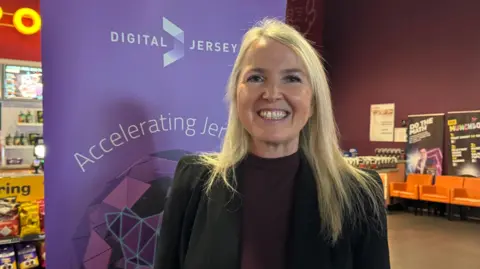


Digital Jersey Review Highlights AI Integration for Economic Growth The island’s Digital Jersey agency released its annual review on February 5, 2026, focusing on how artificial‑intelligence tools can be scaled across local businesses [1]. The report argues that AI adoption can increase productivity in finance, agriculture, tourism, and medicine without requiring additional residents [1]. It positions AI as a strategic lever to sustain Jersey’s economic expansion amid limited land and housing capacity [1].
CEO Tony Moretta Proposes Synthetic Workers to Avoid Housing Crisis Tony Moretta, CEO of Digital Jersey, suggested deploying “synthetic workers”—AI agents that perform routine tasks—to offset the need for 14,000 new financial‑services staff [1]. He warned that adding that many workers would strain housing, schools, and health services, creating a “housing strain” the island cannot accommodate [1]. Moretta framed the proposal as a way to boost output while keeping the resident population stable [1].
Upskilling Emphasized as Humans Remain Essential alongside AI Moretta cautioned that job losses could occur only if the current workforce lacks AI competencies [1]. The review stresses that employees must learn to operate, supervise, and collaborate with AI rather than be replaced by it [1]. Upskilling programs are presented as a prerequisite for successful AI integration and long‑term employment security [1].
AI Trainer Katie King Compares Tools to Modern Electricity Katie King, an AI trainer cited in the review, likened ChatGPT‑style assistants such as Co‑pilot to the advent of electricity [1]. She argued that these tools can act as “synthetic avatars,” augmenting human productivity across sectors [1]. King’s analogy underscores the potential for AI to become a foundational utility in the island’s economy [1].
Local Stakeholders Voice Copyright and Over‑Reliance Concerns Photographer Elizabeth Bosch raised copyright issues, noting that AI‑generated images blur the line between original and synthetic content [1]. Harry Brown described heavy reliance on AI as “lazy” and “scary,” reflecting broader apprehension about over‑dependence [1]. These reactions highlight a tension between enthusiasm for AI‑driven growth and caution over ethical and cultural impacts [1].
Timeline
2020 – PwC Channel Islands estimates roughly 10,800 Guernsey jobs could be at risk from automation between 2020‑2035, underscoring the scale of potential disruption and framing current policy debates on AI’s employment impact [2].
Jan 16, 2026 – The Isle of Man launches a National AI Office, appointing three Digital Isle of Man staff as focal points and allocating £1 million from the Economic Strategy Fund for training, public literacy, and industry engagement, marking a coordinated governmental push for responsible AI adoption [3].
Jan 16, 2026 – Chief Executive Wraxall stresses the office will ensure people use AI responsibly and ethically, while Enterprise Minister Johnston says AI will reshape business staffing but expects redeployment rather than net job loss [3].
Jan 16, 2026 – Chief Minister Cannan frames AI as a transformative, collaborative force for the economy and society, pledging the office will foster public‑private cooperation to capture AI benefits [3].
Jan 21, 2026 – Deputy Tom Rylatt tables an amendment to Guernsey’s Policy and Resources Committee work plan to create a dedicated AI office, with proposals to be examined before the end of 2026 and modeled on the Isle of Man’s recent launch, signalling a formal governmental response to AI opportunities and risks [2].
Jan 21, 2026 – Bank Aston CEO Paul Gorman announces a pre‑launch AI‑enhanced workflow staffed by about 10 employees, positioning AI as a tool to augment operations rather than replace staff [2].
Jan 21, 2026 – PwC Guernsey director Callum McCutcheon predicts new AI‑driven roles will emerge, noting entry‑level positions have not yet declined and emphasizing the need for workforce adaptation [2].
Jan 21, 2026 – Guernsey Institute founder Des Gorman reports development of an AI‑focused syllabus to ready students for future workplaces, acknowledging rapid AI change outpaces current education support [2].
Feb 5, 2026 – Digital Jersey’s annual review spotlights AI as a solution to Jersey’s growth dilemma; CEO Tony Moretta proposes “synthetic workers” – AI agents that boost economic output without adding 14,000 residents, thereby averting housing and service pressures [1].
Feb 5, 2026 – Moretta warns upskilling is essential, urging humans to learn to operate and supervise AI rather than be replaced, highlighting policy focus on AI literacy [1].
Feb 5, 2026 – AI trainer Katie King likens ChatGPT‑style assistants to modern electricity, describing them as “synthetic avatars” that augment productivity across finance, agriculture, tourism, and medicine [1].
Feb 5, 2026 – Photographer Elizabeth Bosch raises copyright concerns over AI‑generated images, while commentator Harry Brown calls reliance on AI “lazy” and “scary,” reflecting community debate over ethical and cultural implications [1].
All related articles (3 articles)
External resources (7 links)
- https://twitter.com/BBCIsleofMan (cited 1 times)
- https://twitter.com/bbcguernsey (cited 1 times)
- https://twitter.com/bbcjersey (cited 1 times)
- https://www.facebook.com/bbcguernsey (cited 1 times)
- https://www.facebook.com/bbcjersey (cited 1 times)
- https://www.instagram.com/bbcguernsey/ (cited 1 times)
- https://en-gb.facebook.com/bbcisleofman/ (cited 1 times)