Trump Secures Bipartisan Funding Deal, Extends DHS Funding, Files $10 Billion Lawsuit
Updated (2 articles)

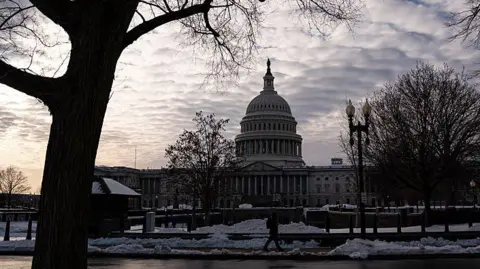
Bipartisan funding package passed Senate, DHS bill removed On January 30, 2026 the Senate approved a five‑bill appropriations package that funds Defense, Health, Treasury, courts and other agencies while stripping out the Department of Homeland Security component, which will continue at current levels for a two‑week stopgap [1][2]. The move enables Congress to avoid a full shutdown, though the package still requires 60‑vote Senate approval and a House vote, with Speaker Mike Johnson yet to schedule a return from recess [2]. President Trump announced the deal on social media, urging a “very much needed Bipartisan ‘YES’ Vote” [1].
Appropriations extend major agencies through September 2026 The agreement funds the Defense Department, Health Department, Treasury and the federal court system through September 30, 2026, part of the original $1.2 trillion spending plan [1]. By keeping these agencies funded, most federal services remain operational despite the pending DHS negotiations [1][2]. The Senate’s removal of the DHS bill was intended to allow continued debate on immigration and ICE reforms while preserving broader government operations [2].
Trump sues IRS and Treasury for alleged $10 billion tax‑return leak In a separate action on the same day, President Trump filed a lawsuit claiming the Internal Revenue Service and Treasury Department unlawfully disclosed his tax returns from his first administration, seeking at least $10 billion in damages [2]. The filing adds legal pressure on the agencies amid the broader funding negotiations. No other outlet reported this lawsuit, making it a unique element of the CNN coverage [2].
Executive order creates Great American Recovery Initiative Also on January 30, Trump signed an executive order establishing a nationwide drug‑addiction program called the Great American Recovery Initiative, mobilizing federal, state, local and private resources to combat the overdose crisis [2]. The order cites CDC data showing over 70,000 overdose deaths in the past year and SAMHSA figures that 17 % of Americans aged 12 and older have a substance‑use disorder. This initiative was not mentioned in the BBC report, highlighting a divergence in coverage focus [2].
Fed chair nominee to be announced Friday; Trump claims Russian pause Trump announced he will reveal his nominee for Federal Reserve chair on Friday, with former Fed governor Kevin Warsh identified as a leading finalist [2]. During a Cabinet meeting, Trump asserted he personally asked President Vladimir Putin to pause attacks on Kyiv for a week and that Putin agreed, a claim not addressed by the BBC article [2]. These statements add further political dimensions to the funding saga.
Sources
-
1.
BBC: Trump Says Congress Reaches Bipartisan Funding Deal, DHS Bill Removed: Details the five‑bill package, two‑week DHS extension, Senator Graham’s opposition, and DHS‑related controversies such as Don Lemon’s arrest and Minneapolis shootings .
-
2.
CNN: Bipartisan Funding Deal Reached Amid Shutdown Threat, Trump Lawsuit, and New Initiatives: Highlights the same funding deal, emphasizes the pending Senate and House votes, reports Trump’s $10 billion lawsuit, the Great American Recovery Initiative, Fed chair nominee prospects, and Trump’s claim about a Russian pause on Kyiv attacks .
Timeline
Jan 29, 2026 – President Donald Trump posts on social media that Republicans and Democrats have reached a bipartisan funding agreement covering five spending bills, urging a “very much needed Bipartisan ‘YES’ Vote” and noting that the deal funds Defense, Health, Treasury and courts through Sep 30 2026 [1].
Jan 29, 2026 – Senate Democrats and Republicans approve a package of five appropriations bills, stripping out the Department of Homeland Security component and extending DHS funding at current levels for two weeks while negotiations continue [1].
Jan 29, 2026 – Senator Lindsey Graham calls the package “a bad deal,” refuses to lift his hold until legislation criminalizes certain conduct and targets sanctuary cities, and cites the repeal of the law that compensated senators for seized phone records during the Jan 6 investigation [1].
Jan 29, 2026 – Federal investigators arrest former CNN host Don Lemon for a Minnesota church protest, and ICE and Border Patrol agents kill Renee Good and Alex Pretti in Minneapolis, intensifying Democratic calls to cut DHS funding and impose warrant requirements on federal agents [1].
Jan 29, 2026 – Lawmakers reach a bipartisan funding deal that separates DHS funding from the larger spending package and provides a two‑week stopgap, aiming to avert a government shutdown while the House remains on recess [2].
Jan 29, 2026 – President Trump files a lawsuit against the IRS and Treasury seeking at least $10 billion in damages, alleging the agencies unlawfully leaked his tax returns from his first administration [2].
Jan 29, 2026 – Trump signs an executive order creating the Great American Recovery Initiative, a nationwide effort to mobilize resources against drug addiction; CDC data show over 70,000 overdose deaths in the past year and SAMHSA reports a 17 % prevalence of substance‑use disorder among Americans aged 12 and older [2].
Jan 29, 2026 – In a Cabinet meeting, Trump claims he personally asked President Vladimir Putin to pause attacks on Kyiv for a week and that “Putin agreed,” after recent Russian strikes on Ukrainian infrastructure [2].
Jan 30, 2026 – The president announces he will reveal his nominee for Federal Reserve chair on Friday, with former Fed governor Kevin Warsh reported as a leading finalist and present at the White House on Thursday [2].
Jan 31, 2026 (expected) – Speaker Mike Johnson is expected to reconvene the House after its recess, allowing the Senate‑passed five‑bill package to receive final approval and potentially avert a full shutdown over the weekend [1][2].
2023 – The previous 43‑day federal shutdown leaves 1.4 million workers unpaid, providing a recent historical backdrop for concerns about another shutdown’s economic impact [1].