Rubio to Meet Netanyahu Feb 28 as US Prepares Full Military Force for Iran by Mid‑March
Updated (2 articles)
-
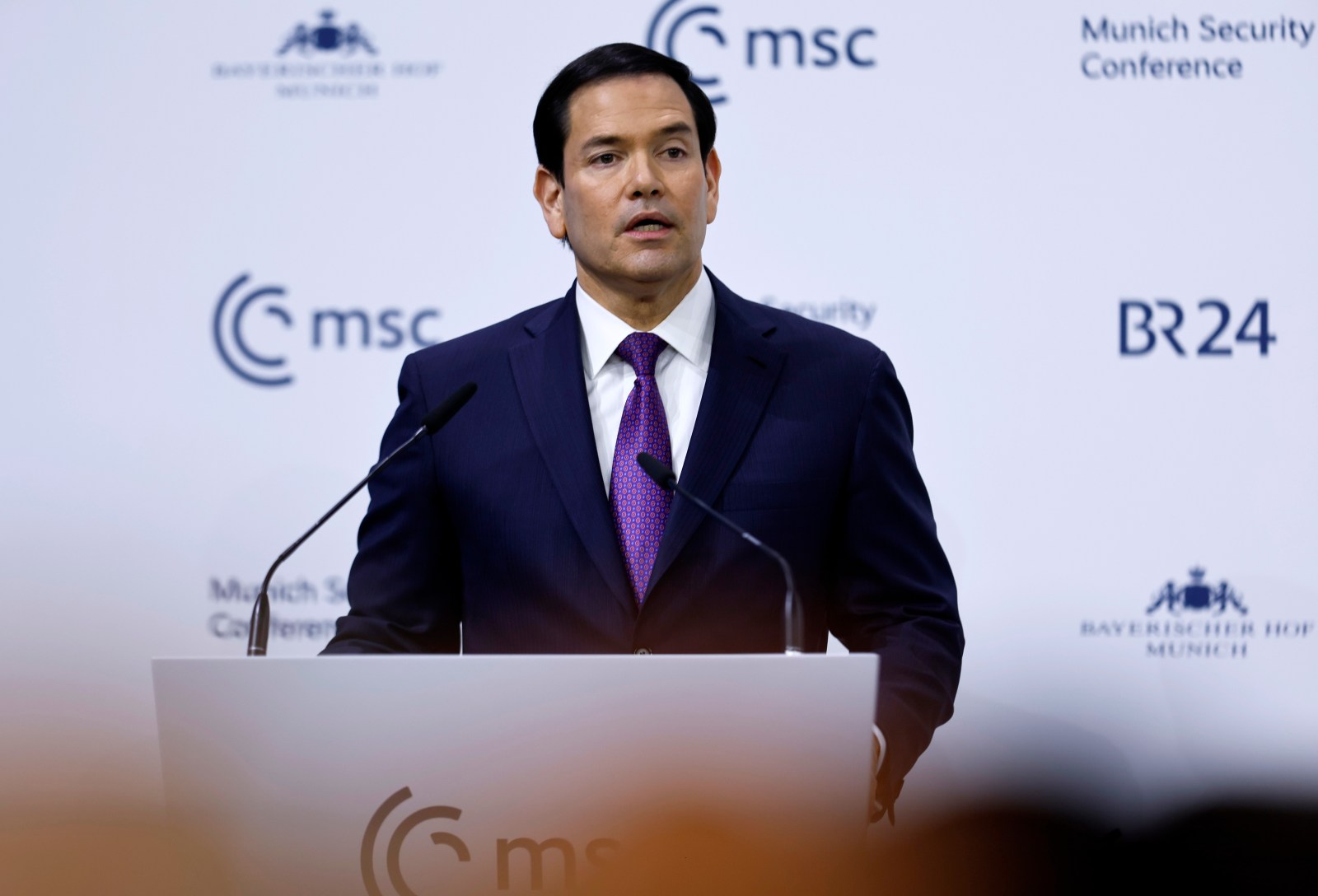 Image: NewsweekMUNICH, GERMANY – FEBRUARY 14: U.S. Secretary of State Marco Rubio delivers a key note speech at the 62nd Munich Security Conference on February 14, 2026 in Munich, Germany. The conference, which brings together government leaders, security experts and defence ministers, is taking place at a time when the traditional western political and military alliance is facing rupture due to the policies of U.S. President Donald Trump. (Photo by Johannes Simon/Getty Images) Source Full size
 -
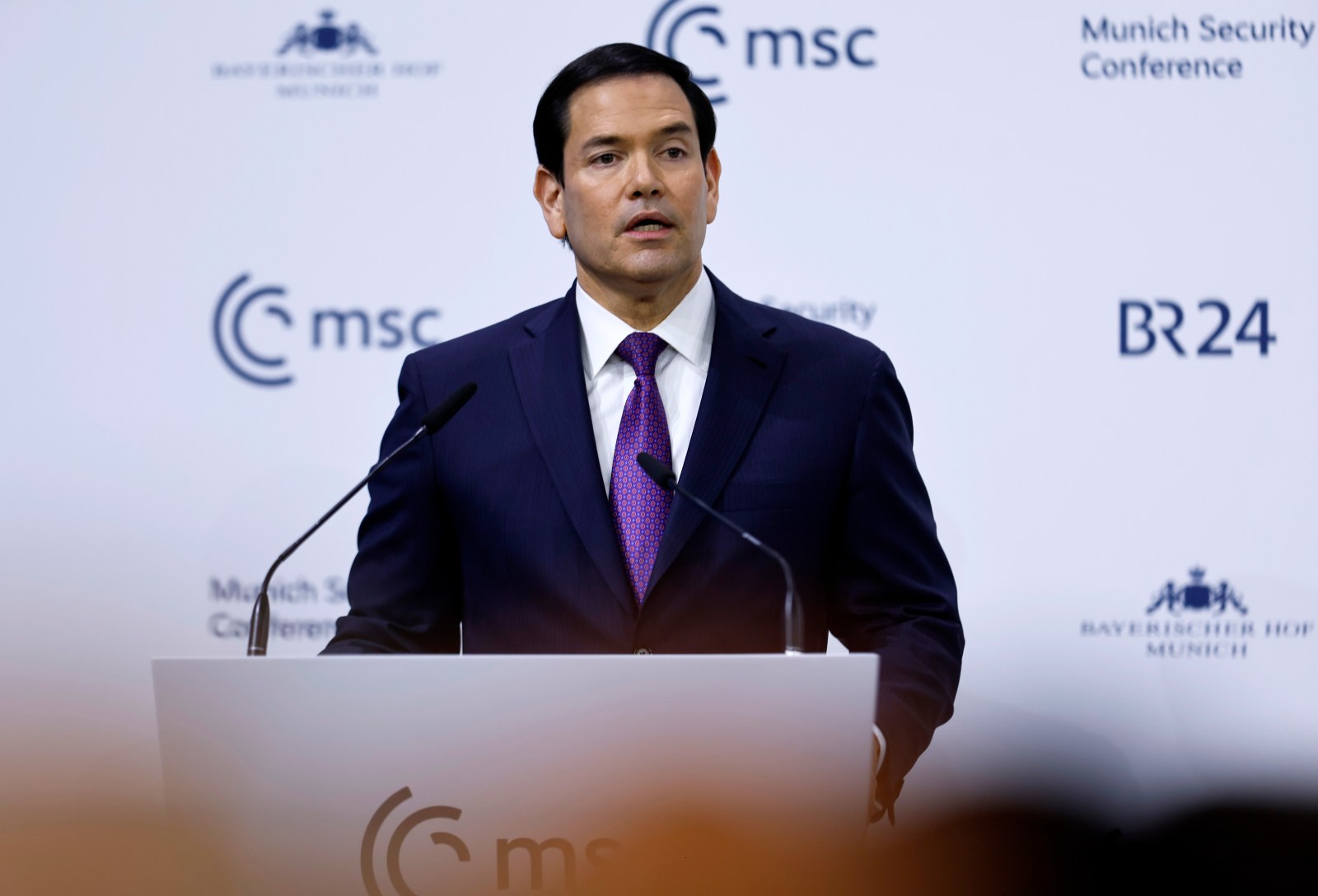 Image: NewsweekMUNICH, GERMANY – FEBRUARY 14: U.S. Secretary of State Marco Rubio delivers a key note speech at the 62nd Munich Security Conference on February 14, 2026 in Munich, Germany. The conference, which brings together government leaders, security experts and defence ministers, is taking place at a time when the traditional western political and military alliance is facing rupture due to the policies of U.S. President Donald Trump. (Photo by Johannes Simon/Getty Images) Source Full size
Rubio’s Upcoming Israel Visit and Briefing Secretary of State Marco Rubio will travel to Israel to meet Prime Minister Benjamin Netanyahu on Feb. 28, where he will update the Israeli leader on the latest U.S.–Iran nuclear negotiations and coordinate policy responses [1]. The briefing follows two rounds of indirect talks between Washington and Tehran that concluded earlier this month [1]. Rubio’s trip underscores the administration’s effort to align allies before the scheduled Geneva conference [2].
Progress in Indirect US‑Iran Negotiations The United States and Iran have completed two rounds of indirect discussions, after which Iran agreed to draft a written proposal addressing U.S. concerns raised in Geneva [1]. Iranian Deputy Foreign Minister Majid Takht‑Ravanchi signaled willingness to discuss diluting 60 % enriched uranium in exchange for sanctions relief [2]. Both sides expressed cautious optimism, with Iranian Foreign Minister Abbas Araghchi noting a “new window” for agreement and U.S. Vice President JD Vance highlighting progress while warning that former President Trump’s red lines remain unaddressed [1].
Escalating Military Posture in the Region The Trump administration has moved the nuclear‑powered aircraft carrier USS Gerald R. Ford from the Caribbean to join USS Abraham Lincoln in the Middle East, adding a second carrier and dozens of warplanes to the theater [1][2]. Senior national‑security officials briefed that “full forces” needed for any potential military action against Iran should be ready by mid‑March [1]. This buildup occurs alongside statements that the U.S. would back Israeli strikes on Iran’s ballistic‑missile program [2].
Iranian Military Activities and IAEA Demands Iran’s Revolutionary Guard conducted drills in the Strait of Hormuz, heightening tensions over a key oil‑shipping chokepoint [2]. The International Atomic Energy Agency has requested data on 400 kg of 60 % enriched uranium last inspected before June strikes and seeks access to the Natanz, Fordow and Isfahan sites [2]. These moves reflect Tehran’s attempt to demonstrate resolve while facing increased scrutiny from the global nuclear watchdog.
Political Rhetoric from Trump and US Leadership President Donald Trump told reporters that a regime change in Iran “seems like the best thing that could happen,” reiterating his long‑standing criticism of Tehran’s leadership [1]. He also warned that the United States is prepared for military options if diplomatic efforts falter [1]. Meanwhile, Vice President Vance cautioned that Iran has not yet acknowledged the administration’s red‑line demands, underscoring the fragile diplomatic environment [1].
Sources
-
1.
AP: Rubio to Brief Netanyahu on US‑Iran Nuclear Talks Amid Rising Military Posture: Details Rubio’s Feb. 28 Israel visit, two rounds of indirect talks, expanded carrier presence, and Trump’s regime‑change remarks, emphasizing the U.S. military’s readiness by mid‑March .
-
2.
Newsweek: Rubio Warns Iran “Difficult” Ahead of Geneva Talks: Highlights Rubio’s criticism of Iranian clerics, Iran’s offer to dilute 60 % enriched uranium, second carrier deployment, Revolutionary Guard drills in Hormuz, and IAEA data requests, focusing on diplomatic hurdles and regional security .
Related Tickers
Timeline
1979 – Islamic Revolution topples the Shah, launching 47 years of U.S.–Iran negotiations that President Trump later describes as “47 years of negotiations” [2].
June 2025 – U.S. airstrikes hit Iranian nuclear facilities; 400 kg of 60 % enriched uranium remains unaccounted for, prompting the IAEA to request site access and material data [1].
Feb 16, 2026 – Secretary of State Marco Rubio tells reporters that “radical Shia clerics” make theological decisions that make real deals with Tehran “very difficult,” highlighting an ideological barrier to a nuclear pact [1].
Feb 16, 2026 – Deputy Foreign Minister Majid Takht‑Ravanchi offers to discuss diluting Iran’s 60 % enriched uranium in exchange for U.S. sanctions relief, signaling a possible concession on the nuclear front [1].
Feb 16, 2026 – Iran’s Revolutionary Guard conducts live‑fire drills in the Strait of Hormuz, heightening tension over a key oil chokepoint and demonstrating Tehran’s willingness to pressure shipping lanes [1].
Feb 16, 2026 – The United States sails the nuclear‑powered carrier USS Gerald R. Ford from the Caribbean to join USS Abraham Lincoln in the Middle East, a “in case we don’t make a deal” move announced by President Trump [1].
Feb 16, 2026 – Israeli Prime Minister Benjamin Netanyahu says Iran must dismantle its enrichment infrastructure, while President Trump tells him the United States will back any Israeli strike on Iran’s ballistic‑missile program [1].
Feb 19, 2026 – Secretary of State Marco Rubio schedules a trip to Israel for Feb 28 to brief Netanyahu on the latest U.S.–Iran nuclear talks, indicating close U.S.–Israeli coordination on the diplomatic track [2].
Feb 19, 2026 – Two rounds of indirect U.S.–Iran talks conclude, with Iran preparing a written proposal that addresses U.S. concerns raised at the Geneva conference, showing progress toward a possible agreement [2].
Feb 19, 2026 – Iranian Foreign Minister Abbas Araghchi declares a “new window has opened” for an agreement, while U.S. Vice President JD Vance notes progress but warns that President Trump’s red‑line demands remain unmet [2].
Feb 19, 2026 – Senior national‑security officials report that “full forces” needed for any military action against Iran will be ready by mid‑March, signaling a parallel escalation in military preparedness [2].
Feb 19, 2026 – President Trump remarks that a regime change in Iran “seems like the best thing that could happen,” reflecting a hard‑line stance despite ongoing diplomatic talks [2].
Feb 28, 2026 – Rubio meets Netanyahu in Israel to update the Israeli premier on the U.S.–Iran nuclear negotiations, reinforcing bilateral security cooperation ahead of potential regional actions [2].
Mid‑March 2026 – The United States positions its full complement of carrier‑based and support aircraft, along with additional warships, to be on standby for possible strikes, completing the military buildup announced in February [2].