India Halts Russian Oil Imports, Cuts U.S. Tariffs and Promises $500 Billion Investment
Updated (3 articles)
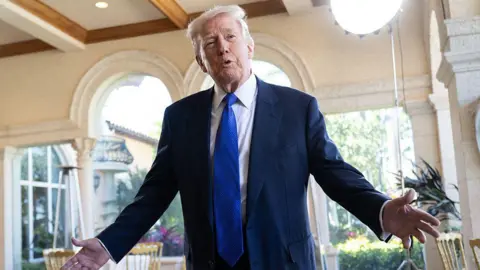
Feb 2‑3 2026 US‑India Trade Deal Rewrites Tariff Landscape On February 2‑3 2026 President Donald Trump and Prime Minister Narendra Modi announced a bilateral trade agreement that ends India’s purchases of Russian crude and commits India to buy more oil from the United States, with possible supplemental imports from Venezuela [1][2][3]. The announcement was made via Trump’s Truth Social post and Modi’s X message, and White House Press Secretary Karoline Leavitt confirmed the details on February 3 2026 [1][2]. Both leaders described the pact as a personal‑rapport‑driven win for jobs and global stability.
U.S. Tariff on Indian Goods Slashed to 18 Percent The United States reduced its tariff on “Made in India” goods from a peak of 50 percent (including a 25 percent penalty linked to Russian oil purchases) to a uniform 18 percent rate, as outlined in the Trump announcement and the BBC report [2][3]. The new 18 percent levy replaces the August 2025 punitive tariff and applies across sectors such as energy, technology and agriculture [2][3]. Small‑business groups in the United States warned that the 18 percent rate remains six times higher than the pre‑Trump average of 2.5 percent [2].
India Eliminates Tariffs on U.S. Products, Targets Zero Barriers India agreed to eliminate all tariffs and non‑tariff barriers on U.S. imports, moving toward a zero‑percent level that mirrors the reciprocal reduction promised by Trump [1][3]. This reciprocal move contrasts with the 18 percent U.S. tariff on Indian goods, creating an asymmetrical but mutually beneficial tariff structure [1][2][3]. The Hindu’s February 4 report notes that the U.S. previously imposed a 50 percent overall tariff on India, which the new deal fully reverses [1].
$500 Billion Investment Pledge Spans Energy, Transport, Agriculture Modi pledged to channel $500 billion into U.S. markets, covering transportation, energy, agricultural and coal products, and potentially expanding to critical minerals [1][2]. The investment commitment was highlighted by Leavitt as a cornerstone of the agreement and is expected to generate jobs on both sides of the Pacific [1]. The pledge also aligns with Jaishankar’s February 2‑4 Washington visit for a Critical Minerals Ministerial, underscoring supply‑chain cooperation beyond tariffs [3].
Political Reactions Highlight Opposition and Parallel Trade Initiatives India’s opposition party criticised the deal as a capitulation, with Congress official Jairam Ramesh calling it a surrender of strategic interests [3]. Meanwhile, the European Union signed its own free‑trade pact with India a week earlier, a deal the EU calls “the mother of all deals” and projected to double EU exports to India by 2032 [2]. U.S. small‑business coalition “We Pay the Tariffs” labeled the 18 percent rate a tax hike, reflecting domestic dissent despite the bilateral leadership’s optimism [2].
Sources
-
1.
The Hindu: India to End Russian Oil Purchases and Commit $500 Billion to U.S. Investment, Trump Announces: details the February 4 2026 announcement that India will stop buying Russian oil, invest $500 billion in the United States, and cut Indian tariffs on U.S. goods to zero, while noting personal rapport between Trump and Modi .
-
2.
BBC: US‑India Trade Deal Cuts Tariffs to 18% After India Halts Russian Oil Purchases: reports the February 2 2026 deal lowering U.S. tariffs on Indian goods to 18 percent, ending Russian oil imports, and highlighting the simultaneous EU‑India free‑trade pact and small‑business criticism .
-
3.
The Hindu: Modi and Trump announce 18% U.S. tariff on “Made in India” goods: focuses on Modi’s February 2 2026 statement about the 18 percent U.S. tariff, the lack of official Indian foreign‑ministry comment, Jaishankar’s Washington visit, and domestic political backlash .
Timeline
Aug 2025 – The United States imposes a 50 % tariff on Indian goods, including a 25 % penalty tied to India’s purchases of Russian oil, sharply reducing Indian exports to the U.S. [1][3]
Early Jan 2026 – The European Union and India sign a free‑trade agreement projected to double EU exports to India by 2032, which EU Commission President Ursula von der Leyen dubs “the mother of all deals.” [1]
Feb 2, 2026 – External Affairs Minister S. Jaishankar lands in Washington for a three‑day visit that includes the Critical Minerals Ministerial chaired by Secretary of State Marco Rubio, where participants aim to draft a non‑binding document on supply‑chain resilience. [3]
Feb 2, 2026 – Prime Minister Narendra Modi announces on X that the United States will apply an 18 % tariff to “Made in India” products, replacing the 50 % penalty tariffs imposed in August 2025, and thanks President Trump on behalf of 1.4 billion Indians. [3]
Feb 2, 2026 – President Donald Trump posts on Truth Social that the U.S. tariff on Indian imports drops from 25 % to 18 %, India will eliminate all tariffs and non‑tariff barriers on U.S. goods, cease Russian oil purchases, boost U.S. oil imports (including possible Venezuelan supplies), and commit to $500 billion of U.S. imports. [1][3]
Feb 2, 2026 – A coalition of 800 U.S. small‑business owners warns that the new 18 % tariff remains six times higher than the pre‑Trump average of 2.5 %, calling the deal a “tax hike.” [1]
Feb 2, 2026 – Congress party general secretary Jairam Ramesh criticizes Modi’s concession, saying “It appears Mr. Modi has capitulated finally,” reflecting domestic political opposition. [3]
Feb 3, 2026 – White House Press Secretary Karoline Leavitt confirms India’s commitment to stop buying Russian oil, shift to U.S. supplies (and possibly Venezuela), and invest $500 billion in the United States across transportation, energy, and agriculture. [2]
Feb 3, 2026 – Leavitt notes that the U.S. tariff on Indian goods falls to 18 % while U.S. exports to India enjoy a zero‑percent tariff, and India pledges to remove all tariffs and non‑tariff barriers on U.S. products, completing the reciprocal reduction. [2]
Feb 3, 2026 – President Trump and Prime Minister Modi describe their partnership as “great” and “getting things done,” emphasizing that the agreement will create jobs, boost businesses, and enhance global stability. [2]
Feb 4, 2026 (expected) – The Critical Minerals Ministerial is slated to sign a non‑binding document on supply‑chain cooperation and clean‑energy transition before Jaishankar departs Washington, cementing the U.S.–India strategic partnership. [3]