Trump Signals Possible Iran Strike as US Carrier Group Deploys to Middle East
Updated (4 articles)
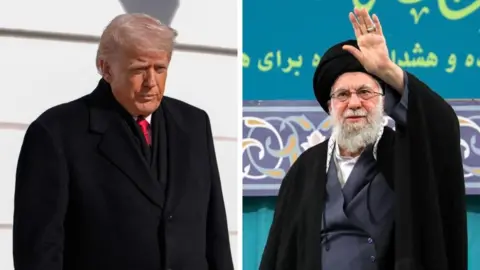
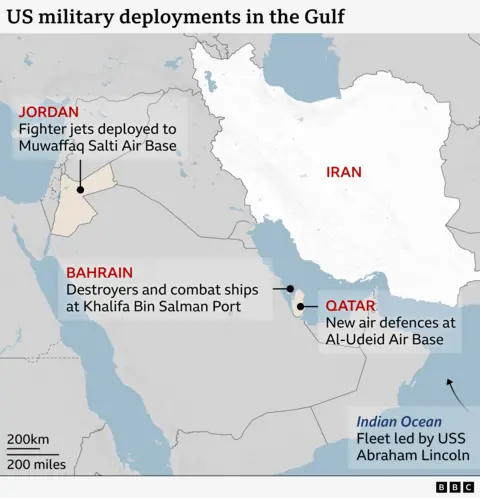
US carrier strike group arrives amid Trump’s warning of attack The United States dispatched a carrier strike group to the Middle East on Jan. 29, 2026, as President Donald Trump publicly hinted at a possible strike on Iran [1]. The move follows recent Israeli and American attacks on Iranian targets, raising the risk of a broader conflict [1]. Analysts note the deployment signals readiness for limited precision strikes against IRGC and nuclear sites [2].
Iran’s extensive missile and drone arsenal threatens regional bases Tehran retains thousands of short‑range ballistic missiles and one‑way Shahed suicide drones capable of reaching eight or nine U.S. facilities across the region [1]. More than 20 missile types can strike as far as southern Europe, while the drones have proven destructive in Ukraine [1]. Iran has warned it could launch concealed missiles and drones from caves or mountainous sites if attacked [2].
Proxy militias pledge direct retaliation alongside Tehran Iraqi groups such as Kataeb Hezbollah and Harakat al‑Nujaba, plus Lebanon’s Hezbollah, announced they will defend Iran in the event of a U.S. strike [1]. Their commanders called for an “all‑out war” and mobilized loyalists worldwide [1]. This proxy threat aligns with Iran’s own vow to respond, citing a “finger on the trigger” [2].
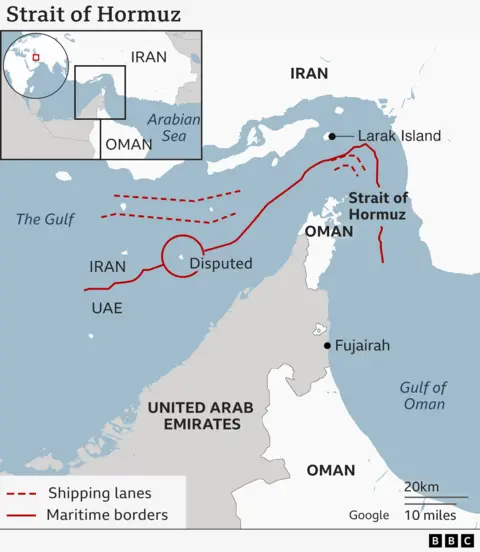
Potential closure of the Strait of Hormuz could shock global markets Iran controls the Hormuz waterway, through which roughly 20 % of LNG and 20‑25 % of oil flow annually [2]. Tehran has warned it could mine or shut the strait, a tactic that historically spiked oil prices and could trigger a worldwide economic downturn [1][2]. Energy strategists warn even partial disruptions would strain supply chains and raise prices sharply [1].
Analysts predict limited regime change and heightened humanitarian risk While some forecasts envision a toppled regime replaced by democracy, experts consider it more likely that an IRGC‑led military government would survive, curtailing proxy support and nuclear ambitions [2]. A U.S. strike could also ignite ethnic tensions among Kurds, Baluchis and other minorities, potentially sparking civil war and a refugee crisis [2]. The combined military and economic pressures raise the prospect of a prolonged regional humanitarian fallout [2].
Sources
-
1.
CNN: Iran’s Options to Respond if Trump Orders a Strike: Details the carrier group arrival, Iran’s missile/drone stockpiles, proxy militia pledges, and Hormuz closure risks, emphasizing Tehran’s capacity to disrupt global trade .
-
2.
BBC: Potential Outcomes if the U.S. Strikes Iran: Focuses on limited precision U.S. strikes, regime‑change scenarios, Iran’s retaliation threats, regional target possibilities, Hormuz market impact, and civil‑war humanitarian concerns .
Timeline
1980s – Iran mines the Persian Gulf during the “Tanker War,” demonstrating an early capability to disrupt regional shipping and set a precedent for maritime threats [2].
1988 – Iran nearly sinks the USS Samuel B. Roberts, showing its willingness to target U.S. warships in the Gulf [2].
2019 – Iran is implicated in Gulf of Oman tanker strikes, reinforcing its capacity to threaten commercial vessels and global energy flows [2].
June 23, 2025 – Iran attacks Al Udeid Air Base in Qatar, prompting U.S. personnel to evacuate and highlighting escalation after earlier U.S. strikes on Iranian nuclear sites [4].
2025 (last year) – U.S. B‑2 bombers drop 14 large bombs on two Iranian nuclear installations without U.S. casualties; the Trump administration touts the operation as a major success and uses it to justify potential follow‑on action [3].
Early 2026 – Hundreds of thousands of Iranians protest against Tehran’s hard‑line regime, creating domestic pressure that could influence U.S. decision‑making [3].
Jan 14‑15, 2026 – Analysts map potential U.S. targets, noting Tomahawk missiles, JASSMs and drones could strike IRGC, Basij and nuclear sites, but stress the need to avoid populated areas to prevent civilian casualties [3].
Jan 15, 2026 – Rosemary Kelanic warns that Tehran faces an existential threat and “the situation is very different from seven months ago,” suggesting a U.S. attack could provoke a far more aggressive Iranian response [4].
Jan 15, 2026 – Experts say Iran could retaliate via proxy militias in Iraq and Syria, using indirect attacks on U.S. bases as a “last‑resort” escalation path [4].
Jan 15, 2026 – Analysts highlight that disrupting the Strait of Hormuz would affect roughly 20 % of global oil and gas trade, but Iran would likely use it only as a final lever because it also harms its own exports [4].
Jan 29, 2026 – The United States appears poised to launch limited precision strikes within days, targeting IRGC and Basij bases, ballistic‑missile launch sites and nuclear facilities in a highly focused operation rather than a full‑scale invasion [1].
Jan 29, 2026 – Iran warns “finger is on the trigger” and threatens to launch concealed ballistic missiles and drones from caves, underground sites or remote mountainsides if the U.S. attacks [1].
Jan 29, 2026 – Senator Marco Rubio tells CNN that 30,000‑40,000 U.S. troops at eight or nine regional sites are within range of Iranian UAVs and short‑range missiles, underscoring the personnel risk [2].
Jan 29, 2026 – Proxy groups, including Kataeb Hezbollah’s Abu Hussein al‑Hamidawi, pledge “all‑out war” in defense of Iran, signaling coordinated militia retaliation [2].
Jan 29, 2026 – Analysts warn a U.S. strike could trigger Iranian attacks on U.S. bases in Bahrain and Qatar and on critical infrastructure in Jordan or Israel using swarm drones and fast torpedo boats [1].
Jan 29, 2026 – Energy strategist Umud Shokri warns that any partial closure of the Strait of Hormuz would spike oil prices and could spark a worldwide economic downturn [2].
Jan 29, 2026 and onward – The U.S. plans limited precision strikes within days, while Iran threatens to mine the Strait of Hormuz and launch missile attacks, creating a high risk of rapid escalation and global market disruption [1][2].