Study Shows Blood Falls Brine Pulse Caused 0.6‑Inch Glacier Surface Drop
Updated (2 articles)
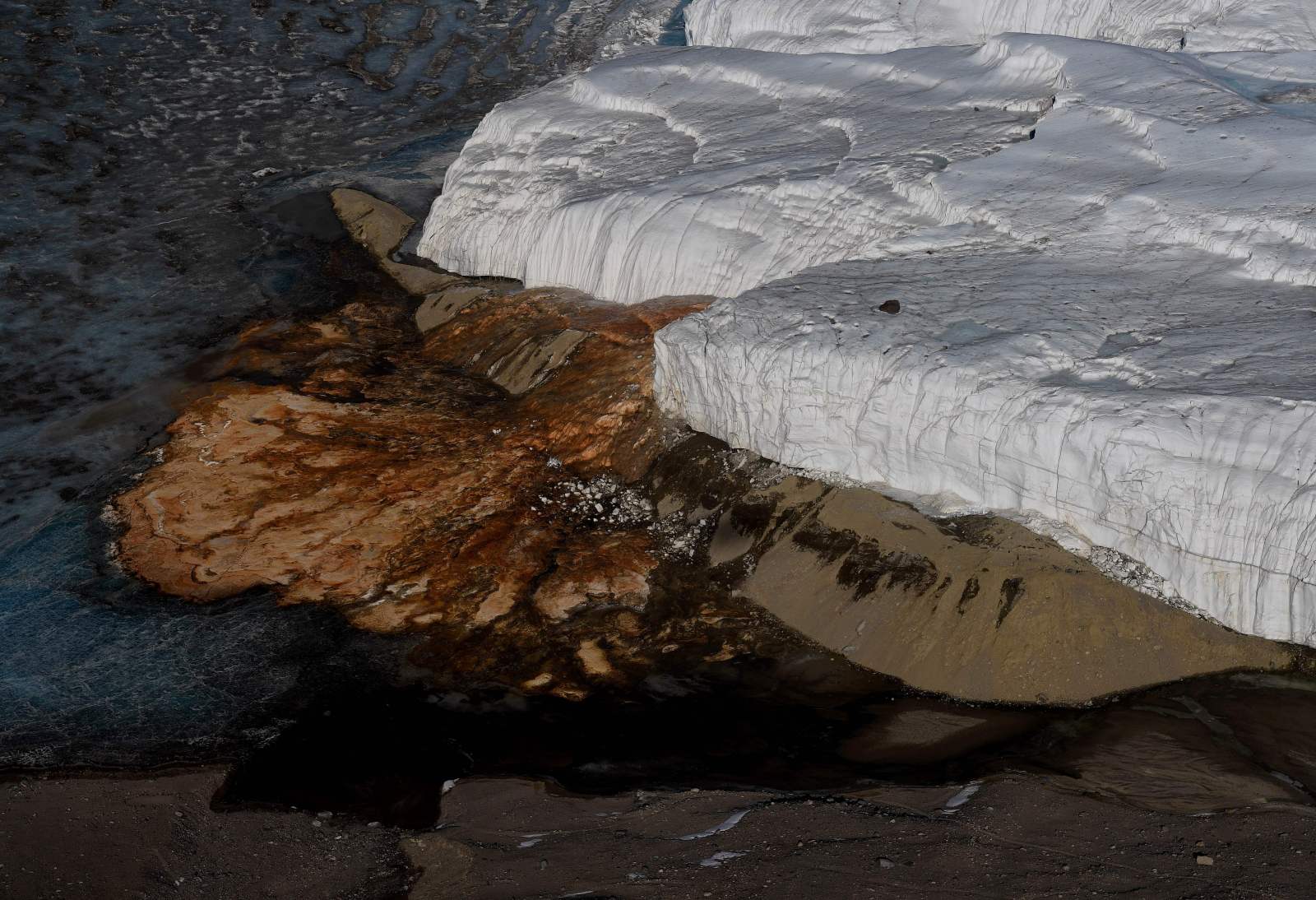
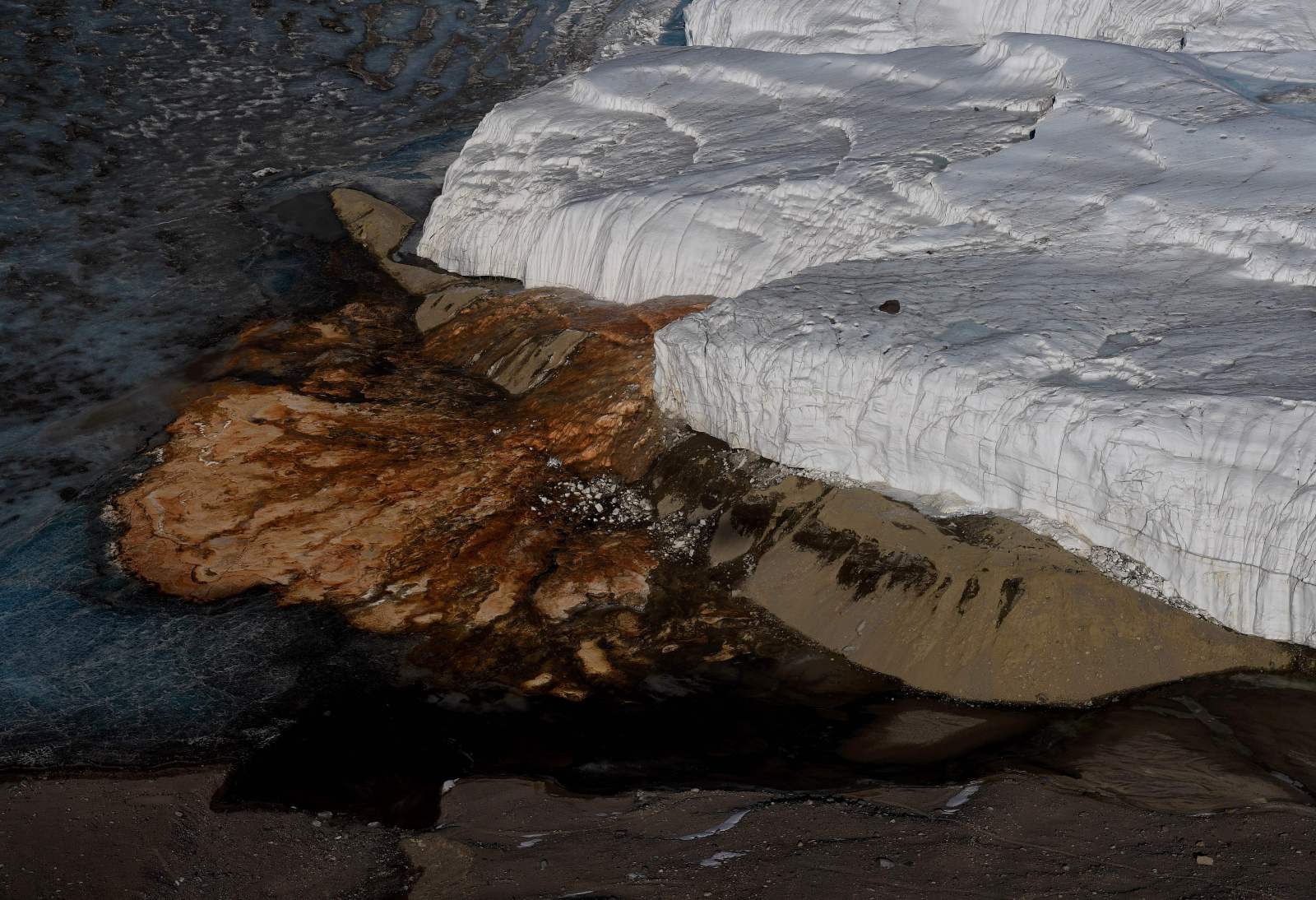
Historical Discovery and Ongoing Mystery Blood Falls was first noted in 1911 by geologist Thomas Griffith Taylor during the Terra Nova Expedition, marking the red‑stained outflow at the nose of Taylor Glacier in the McMurdo Dry Valleys; its origin has remained a century‑old puzzle until now [1].
Mechanism of Iron‑Rich Brine Expulsion Researchers identified the flow as iron‑rich brine forced upward by the weight and slow movement of overlying ice, originating from a subglacial reservoir where it stays liquid under pressure and oxidizes at the surface, running toward the West Lobe of Lake Bonney [1].
Surface Drop Correlated With Brine Pulse Lead author Peter T. Doran matched a measurable 0.6‑inch surface lowering to the timing of the brine discharge; over roughly one month the glacier’s forward velocity fell about ten percent, indicating reduced subglacial water pressure directly impacts ice dynamics [1].
2018 Observations Capture Event Onset September 2018 observations recorded the pulse with synchronized GPS tracking, time‑lapse photography, and lake‑thermistor data; fresh red staining began on 19 Sept 2018 alongside a temperature dip, providing high‑resolution insight into the discharge’s progression [1].
Call for Expanded High‑Frequency Monitoring The authors urge broader, high‑frequency glacial and limnological monitoring across the Dry Valleys to build a robust dataset capable of detecting future changes in event frequency and magnitude driven by long‑term environmental shifts [1].
Related Tickers
Timeline
2 – 5 million years ago – Dense, iron‑rich lithospheric material detaches from the mantle and sinks, dragging the overlying Uinta Mountains down and creating a low‑elevation corridor that later guides the Green River through a 2,296‑ft‑deep canyon; researchers describe this “lithospheric drip” as the mechanism behind the river’s anomalous uphill path [2].
c. 1870 – present – Scientists puzzle over the Green River’s “uphill” canyon for more than 150 years, a mystery that persists until the 2026 lithospheric‑drip model provides a definitive explanation [2].
1911 – Geologist Thomas Griffith Taylor first notes the red‑stained outflow later named Blood Falls at the nose of Taylor Glacier during the Terra Nova Expedition, launching a century‑long investigation into its origin [1].
Sept 19 – Oct 2018 – GPS, time‑lapse cameras and a lake thermistor capture the onset of a brine pulse at Blood Falls; a “serendipitous alignment” of surface GPS tracking, footage of fresh staining and a temperature dip documents a 0.6‑inch surface drop and ~10 % slowdown in glacier motion over about one month [1].
Feb 4 2026 – The University of Glasgow team led by Adam Smith publishes “A Lithospheric Drip Triggered Green and Colorado River Integration” in Journal of Geophysical Research, presenting quantitative evidence that the drip reshaped the continental divide and altered North American wildlife habitats [2].
Feb 20 2026 – Peter T. Doran and colleagues release a study showing the Blood Falls brine discharge causes measurable glacier surface lowering and motion slowdown, and they call for “expanded high‑frequency glacial and limnological monitoring” to detect future changes driven by long‑term environmental shifts [1].
All related articles (2 articles)
External resources (2 links)
- https://doi.org/10.1017/S0954102025100527 (cited 1 times)
- https://doi.org/10.1029/2025JF008733 (cited 1 times)