House Oversight Committee Releases Wexner Deposition, Highlighting Epstein Financial Ties and Calls for Transparency
Updated (6 articles)
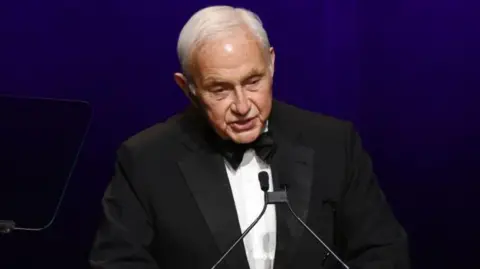
Deposition Video Reveals Wexner’s Testimony nearly five‑hour closed‑door deposition was posted on February 19, 2026, showing billionaire Les Wexner answering questions about his decades‑long relationship with Jeffrey Epstein [1][2][4]. Wexner described Epstein as a “just a guy” he met through friends in the mid‑1980s and insisted their interactions were strictly business [1]. He repeatedly denied any knowledge of Epstein’s sexual abuse or large‑scale financial schemes, stating he never learned the magnitude of alleged theft until after it occurred [1][2].
Financial Relationship Traced From Power‑of‑Attorney to 2008 Email Wexner granted Epstein power of attorney in 1991, allowing the financier to manage investments and purchase property, a partnership that dissolved in 2007 after Wexner discovered significant theft [4][6]. DOJ files note the ties began in the mid‑1980s and continued sporadically, with Wexner emailing Epstein in June 2008 following Epstein’s plea deal [6]. Attorneys claim roughly $100 million was repaid, while Wexner characterizes the losses as “vast sums” stolen by a “conman” [2][4].
Denial of Abuse Knowledge and Surprise Over Payments Wexner said he was unaware of quarterly $25,000 payments to OB‑GYN Dr. Mark Landon on his behalf, learning of the arrangement only days before his testimony [1]. He recounted a one‑hour boat trip to Epstein’s U.S. Virgin Islands island and a similar visit to the Zorro Ranch in New Mexico, insisting he saw no minors during either visit [1]. Throughout, he maintained he had no knowledge of Epstein’s trafficking activities, a stance echoed by his spokesperson [2][5].
Congressional Criticism and Survivor Advocacy Intensify Democratic Rep. Robert Garcia warned that without Wexner’s financial support there would be no “Epstein island, Epstein plane, or money to traffic women and girls,” urging accountability for the billionaire’s role [2][4]. Rep. Thomas Massie accused the Justice Department of a decades‑long cover‑up, calling the redacted co‑conspirator document “bigger than Watergate” [5]. Survivors such as Virginia Giuffre and Maria Farmer, along with Ohio State activists, are pressing to remove Wexner’s name from campus facilities, citing the new records as evidence of his involvement [4][6].
Discrepancies Over Co‑Conspirator Status and Evidence FBI documents from 2019 list Wexner as a “secondary co‑conspirator” with limited evidence, while DOJ officials have portrayed him solely as an information source and not a target [5][2]. FBI Director Kash Patel testified there is no credible information linking Epstein’s trafficking to any other men, a claim that contrasts with the extensive references to Wexner in over 1,000 released files [5][6].
Sources
-
1.
WBNS: House Oversight Committee releases nearly five‑hour Les Wexner deposition in Epstein probe: Details the posted deposition, Wexner’s description of Epstein as a business contact, brief island and ranch visits, and his denial of knowledge of abuse .
-
2.
BBC: Les Wexner Testifies Before House Committee, Calls Himself “Naïve” and Accuses Epstein of Theft: Highlights Wexner’s self‑characterization as naïve, his accusations of Epstein’s theft, and Rep. Robert Garcia’s claim about Wexner’s financial enablement of Epstein .
-
3.
WBNS: Les Wexner Deposition Fuels Calls for Transparency in New Albany: Reports local demand for clear, accessible information on the deposition and community reactions to Wexner’s philanthropic footprint .
-
4.
WBNS: Les Wexner Deposed by House Committee in Jeffrey Epstein Probe: Covers the subpoena after DOJ file release, Garcia’s accusation of Wexner as primary financial backer, and survivor activism to strip his name from Ohio State sites .
-
5.
CNN: New FBI Files Highlight Ongoing Scrutiny of Les Wexner: Describes Massie’s cover‑up allegation, FBI subpoena in 2019, and Patel’s statement on lack of credible evidence linking Epstein to other men .
-
6.
AP: Les Wexner to Testify Before Ohio Congressional Committee on Epstein Ties: Summarizes deposition scheduling, Giuffre’s trafficking allegation, the timeline of financial ties, and survivor calls for accountability .
Related Tickers
Timeline
Mid‑1980s – Les Wexner meets Jeffrey Epstein through mutual acquaintances and treats him as “just a guy” in a purely business relationship, laying the foundation for a financial partnership that will later draw intense scrutiny[3].
1991 – Epstein receives power of attorney over Wexner’s assets, giving him control of investments and the ability to purchase property on Wexner’s behalf[3].
2007 – Wexner terminates the relationship after discovering that Epstein had stolen “vast sums” from his family, ending a decade‑long financial tie[6].
2008 – Following Epstein’s prostitution conviction, Wexner and his wife Abigail cut all ties, and Wexner later learns of the theft’s magnitude only after the case closes[4].
June 2008 – Despite the breakup, Wexner sends an email to Epstein after the latter’s plea deal, indicating continued, albeit limited, contact[3].
2019 – The FBI subpoenas Wexner and requests his attorneys’ input on whether he knew about Epstein’s payments to under‑age girls; a 2019 FBI document lists Wexner as a “secondary co‑conspirator” with “limited evidence” of involvement[2].
2019 – DOJ officials inform Wexner that he is “neither a co‑conspirator nor a target in any respect,” a statement he repeats in later testimony[2].
Feb 18, 2026 – The House Oversight and Government Reform Committee issues a subpoena and schedules a closed‑door deposition of the 88‑year‑old billionaire in Ohio to question him about the newly released Justice Department files linking him to Epstein[3][6].
Feb 18, 2026 – In his deposition, Wexner describes himself as “naïve, foolish, and gullible,” denies any knowledge of Epstein’s sexual crimes, and asserts he has “nothing to hide”[1][6].
Feb 18, 2026 – Rep. Robert Garcia tells reporters, “no one was more involved in providing Epstein with financial support for his crimes than Wexner,” underscoring the alleged scale of the billionaire’s monetary backing[6].
Feb 18, 2026 – Rep. Thomas Massie accuses the Justice Department of a “decades‑long cover‑up,” calling the redacted co‑conspirator document “bigger than Watergate”[2].
Feb 19, 2026 – The Committee posts a nearly five‑hour video of Wexner’s testimony, making his full statements publicly available for the first time[4].
Feb 19, 2026 – Wexner admits a brief one‑hour boat trip to Epstein’s U.S. Virgin Islands island and a similar visit to the Zorro Ranch in New Mexico, saying he saw no minors; New Mexico’s attorney general subsequently reopens the ranch investigation[4].
Feb 19, 2026 – Local residents and Rep. Dave Min demand that any facts emerging from the deposition be posted in an “easy‑to‑read format,” reflecting a community push for transparency about Wexner’s ties to the trafficking network[5].
Feb 19, 2026 – Survivors such as Virginia Giuffre and Maria Farmer, along with Ohio State University activists, intensify calls to strip Wexner’s name from campus facilities, linking his philanthropic legacy to the broader sexual‑abuse scandal[5][6].
External resources (9 links)
- https://oversightdemocrats.house.gov/imo/media/doc/garcia_amendment_to_luna_1.pdf (cited 2 times)
- https://www.justice.gov/epstein/files/DataSet%209/EFTA00173201.pdf (cited 1 times)
- https://www.justice.gov/epstein/files/DataSet%209/EFTA00175080.pdf (cited 1 times)
- https://www.justice.gov/epstein/files/DataSet%209/EFTA00179434.pdf (cited 1 times)
- https://www.ap.org/news-highlights/best-of-the-week/2019/exclusive-look-at-private-epstein-island/ (cited 1 times)
- https://x.com/mtracey/status/2021347809321214392?s=20 (cited 1 times)
- https://arrest on federal sex trafficking charges (cited 1 times)
- https://arrest%20on%20federal%20sex%20trafficking%20charges/ (cited 1 times)
- https://www.wexnerfoundation.org/letter-from-les/ (cited 1 times)