U.S. Readies Limited Precision Strikes on Iran, Prompting Broad Regional Fallout Scenarios
Updated (7 articles)
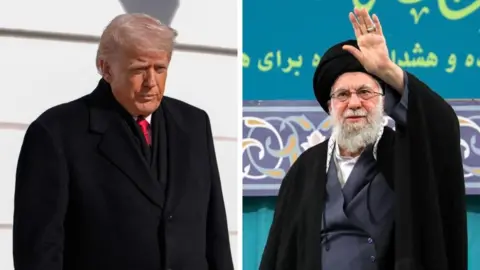
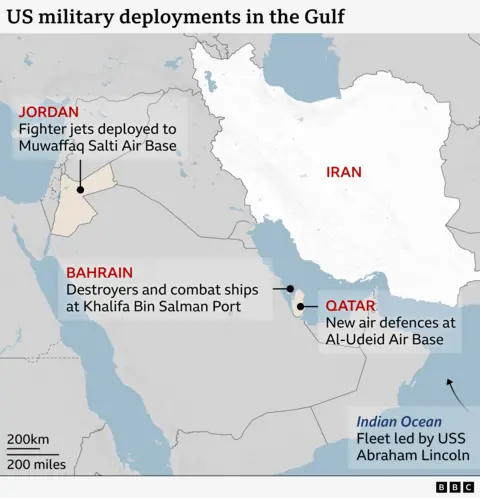
U.S. Preparing Targeted Air and Naval Operations The United States is poised to launch limited precision air and naval attacks within days, concentrating on Islamic Revolutionary Guard Corps (IRGC) and Basij bases, ballistic‑missile launch sites, and Iran’s nuclear facilities. Analysts describe the strikes as highly targeted rather than a full‑scale invasion, aiming to degrade specific capabilities while avoiding broader conflict. The operational window is narrow, with U.S. forces positioning assets in the Persian Gulf and Arabian Sea for rapid execution[1].
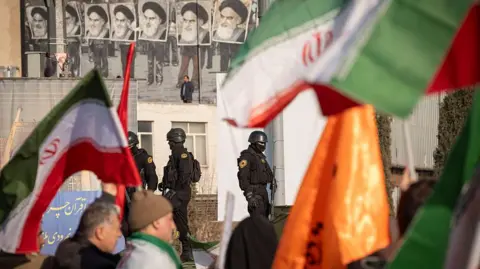
Iran Vows Immediate Retaliation Tehran has declared its “finger is on the trigger,” promising swift retaliation against any U.S. attack. Iranian officials cite the potential launch of concealed ballistic missiles and swarms of drones from caves, underground sites, and remote mountain locations. The rhetoric underscores Iran’s intent to demonstrate deterrence and to complicate U.S. targeting through dispersed launch points[1].
Regional Targets Could Extend to U.S. Bases and Allies Iran may expand strikes to U.S. facilities in Bahrain and Qatar, as well as critical infrastructure in nations it deems complicit, such as Jordan and Israel. Plans reportedly involve swarm attacks using high‑explosive drones and fast torpedo boats designed to overwhelm naval defenses. Such actions would broaden the conflict beyond Iran’s borders, implicating regional partners directly[1].
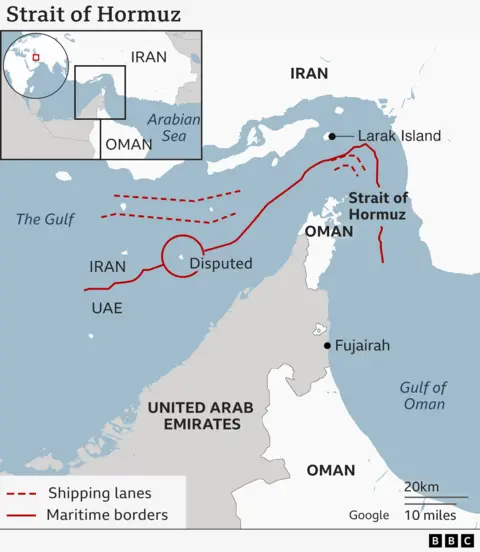
Disruption of Strait of Hormuz Threatens Global Energy Markets The narrow Strait of Hormuz, through which roughly 20 % of global LNG and 20‑25 % of oil transit annually, could be mined or attacked by Iranian forces. Rapid sea‑mine deployment capabilities raise the risk of sudden closures, likely spiking oil prices and disrupting world trade. Market analysts warn that even a brief interruption could have cascading effects on global supply chains[1].
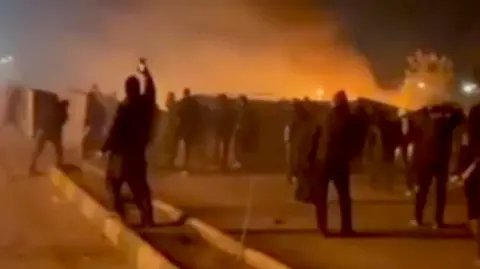
Potential for Internal Iranian Conflict and Humanitarian Crisis In the chaos following a U.S. strike, ethnic tensions among Kurds, Baluchis, and other minorities could ignite armed conflict within Iran. Observers warn that a civil war scenario could generate a large refugee flow and destabilize neighboring states. Humanitarian fallout would compound the strategic and economic repercussions of the confrontation[1].
Related Tickers
Timeline
June 2025 – Iran endures a 12‑day U.S. air campaign that kills nearly 1,100 Iranians, including senior commanders and scientists, and Iran retaliates with missile strikes that kill 28 Israelis, underscoring the high‑cost escalation of the conflict[7].
Summer 2025 – The United States conducts a bombing operation using B‑2 bombers that drop 14 of the world’s largest bombs on two Iranian nuclear sites without U.S. casualties, a success the Trump administration touts as a precedent for future strikes[2].
Dec 30, 2025 – Iranian President Masoud Pezeshkian posts on X that “cruel aggression would be met with a harsh and discouraging response,” directly rebuffing Trump’s warning of renewed U.S. action if Tehran rebuilds its nuclear program[6].
Dec 30, 2025 – Donald Trump, meeting Benjamin Netanyahu in Florida, reiterates the prospect of U.S. strikes against Iran should it resume its nuclear or missile programs, signaling a possible escalation[6].
Dec 30, 2025 – Iran’s parliamentary speaker Mohammad Bagher Qalibaf declares that all U.S. military centers, bases and ships in the region would be legitimate targets if the United States attacks, reinforcing Tehran’s deterrent posture[4].
Dec 30, 2025 – Protests continue across Iran as the rial plunges; the Central Bank chief resigns amid the currency collapse, highlighting domestic instability that could affect Tehran’s strategic calculations[6].
Dec 31, 2025 – The IRGC accelerates development of chemical and biological warheads for ballistic missiles, expanding Tehran’s unconventional capabilities and altering regional deterrence dynamics[5].
Dec 31, 2025 – Trump warns the United States would back Israeli strikes if Iran rebuilds its long‑range missile force, stating “we will knock them down if necessary,” linking U.S. policy to Israeli action[5].
Dec 31, 2025 – Iranian leadership declares a “full‑scale war” with the United States, Europe and Israel, vowing a harsh response to any attack and recalling past U.S. strikes on Iranian nuclear facilities[5].
Dec 31, 2025 – The IRGC relocates missile launchers toward Iran’s eastern regions, a tactical shift intended to bolster deterrence amid heightened regional tensions[5].
Jan 13, 2026 – Trump signals “very strong options” under consideration for military action after Iran’s crackdown on protesters, while Iran’s speaker Qalibaf repeats that U.S. bases and ships will be targeted if attacked[4].
Jan 13, 2026 – Iranian President Pezeshkian promises a “harsh and discouraging” response to any U.S. attack, echoing earlier warnings and raising the stakes of potential retaliation[4].
Jan 15, 2026 – U.S. defense analysts note that the American weapons stockpile is depleted in some categories after recent campaigns but remains capable, with rebuild times of about two years, indicating limited immediate capacity for a prolonged war[3].
Jan 15, 2026 – Iran’s protests intensify, and the United States keeps military options open, with the president warning of “strong action” if the unrest escalates, reflecting the interplay of domestic unrest and external pressure[3].
Jan 15, 2026 – The Wall Street Journal reports that Trump ordered U.S. assets to be prepared for a potential strike on Iran, showing elevated readiness amid rising tensions[3].
Jan 15, 2026 – Analysts argue that any U.S. strike would likely be short‑duration and media‑focused, possibly targeting oil facilities to inflict economic damage while minimizing casualties, aligning with a “theater‑like” strategy[2].
Jan 15, 2026 – Experts highlight that targeting Iranian leadership or IRGC commercial networks would be complicated because officials disperse and hide, increasing the risk of civilian casualties and political backlash[2].
Jan 29, 2026 – The United States prepares limited precision air and naval strikes within days, aiming at IRGC and Basij bases, missile launch sites and nuclear facilities, marking a shift from broad invasion plans to focused attacks[1].
Jan 29, 2026 – Iran warns that its “finger is on the trigger,” threatening concealed ballistic missiles and drones from caves and mountains in retaliation to any U.S. attack, signaling a high risk of rapid escalation[1].
Jan 29, 2026 – Iran threatens to strike U.S. bases in Bahrain and Qatar and to target critical infrastructure in Jordan or Israel with swarms of high‑explosive drones and fast torpedo boats, expanding the potential theater of conflict[1].
Jan 29, 2026 – Iran signals it could mine or attack the Strait of Hormuz, where 20‑25 % of global oil and LNG passes, a move that would likely spike oil prices and disrupt world trade[1].
Jan 29, 2026 – Analysts warn that a U.S. strike could ignite ethnic tensions among Kurds, Baluchis and other minorities, potentially sparking civil war, a refugee crisis and broader humanitarian fallout across the Middle East[1].
All related articles (7 articles)
-
BBC: Potential Outcomes if the U.S. Strikes Iran
-
Newsweek: US weapons stockpile examined amid potential war with Iran
-
CNN: Analysts map potential US targets and risks in possible Iran strike
-
Newsweek: Iran's military assessed against US as Tehran vows retaliation amid Trump threats
-
Newsweek: Iran developing chemical and biological warheads for long-range missiles, report says
-
Newsweek: Iran warns of harsh response to any attack after Trump threat
-
AP: Iranian president pledges harsh response to aggression in apparent rebuke to Trump warning