Tarique Rahman Sworn In as Bangladesh Prime Minister Following 17‑Year Exile
Updated (8 articles)
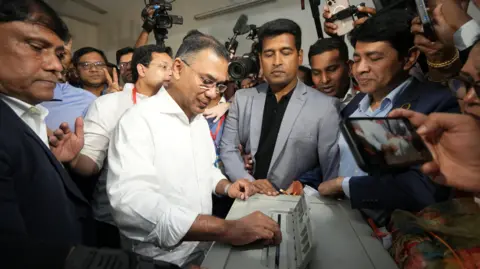
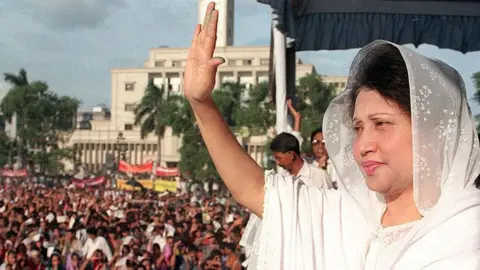
Rahman Takes Oath as Prime Minister on 17 February Tarique Rahman, 60, was sworn in as Bangladesh’s prime minister on 17 February 2026, after the Bangladesh Nationalist Party (BNP) secured a landslide victory in the general election [1]. His inauguration marks the first time the Zia family has held the premiership since former prime minister Khaleda Zia’s tenure [1]. The ceremony signaled a dramatic political shift after years of opposition rule [1].
Return from Exile and Mother’s Death Mark Personal Milestones Rahman returned to Bangladesh on 25 December 2025, ending a 17‑year exile [1]. Five days later his mother, former prime minister Khaleda Zia, died, adding a personal tragedy to his political comeback [1]. He was formally appointed BNP leader on 9 January 2026, consolidating his authority within the party [1].
Cabinet Formation and International Attendance Highlight New Government Forty‑nine cabinet members were sworn in alongside Rahman, completing the new government’s core team [1]. Foreign representatives from India, Nepal, Pakistan and Sri Lanka attended the oath‑taking ceremony, underscoring regional interest in Bangladesh’s political transition [1]. The broad attendance suggested diplomatic support for the incoming administration [1].
Opposition Leadership and Dynastic Criticism Shape Political Landscape Shafiqur Rahman of Jamaat‑e‑Islami was named Leader of the Opposition, positioning the main rival bloc against the BNP government [1]. BNP insiders, including former commerce minister Amir Khasru, downplayed concerns about dynastic rule, while analyst Mohiuddin Ahmed warned that Rahman’s leadership would be closely tested [1]. The debate over political dynasty versus meritocracy remains a focal point of public discourse [1].
Rahman Vows Strict Maintenance of Peace and Law At his oath ceremony, Rahman pledged that “peace, law and order must be maintained at any cost,” signaling a hard‑line stance on civil unrest [1]. He warned that chaos would not be tolerated and promised decisive government action to preserve stability [1]. This commitment reflects the BNP’s emphasis on security following a contentious election period [1].
Timeline
1977–1981 : Ziaur Rahman serves as Bangladesh’s sixth president, founds the Bangladesh Nationalist Party (BNP) and establishes the political dynasty that later produces Khaleda Zia and Tarique Rahman, providing the historical backdrop for today’s power struggle [5].
2007–2008 : Tarique Rahman is arrested during a military‑backed interim government, alleges torture, and is granted bail to seek medical treatment in London, beginning his 17‑year self‑exile that shapes his later political narrative [3][8].
Dec 17, 2025 : In London, Tarique Rahman announces his planned return on Dec 25, pledges to turn Bangladesh into a welfare state for families, farmers and unemployed youth, and urges supporters to bless his homecoming, framing it as a pivotal moment for the BNP [8].
Dec 24, 2025 : A bomb explodes in Dhaka’s Mogbazar area, killing at least one person; the interim government tightens security and announces toll‑free daytime access on the Dhaka Elevated Expressway ahead of Rahman’s imminent arrival [7].
Dec 25, 2025 : Tarique Rahman lands at Hazrat Shahjalal International Airport with his wife and daughter, greeted by BNP Standing Committee members; the BNP bills the homecoming as its “biggest calendar event” and signals a renewed campaign push ahead of the Feb 12 general election [6][7].
Dec 26, 2025 : Tarique Rahman visits Zia Udyan to lay flowers at his father Ziaur Rahman’s grave, accompanied by senior BNP leaders; security forces bar media while party activists chant slogans, underscoring the symbolic revival of the Zia family legacy [5].
Dec 30, 2025 : Former prime minister Khaleda Zia dies after a prolonged illness, creating a leadership vacuum in the BNP and prompting the party’s Standing Committee to convene for a succession decision [4].
Jan 9, 2026 : The BNP Standing Committee appoints Tarique Rahman as party chairman, formalizing his leadership role days after his mother’s death and positioning him as the BNP’s prime‑ministerial contender in the upcoming election [4].
Jan 2026 : Shafiqur Rahman of Jamaat‑e‑Islami is named Leader of the Opposition; BNP insider Amir Khasru downplays dynastic concerns while analyst Mohiuddin Ahmed warns that Tarique Rahman’s leadership will be tested [1].
Feb 12, 2026 : Bangladesh holds its parliamentary election under an interim government led by Nobel laureate Muhammad Yunus, with the Awami League barred from participation and the BNP fielding Tarique Rahman as its prime‑ministerial candidate [3][2].
Feb 17, 2026 : Tarique Rahman is sworn in as prime minister, pledging that “peace, law and order must be maintained at any cost,” while 49 cabinet members and regional dignitaries attend the ceremony, marking the first Zia‑family premiership since Khaleda Zia [1].
Feb 2026 (future) : The new Rahman government is expected to confront UN‑cited allegations of up to 1,400 deaths in past student unrest and to address ongoing human‑rights critiques of the previous Hasina administration, setting the agenda for its early tenure [2].
All related articles (8 articles)
-
BBC: Tarique Rahman Sworn In as Bangladesh Prime Minister After 17‑Year Exile
-
The Hindu: Tarique Rahman appointed BNP chairman after Khaleda Zia's death
-
The Hindu: BNP acting chairman Tarique Rahman visits his father's grave in Dhaka, 17 years after self-exile
-
AP: Tarique Rahman returns to Bangladesh after 17 years in exile, poised to lead amid election race
-
The Hindu: BNP acting chairman Tarique Rahman lands in Dhaka ahead of February elections
-
BBC: Bangladesh BNP frontrunner Tarique Rahman returns after 17-year exile ahead of elections
-
The Hindu: BNP's Tarique Rahman to return to Dhaka ahead of polls with security measures
-
The Hindu: Tarique Rahman Plans Return to Bangladesh After 17 Years