Pakistan’s Pre‑Dawn Airstrikes on Kabul and Kandahar Trigger Escalated Border Fighting
Updated (2 articles)
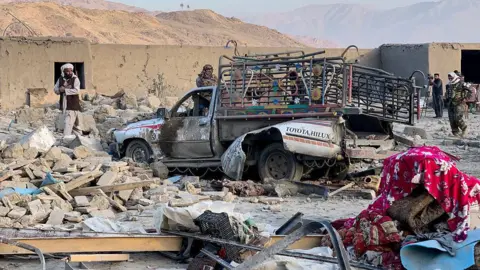
Pakistan’s pre‑dawn air campaign targets Afghan capitals In the early hours of 26 February 2026, Pakistan’s military launched air strikes on Kabul and Kandahar, hitting seven alleged militant camps in Khyber Pakhtunkhwa as retaliation for recent suicide bombings inside Pakistan [1]. The strikes were announced by Pakistani officials and followed an Afghan border attack earlier that night [2]. Both governments framed the operation as a defensive response to cross‑border terrorism.
Taliban announces counter‑attacks and claims capture of Pakistani posts The Taliban’s official X account reported renewed attacks on Pakistani troops along the frontier, later deleting the post, while deputy spokesman Hamdullah Fitrat claimed Afghan forces seized the Pakistani headquarters at Anzar Sar, Babrak post in Khost Province and captured over 15 outposts in two hours [2]. Pakistan’s prime ministerial spokesperson denied any loss of posts and said Pakistani forces inflicted heavy casualties on the Taliban [2][1]. The conflicting narratives illustrate an information war accompanying the kinetic fighting.
Both sides report heavy military and civilian casualties Pakistan confirmed two soldiers killed and three wounded after Taliban fire, whereas Taliban spokesman Zabihullah Mujahid claimed numerous Pakistani soldiers were killed and posts captured [1]. Afghan officials reported civilian injuries near the Torkham crossing and explosions heard in Kabul, with women and children killed in a religious school hit by the strikes [1][2]. The clashes forced evacuations and closed the border to Afghan refugees, deepening the humanitarian impact.
UN urges diplomatic resolution amid rising tensions United Nations Secretary‑General Antonio Guterres, through spokesman Stéphane Dujarric, expressed concern over the clashes and called for both parties to resolve their differences through diplomacy [2]. The UN statement underscores international alarm as the October ceasefire collapses and hostilities resume [1]. Diplomatic pressure adds to the mounting calls for a cease‑fire to prevent further civilian suffering.
Sources
-
1.
BBC:Pakistan launches strikes on Kabul and Kandahar, reigniting border conflict: Details Pakistan’s pre‑dawn airstrikes, Taliban’s deleted X post, casualty claims, civilian impact, and links to the collapsed October ceasefire .
-
2.
The Hindu:Afghanistan‑Pakistan border clashes intensify with strikes on Kabul and Kandahar: Highlights heavy clashes after the airstrikes, UN concern, Taliban’s claim of capturing Khost headquarters and multiple outposts, and Pakistan’s denial of losses .
Related Tickers
Timeline
Oct 2025 – A fragile cease‑fire negotiated after earlier deadly exchanges between Afghanistan and Pakistan collapses, leaving the frontier vulnerable to renewed fighting later in 2026 [1].
Early 2026 (prior to Feb 26) – Suicide‑bomb attacks inside Pakistan kill dozens, prompting Islamabad to plan retaliation and later announce it will strike seven alleged militant camps in Khyber Pakhtunkhwa as a response [1].
Feb 25, 2026 (Thursday night) – Heavy clashes erupt along the Afghanistan‑Pakistan border after Pakistani airstrikes, with Afghanistan’s eastern military corps reporting “heavy clashes” and Taliban forces launching attacks on Pakistani border troops [2].
Feb 26, 2026 (pre‑dawn) – Pakistan launches air strikes on Kabul and Kandahar, targeting seven militant camps and hideouts, and says it destroys Afghan posts while reporting two of its soldiers killed and three wounded [1].
Feb 26, 2026 (hours later) – The Taliban’s official X account announces renewed attacks on Pakistani troops along the frontier, then deletes the post, illustrating a rapid information war alongside the fighting [1].
Feb 26, 2026 (later that day) – Taliban deputy spokesman Hamdullah Fitrat claims Afghan forces capture the Pakistani headquarters at Anzar Sar, Babrak post in Khost Province, killing and wounding dozens and seizing a large weapons cache; the Taliban also says it seized over 15 Pakistani outposts in two hours, while Pakistan denies any losses and says it inflicted heavy casualties on the Afghan side [2].
Feb 26, 2026 (same day) – UN Secretary‑General Antonio Guterres, via spokesman Stéphane Dujarric, says he is following reports of the clashes with concern and urges the parties to resolve their differences through diplomacy [2].
Feb 26, 2026 (same day) – Civilian casualties occur near the Torkham crossing and in Kabul, where residents hear three explosions and aircraft sounds; a religious school and homes are hit, killing women and children, prompting evacuation orders and the closure of the border to Afghan refugees [1][2].
Feb 26, 2026 (ongoing) – Both sides claim heavy casualties and equipment losses: Pakistan reports two soldiers killed, three wounded, and says the Afghan side suffered heavy losses and destroyed posts; Taliban spokesman Zabihullah Mujahid claims numerous Pakistani soldiers were killed and posts captured [1].