Russia’s Four‑Year War Leaves Over One Million Casualties and Strains Remote Villages
Updated (4 articles)
War Duration and Initial Objectives Collapse The Kremlin launched its “Special Military Operation” on 24 February 2022, promising a ten‑day victory that quickly unraveled. After more than 1 450 days of combat, the conflict has become a protracted four‑year war with no decisive outcome [1]. Russian leadership’s early timeline is now widely regarded as naïve by security analysts [1].
Russian Military Losses Exceed One Million Across Sources CSIS estimates that roughly 1.2 million Russian personnel have been killed or injured, including about 325 000 fatalities, a toll three times larger than all U.S. war losses since 1945 [1]. BBC research, using obituaries and probate records, suggests 286 000‑413 500 total deaths, with 80 000 deaths reported in 2025 alone [2]. The disparity highlights the difficulty of obtaining precise casualty figures in a war marked by restricted data.
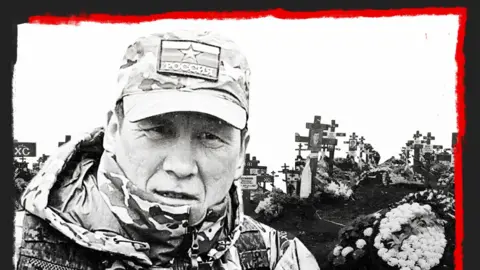
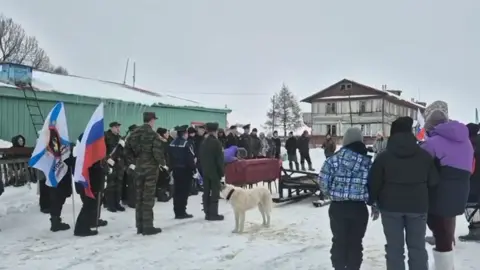
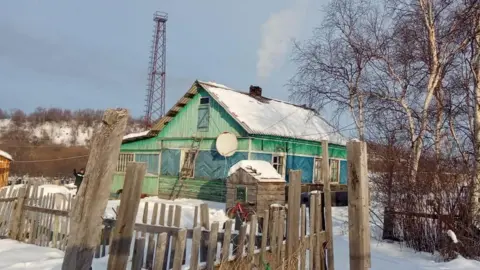
Rural and Indigenous Communities Bear Disproportionate Fatalities In the Far‑East village of Sedanka, 39 of 258 residents aged 18‑55 enlisted, 12 have been killed and seven are missing, leaving almost every household with a front‑line member [2]. Indigenous groups such as the Nenets, Chukchi, Khanty, Koryaks and Inuit have suffered losses amounting to 1‑2 % of their male populations [2]. Demographer Alexey Raksha notes that rural regions, which house 48 % of Russia’s population, account for 67 % of war deaths, with death rates 27‑33 times higher than in Moscow [2].
Economy Remains Large but Strained by War Despite sanctions, the International Monetary Fund ranks Russia as the world’s ninth‑largest economy in 2025, up from eleventh before the invasion [1]. War‑driven labor shortages and soaring food prices—cucumbers have doubled since December—signal mounting domestic strain [1]. The paradox of a growing nominal GDP alongside acute supply‑chain and cost‑of‑living pressures underscores the war’s economic toll.
Geopolitical Shifts Weaken Russian Influence NATO expansion continued unabated, with Sweden and Finland joining the alliance and doubling the NATO border with Russia [1]. Moscow’s strategic pivot toward Beijing has deepened, but analysts describe Russia as the junior partner in the relationship [1]. The Kremlin’s inability to protect allies such as Syria, Iran and Venezuela illustrates a broader erosion of diplomatic clout after four years of conflict [1].
Sources
-
1.
CNN: Russia’s Four‑Year War Costs: Casualties, Economy, and Global Influence – Provides comprehensive estimates of Russian military casualties, economic ranking, and the war’s impact on NATO expansion and Russia‑China relations .
-
2.
BBC: Russian Far‑East Village Loses Most Fighting‑Age Men to Ukraine War – Focuses on the demographic devastation in remote villages like Sedanka, detailing indigenous casualty rates and the disproportionate death burden in rural Russia .
Related Tickers
Timeline
Feb 24, 2022 – Russia launches its “Special Military Operation” in Ukraine, publicly promising to defeat Ukrainian forces within ten days, a plan later shown to be disastrous as the conflict drags on for over 1,450 days[3].
2023 – Sweden and Finland complete NATO accession, doubling the alliance’s border with Russia and underscoring the war’s failure to halt NATO expansion[3].
2024 – Activist Murat Mukashev receives a ten‑year prison sentence for a drug‑dealing case, refuses a defence‑ministry contract, and later enlists in the army despite his anti‑war stance[2].
Feb 2025 – Direct talks between President Donald Trump and President Vladimir Putin spark a brief lull in Russian obituary counts, after which published soldier obituaries rise sharply, indicating renewed fighting intensity[2].
June 11, 2025 – Murat Mukashev is killed in combat in the Kharkiv region; friends say promises from Trump to end the war influenced his decision to sign up, highlighting the paradox of anti‑war activists joining the front[2].
Aug 2025 – Trump and Putin meet in Alaska, after which Russian obituary publications surge again, reflecting a second spike in battlefield deaths[2].
Oct–Nov 2025 – The United States unveils a 28‑point peace proposal; Russian obituaries average about 322 per day, roughly double 2024 levels, serving as a proxy for intensified combat[2].
2025 – BBC analysis confirms nearly 160,000 verified Russian battlefield deaths since 2022, while independent estimates place total Russian fatalities between 243,000 and 352,000, indicating a likely undercount[2].
2025 – NATO estimates total Russian dead and wounded at roughly 1.1 million, with about 250,000 fatalities, underscoring the massive human cost of the war[2].
2025 – Russian military deaths in that year may reach 80,000, pushing cumulative deaths to 413,500, and Indigenous groups suffer disproportionate losses, with Chukchi male casualties at 2 % of their population[1].
2025 – Approximately 336,000 Russians enlist in the armed forces, with volunteers now comprising about one‑third of battlefield deaths, reflecting a shift toward incentivized recruitment over mass mobilization[2].
2025 – The IMF ranks Russia as the world’s ninth‑largest economy despite sanctions, yet domestic pressures emerge as food prices, such as cucumbers, double since December and labor shortages intensify[3].
Dec 2025 – In a Politico interview, former President Donald Trump declares, “Russia has the upper hand… They’re much bigger. They’re much stronger… At some point, size will win,” reinforcing a narrative of inevitable Russian victory[4].
Dec 2025 – Britain’s deputy OSCE ambassador James Ford warns that Russian military losses now exceed sustainable recruitment rates, while NATO Secretary‑General Mark Rutte notes Moscow loses about 1,000 troops a day, far outpacing Soviet Afghanistan losses[4].
Jan 28, 2026 – CSIS estimates 1.2 million Russian casualties (275,000‑325,000 killed) and a mere 12 % territorial gain since 2022, while Russia’s GDP growth slows to 0.6 % and its global economic ranking slips, highlighting the war’s unsustainable human and economic toll[4].
Feb 20, 2026 – In the remote Far‑East village of Sedanka, 39 of 258 residents enlist, 12 are killed and seven missing, leaving almost every household with a front‑line member; promised “village of military valour” aid remains undelivered amid severe infrastructure deficits[1].
Feb 21, 2026 – RUSI research confirms Russian military losses top 1 million (about 325,000 killed), a casualty rate triple that of all U.S. wars since 1945, while Ukraine reports 35,000 Russian deaths in December alone, illustrating the war’s escalating lethality[3].
All related articles (4 articles)
-
CNN: Russia’s Four‑Year War Costs: Casualties, Economy, and Global Influence
-
BBC: Russian Far‑East Village Loses Most Fighting‑Age Men to Ukraine War
-
CNN: Russia’s Casualties Reach 1.2 Million, Gains Remain Minimal, Report Finds
-
BBC: Russia's losses in Ukraine rise faster than ever as US pushes for peace deal
External resources (2 links)
- https://www.politico.com/news/2025/12/09/donald-trump-full-interview-transcript-00681693 (cited 1 times)