Judge Leon Denies Injunction, Allows National Trust to Refile Over White House Ballroom
Updated (30 articles)
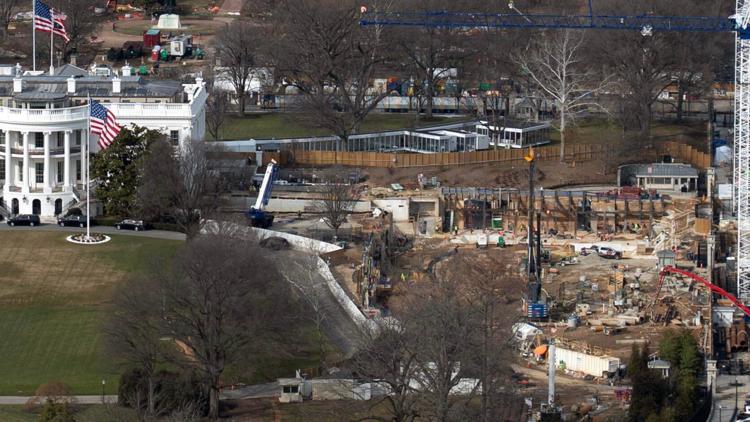
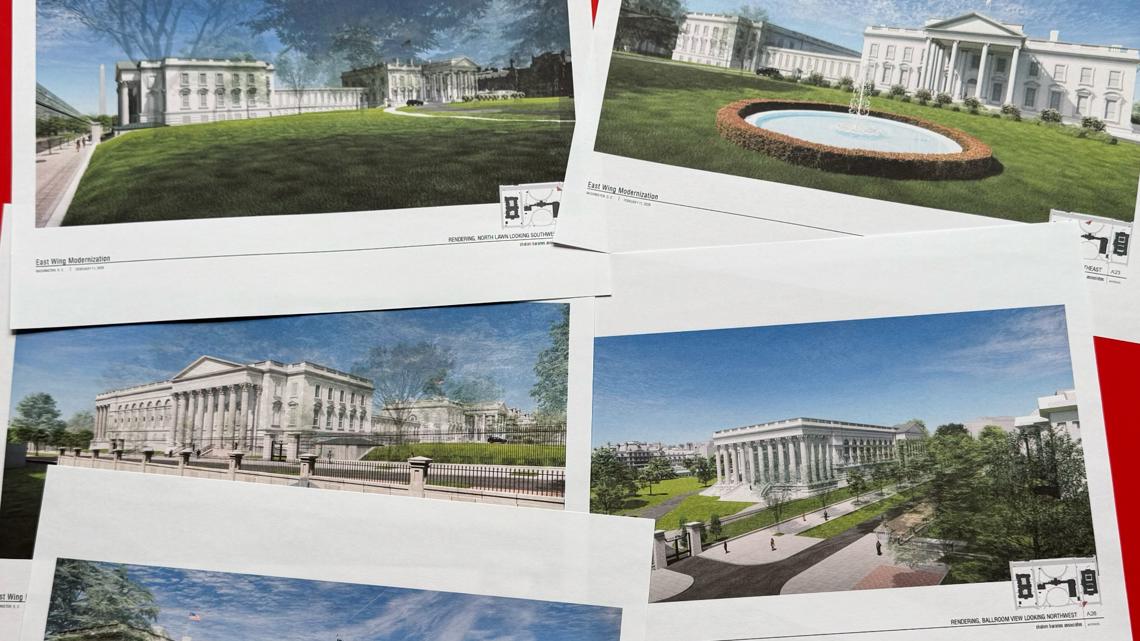
Judge Leon Rules Against Preliminary Injunction U.S. District Judge Richard Leon dismissed the National Trust for Historic Preservation’s request for a temporary halt to the White House ballroom construction on February 26, 2026, finding the suit “unlikely to succeed” under the Administrative Procedure Act because the White House office overseeing the work is not an “agency” and the Trust failed to assert an ultra vires claim [1][2]. He described the plaintiffs’ legal theories as “ragtag” and noted the lack of a proper cause of action. The decision leaves the $400 million project free to proceed while the Trust may seek a different legal avenue.
National Trust May Pursue New Legal Theory Leon signaled that the Trust could restructure its case to challenge the President’s statutory authority, calling the issues “novel and weighty” and suggesting a potential path forward [1]. He did not bar a refiling, merely denied the immediate injunction. The court’s comment opens the door for a second filing that targets a different legal foundation.
Project Scope and Funding Details Revealed Court filings disclosed that the new ballroom will occupy roughly 89,000–90,000 sq ft, dwarfing the 55,000‑sq‑ft footprint of the historic Executive Mansion and accommodating up to 999 guests [1][2]. The administration demolished the East Wing to make way for the space, and private donations—including contributions from Donald Trump—cover the construction costs. Lead architect Shalom Baranes confirmed the design includes a two‑story East Colonnade and artifact‑preservation measures.
Political Reactions and Agency Approvals President Donald Trump posted on Truth Social that the ruling is “great news for America,” emphasizing that the ballroom is ahead of schedule and under budget [1][2]. The independent Commission of Fine Arts had already approved the design, and the National Capital Planning Commission is set to discuss the project on March 5. Government lawyers argued the lawsuit was premature, citing historic presidential renovations that proceeded without congressional consent, a point echoed by the judge.
Sources
-
1.
CNN: Judge Leon denies injunction but leaves door open for new legal angle in White House ballroom case: Reports Leon’s denial of the preliminary injunction, his reasoning under the APA, and the possibility for the National Trust to refile with a different statutory theory, while detailing project size and Trump’s reaction .
-
2.
King5: Judge Leon Rejects Injunction to Halt Trump White House Ballroom Project: Highlights Leon’s dismissal of the preservationists’ request, describes the $400 million, 90,000‑sq‑ft ballroom, private‑donation funding, Fine Arts approval, upcoming planning commission meeting, and the administration’s claim that the lawsuit is untimely .
Videos (1)
Timeline
1941 – President Franklin Roosevelt orders a top‑secret underground bunker beneath the White House East Wing to protect the presidency after Pearl Harbor, establishing a secure complex that later becomes a focal point of the 2025‑2026 ballroom controversy [6].
Oct 2025 – President Donald Trump directs the rapid demolition of the 123‑year‑old East Wing, clearing the site for a new ballroom and sparking outrage from historians and preservationists who warn the move bypasses required reviews [8][14].
Dec 8 2025 – Contractors resume demolition of the East Wing despite pending litigation, reinforcing the administration’s claim that demolition is the most cost‑effective solution for the planned expansion [20].
Dec 12 2025 – The National Trust for Historic Preservation files a federal lawsuit seeking a preliminary injunction to halt the East Wing demolition and ballroom construction, alleging violations of the Administrative Procedure Act and the National Environmental Policy Act [13][21].
Dec 15 2025 – The Trump administration submits a 36‑page court brief asserting that the ballroom and associated underground work are required for “safety and security” reasons, offering to share classified details with the judge [27][28].
Dec 16 2025 – U.S. District Judge Richard Leon leans toward denying the Trust’s request for a restraining order, noting the plaintiffs have not shown irreparable harm and warning against locking in underground utilities that could cement the project’s scope [28].
Dec 19 2025 – Senator Richard Blumenthal introduces the “No Palaces Act” to require National Capital Planning Commission (NCPC) approval before any historic federal building is altered, directly targeting the White House ballroom plan [3].
Dec 31 2025 – Long‑time White House chief usher Gary Walters remarks that presidents have historically sought larger entertaining spaces, framing Trump’s ballroom as part of a long‑standing pattern of White House modifications [25].
Jan 1 2026 – The White House releases an eight‑week schedule to push the East Wing ballroom through the NCPC and the Commission of Fine Arts, aiming to complete all approvals before any above‑ground construction begins [18].
Jan 2 2026 – President Trump visits a Florida stone‑supplier near Mar‑a‑Lago to select marble for the ballroom, confirming the material will be paid for with his personal funds [11].
Jan 8 2026 – The White House delivers an “information presentation” to the NCPC outlining the 90,000‑sq‑ft ballroom’s purpose, design, and landscaping impacts, initiating the formal review process without a vote [10].
Jan 9 2026 – White House officials tell the NCPC that demolishing the East Wing is cheaper than renovating, citing structural deficiencies and projecting the ballroom’s cost at $400 million, roughly double the original estimate [2][9].
Jan 16‑17 2026 – Trump appoints four new members to the Commission of Fine Arts, restoring a quorum and enabling a Jan 22 meeting to consider the East Wing modernization [23].
Jan 22 2026 – U.S. District Judge Richard Leon questions whether Congress has authorized the $400 million ballroom, suggesting the administration may be end‑running statutory spending limits [7].
Feb 2 2026 – Hand‑picked Fine Arts officials raise concerns about the “immense” scale of the ballroom while generally supporting the president’s vision, noting overwhelmingly negative public feedback [22].
Feb 3 2026 – President Trump posts a new rendering of the ballroom on Truth Social, showing a view from the Treasury Building and emphasizing the project’s $400 million price tag and capacity for 1,000 guests [17].
Feb 19 2026 – The all‑Trump‑appointed Commission of Fine Arts fast‑tracks and unanimously approves both concept and final design for the East Wing ballroom, moving the project a step closer to construction [5][16].
Feb 19 2026 – In a Truth Social post, Trump hails the Fine Arts approval as “great news for America,” claiming the ballroom is ahead of schedule, under budget, and will serve future inaugurations and state visits [4].
Feb 26 2026 – Judge Richard Leon denies the National Trust’s request for a preliminary injunction, calling the legal theories “ragtag” and allowing the $400 million ballroom to proceed; the ruling prompts Trump to celebrate the decision as a victory [30][4].
Mar 5 2026 (planned) – The National Capital Planning Commission is scheduled to meet and vote on the ballroom proposal, the next major federal review after the Fine Arts approval [5][1].
Summer 2028 (projected) – Administration officials set a target to complete the East Wing ballroom by summer 2028, providing a permanent, secure venue for state functions and reducing reliance on costly temporary tents [10][12].
Dive deeper (8 sub-stories)
-
Judge Leon Rejects Injunction, Leaves Door Open for New Legal Challenge to White House Ballroom
(22 articles)
-
CNN: White House plans to rebuild top-secret bunker under East Wing as ballroom project advances
-
AP: Trump quietly appoints four new members to Commission of Fine Arts
-
CNN: East Wing expansion includes two-story West Wing Colonnade, ballroom, drawing mixed reactions at NCPC
-
Trump Chooses Marble for Expansive White House Ballroom as Costs Near $400 Million
(2 articles)
-
AP: White House usher: presidents long sought bigger entertaining space; Trump's ballroom plan follows history
-
AP: National Trust chief backs Trump-picked NCPC chair to review White House ballroom plan
-
CNN: Trump’s Washington reshaping updates as of December 2025
All related articles (30 articles)
-
CNN: Judge Leon denies injunction but leaves door open for new legal angle in White House ballroom case
-
King5 (Seattle, WA): Judge Leon Rejects Injunction to Halt Trump White House Ballroom Project
-
Newsweek: White House Fine Arts Commission Gives Final Nod to Trump‑Backed Ballroom Project
-
BBC: Trump‑appointed panel greenlights White House ballroom redesign
-
CNN: Trump’s White House ballroom moves one step closer after fast‑track vote
-
Newsweek: Trump Unveils White House Ballroom Rendering Amid Legal Fight
-
AP: Trump Appointees Probe White House Ballroom Design at Fine Arts Panel
-
CNN: Federal judge skeptical of White House authority to proceed with Trump ballroom
-
CNN: White House plans to rebuild top-secret bunker under East Wing as ballroom project advances
-
CNN: Trump pushes rapid East Wing demolition and broad DC makeover
-
AP: Trump quietly appoints four new members to Commission of Fine Arts
-
BBC: White House says demolishing East Wing cheaper than renovating for ballroom
-
CNN: East Wing expansion includes two-story West Wing Colonnade, ballroom, drawing mixed reactions at NCPC
-
AP: White House says saving the East Wing was too expensive
-
CNN: White House seeks NCPC review for Trump’s contested 90,000-square-foot East Wing ballroom
-
CNN: Trump shops for marble for new White House ballroom
-
Newsweek: White House lays out eight-week timeline for Trump ballroom approvals
-
AP: White House usher: presidents long sought bigger entertaining space; Trump's ballroom plan follows history
-
Newsweek: Trump shares new White House renovation photos, hints at marble for Trump-Kennedy Center
-
AP: National Trust chief backs Trump-picked NCPC chair to review White House ballroom plan
-
CNN: Federal Judge Declines Immediate Halt to White House Ballroom Construction
-
AP: Judge leans toward denying halt to Trump White House ballroom
-
Newsweek: Trump Administration Defends White House Ballroom Construction on National‑Security Grounds
-
AP: Trump Administration Defends White House Ballroom as National‑Security Project
-
AP: Preservationists Sue Trump Over White House Ballroom Project
-
Newsweek: Trump Ballroom Project Faces Lawsuit Over Legal and Preservation Concerns
-
CNN: Historic Preservation Group Sues Trump Administration Over White House Ballroom Demolition
-
BBC: Trump hires new architect for White House ballroom
-
CNN: Trump Appoints New Architect for White House Ballroom Amid Design Dispute
-
CNN: Trump’s Washington reshaping updates as of December 2025
External resources (14 links)
- https://www.youtube.com/watch?v=XcEmF5SSC-E (cited 1 times)
- https://www.ncpc.gov/docs/actions/2026January/8733_East_Wing_Modernization_Project_Information_Sheet_Jan2026.pdf (cited 3 times)
- https://www.whitehouse.gov/briefings-statements/2025/07/the-white-house-announces-white-house-ballroom-construction-to-begin/ (cited 3 times)
- https://www.ncpc.gov/files/projects/2025/8733_East_Wing_Modernization_Project_Project_FAQs_Jan2026.pdf (cited 1 times)
- https://www.ncpc.gov/review/agenda/ (cited 1 times)
- https://storage.courtlistener.com/recap/gov.uscourts.dcd.287645/gov.uscourts.dcd.287645.14.0_2.pdf (cited 1 times)
- https://storage.courtlistener.com/recap/gov.uscourts.dcd.287645/gov.uscourts.dcd.287645.33.0.pdf (cited 1 times)
- https://storage.courtlistener.com/recap/gov.uscourts.dcd.287645/gov.uscourts.dcd.287645.47.0.pdf (cited 1 times)
- https://www.washingtonpost.com/politics/2025/11/26/trump-ballroom-architect-james-mccrery/ (cited 1 times)
- https://chairmanmendelson.com/ (cited 1 times)
- https://www.clarkconstruction.com/our-work/projects?project_search=&company_hidden=&market_hidden=&expertise_hidden=&location_hidden=&project_location_state_hidden=&delivery_method_hidden=&client_hidden=&designer_hidden=&company%5B%5D=Clark+Construction&market%5B%5D=Government&project_location_state%5B%5D=Washington%2C+DC&designer=&client= (cited 1 times)
- https://www.whitehousehistory.org/secret-spaces-at-the-white-house (cited 1 times)