Global Auto Market Fractures Into U.S., China, Europe Tech Camps
Updated (8 articles)
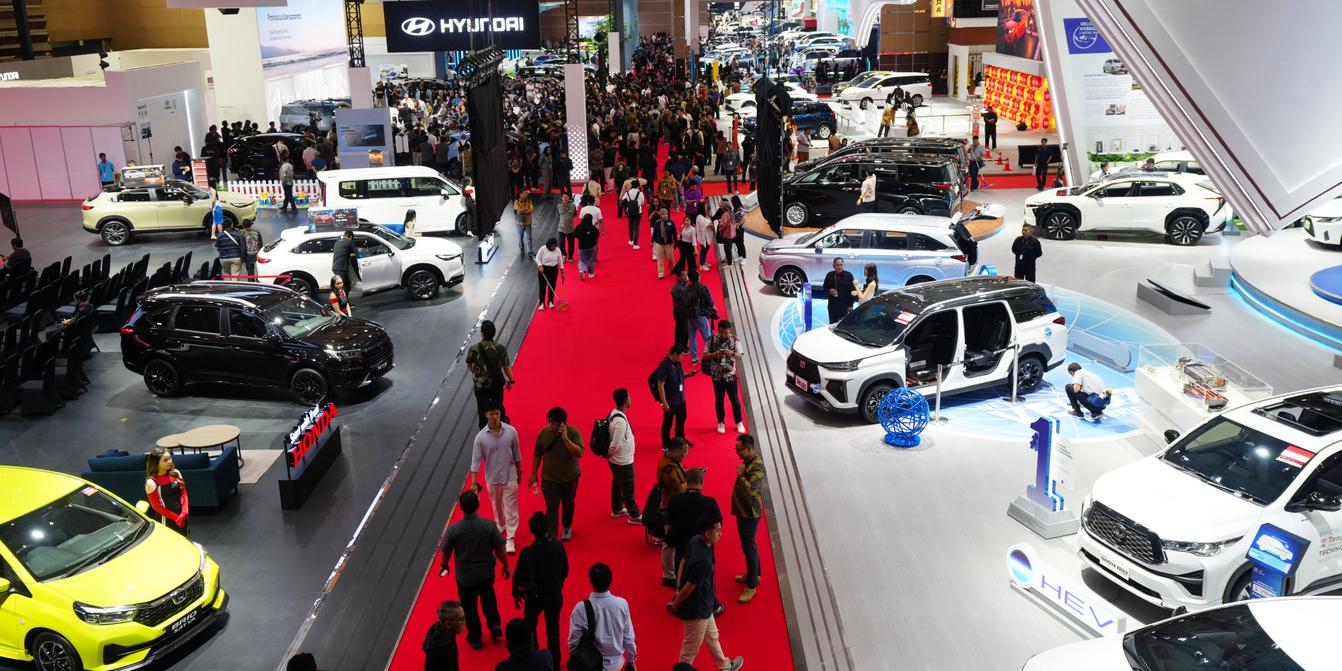
Fragmentation Redefines Global Automotive Landscape The worldwide car industry is no longer unified by shared platforms; instead, three distinct regional blocs are forming around incompatible technology standards, reshaping design, production, and sales strategies [1]. Decades of cross‑continental platform sharing—from Detroit to Shanghai, Wolfsburg to São Paulo—are giving way to this new segmentation, marking the end of a historic globalization phase [1]. Analysts describe the shift as a “radical re‑orientation” driven by divergent policy environments and market priorities [1].
U.S. Policy Shifts Revive Large‑Displacement ICE Vehicles Under President Donald Trump’s climate‑skeptical administration, federal subsidies for electric‑vehicle purchases have been eliminated, prompting American manufacturers to double down on powerful internal‑combustion engines for SUVs and pickups [1]. The policy reversal emphasizes performance and market demand over CO₂ emissions reductions [1]. Consequently, U.S. automakers are re‑investing in large‑displacement powertrains while scaling back EV development [1].
China Accelerates State‑Led EV Dominance Beijing has declared electric vehicles a core industrial, technological, and geopolitical pillar, constructing a fully domestic value chain and imposing its own technical standards [1]. State support fuels rapid expansion of national champions, which are now targeting export markets as well as the massive domestic demand [1]. The Chinese approach contrasts sharply with the U.S. retreat from EV incentives, reinforcing the regional split [1].
European Makers Juggle Contradictory Strategies European groups such as Stellantis face a strategic dilemma, needing to comply with both U.S. ICE‑friendly policies and China’s EV‑centric agenda [1]. This forces them to develop parallel product lines—high‑performance gasoline models for the United States and electric offerings for China and the EU [1]. The split raises questions about long‑term profitability and brand coherence [1].
Analyst Highlights Emerging Technological Poles Stéphane Lauer, editorialist for Le Monde, identifies the United States, China, and Europe as three emerging poles that drive the market’s fragmentation [1]. He argues that technology choices are now irreconcilable, compelling manufacturers to align with the dominant standards of their target region [1]. The analysis suggests that future competition will be less about global scale and more about regional technological leadership [1].
Related Tickers
Timeline
Dec 14, 2025 – Chinese luxury‑car sales slip as domestic brands surge, with premium‑car share falling to 13% in the first nine months of 2025 and Chinese manufacturers capturing roughly 70% of passenger‑car sales; UBS’s Paul Gong says the property slump and growing modesty “curb big purchases,” while a 20,000‑yuan trade‑in incentive steers buyers toward cheaper EVs[7].
Dec 15, 2025 – Volkswagen opens a €3 billion R&D hub in Hefei, building China‑specific EV platforms and pledging a 2026 rollout of “China‑for‑China” models; Morningstar’s Rella Suskin says the move should keep VW’s market share, and S&P Global’s Claire Yuan calls the outcome a “million‑dollar question”[6].
Dec 17, 2025 – Global auto industry reshapes as Chinese umbrella brands expand worldwide and legacy makers adjust EV plans; World Car Awards chair‑emeritus Jens Meiners warns Europe “operates in its own bubble” as forced EV transitions could erode its combustion‑engine advantage, while Hyundai’s Genesis brand pushes low‑priced premium models across markets[1].
Dec 18, 2025 – German luxury automakers accelerate China strategies amid sales declines, with Audi targeting 20 new models by end‑2025 and CEO Gernot Döllner stating the new design philosophy “will shape the company’s future product range,” while Mercedes‑Benz plans 40 new or refreshed models within the next two years to regain market share[2].
Jan 12, 2026 – The EU publishes a guidance document setting minimum import prices for Chinese EVs and pledges WTO‑compliant assessments; China’s Commerce Ministry welcomes the “soft landing” for trade, and ING senior economist Rico Luman says the price guidance gives Chinese brands “some comfort to continue exporting long term”[5].
Jan 14, 2026 – China’s auto exports rise 21% in 2025 to over 7 million units, with NEV shipments doubling to 2.6 million; China‑Passenger‑Car Association secretary Cui Dongshu predicts EU EV exports will grow about 20% annually from 2026‑2028, and BYD overtakes Tesla as the world’s biggest EV maker despite an 18% drop in December deliveries[4].
Jan 14, 2026 – China and the EU agree on steps to resolve the EV trade dispute, a move analysts say could spur additional Chinese EV exports to Europe and complement the EU’s new price‑guidance framework[4].
Jan 22, 2026 – Argentina opens a tariff‑free quota for up to 50,000 EVs this year, welcoming a BYD shipment of 5,800 vehicles at Zárate port; government spokesperson Javier Lanari says the arrival shows Argentina “has rejoined the world,” and President Javier Milei declares at Davos, “This is MAGA, Make Argentina Great Again”[3].
Feb 23, 2026 – The global auto market fragments into regional tech camps, ending the era of universal platforms as the U.S. reverts to large ICE vehicles, China makes EVs a state priority, and European groups like Stellantis juggle contradictory ICE and EV strategies; Le Monde editorialist Stéphane Lauer argues the three poles—U.S., China, Europe—“are driving a radical re‑orientation of the industry”[8].
2027 (Planned) – Mercedes‑Benz aims to launch 20 brand‑new vehicles and refresh another 20 by 2027 as part of its effort to regain Chinese market share, expanding its efficient‑engine and new‑energy portfolio[2].
All related articles (8 articles)
-
Le Monde: Global Auto Market Splits Into Regional Tech Camps
-
AP: Argentina opens tariff-free path for 50,000 Chinese EVs as Milei deregulates
-
AP: China’s 2025 car exports rise 21% on EV boom while domestic demand slows
-
AP: EU and China outline steps to settle dispute over Chinese-made EV imports
-
Newsweek: German Luxury Automakers Accelerate China Strategy Amid Sales Decline
-
Newsweek: Global auto industry shifts as Chinese brands rise and legacy makers reshape EV plans for 2026
-
AP: Volkswagen pushes €3 billion R&D hub in China to regain market share
-
AP: Chinese Luxury Car Sales Slip as Domestic Brands Surge