2026 Winter Olympics Big Air Rules Detail Scoring and Run Requirements
Updated (3 articles)
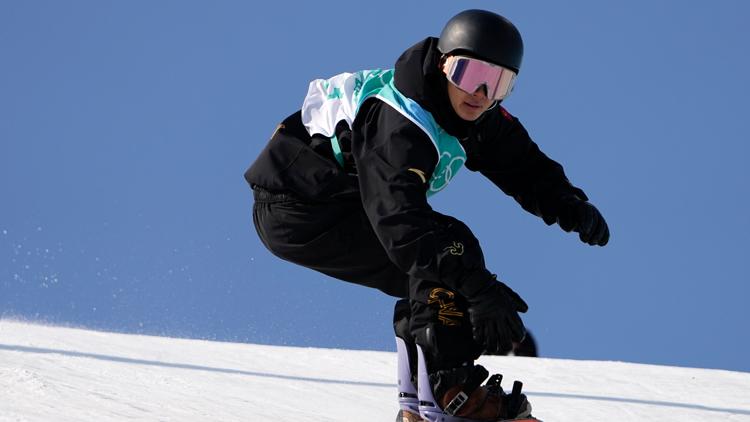
Single Jump Format Drives Spectacle The big‑air events use one oversized ramp where athletes launch to execute their most complex tricks. Snowboard big‑air entered the Olympic program in 2018, while freestyle skiing added the discipline in 2022, making both events relatively new additions to the Games [1][2]. The single‑jump design creates a high‑impact visual focus for spectators and broadcasters alike.
Three Attempts, Two Best Scores, Distinct Tricks Required Competitors receive three runs; the two highest‑scoring runs count toward the final total [1][2]. The two scoring runs must feature different tricks, defined by rotation direction or take‑off style, ensuring athletes showcase variety and creativity. This best‑two‑of‑three system rewards consistency while allowing a single mistake without eliminating medal chances.
Judges Apply Five Core Criteria and Discard Extremes Each run is evaluated on difficulty, execution, amplitude, landing and progression [1][2]. After judges submit scores, the highest and lowest marks are removed, and the remaining scores are averaged to produce the run’s final value. Progression grants extra points for novel or rare maneuvers, while clean landings are essential for high marks.
Snowboarding and Freestyle Skiing Follow Identical Scoring Rules Both disciplines share the same run format, scoring system, and judging criteria [1][2]. Skiers receive the same penalties for hand drags or unstable landings that snowboarders face, and both can earn extra credit for innovative grabs. This parity simplifies audience understanding and ensures equitable treatment across the two sports.
Sources
-
1.
WBNS: 2026 Olympics Big Air Snowboarding and Skiing Rules Explained: Provides a detailed breakdown of the event’s debut history, run structure, five‑point judging rubric, and the discard‑extreme scoring method .
-
2.
King5: Big Air Snowboarding and Freestyle Skiing Rules for the 2026 Winter Olympics: Highlights the single‑jump spectacle, three‑run format with distinct‑trick requirement, identical judging criteria for both sports, and emphasizes creativity bonuses and error penalties .
Timeline
Dec 25, 1965 – Engineer Sherman Poppen invents the “snurfer” by binding two skis together for his daughters, launching the grassroots origin of snowboarding that later evolves into a mass‑market sport[1].
1966 – Poppen begins commercial sales of the snurfer, spreading the concept beyond his family and seeding the early snowboarding community[1].
Late 1970s – Innovators such as Jake Burton refine the snurfer into the modern snowboard, establishing the rider‑driven culture that still defines the sport today[1].
1998 – Snowboarding debuts as an Olympic discipline at Nagano, marking its entry into the global sporting arena[1].
1998 – Ross Rebagliati’s gold medal is briefly stripped then reinstated after a cannabis test controversy, highlighting early Olympic growing‑pains for the sport[1].
2002 – The United States sweeps the Olympic halfpipe podium with Ross Powers, Danny Kass and JJ Thomas, cementing American dominance in park events[1].
2018 – Shaun White captures his third Olympic halfpipe gold in PyeongChang, delivering a defining moment that popularizes high‑amplitude tricks[1].
2022 – Shaun White finishes fourth in Beijing and subsequently retires, closing an era that helped propel snowboarding’s mainstream appeal[1].
Feb 5‑9, 2026 – The Livigno Snow Park hosts the Olympic big‑air snowboarding competition, where athletes will perform three runs and the two highest scores on distinct tricks will decide the medals[1][2].
Feb 8, 2026 – Parallel giant slalom takes place at Livigno, featuring defending champion Esther Ledecka defending her title[1].
Feb 11‑13, 2026 – The halfpipe event unfolds, with Chloe Kim seeking an unprecedented third straight gold and Japan’s Ayumu Hirano aiming to repeat, while Australia’s Scotty James emerges as his main rival[1].
Feb 13 & 15, 2026 – Snowboardcross races occur, adding a head‑to‑head downhill component to the snowboarding program[1].
Feb 16‑18, 2026 – Slopestyle contests round out the park schedule, giving 2018 slopestyle champion Red Gerard a chance to return to the podium[1].
2026 – Big‑air scoring requires athletes to execute three distinct tricks, with the two best runs counted after discarding the highest and lowest judges’ marks, emphasizing difficulty, execution, amplitude, landing and progression[2][3].
2026 – The same best‑two‑of‑three format and five‑factor judging criteria apply to freestyle skiing big‑air, reinforcing a unified spectator‑friendly structure across snow and ski events[2][3].
2026 – Big‑air events, introduced to the Olympics in 2018 for snowboarding and 2022 for freestyle skiing, serve as marquee attractions that showcase athletes’ most ambitious tricks and drive viewership[2][3].