U.S. Women’s Hockey Secures Third Olympic Gold with Overtime Victory Over Canada
Updated (6 articles)
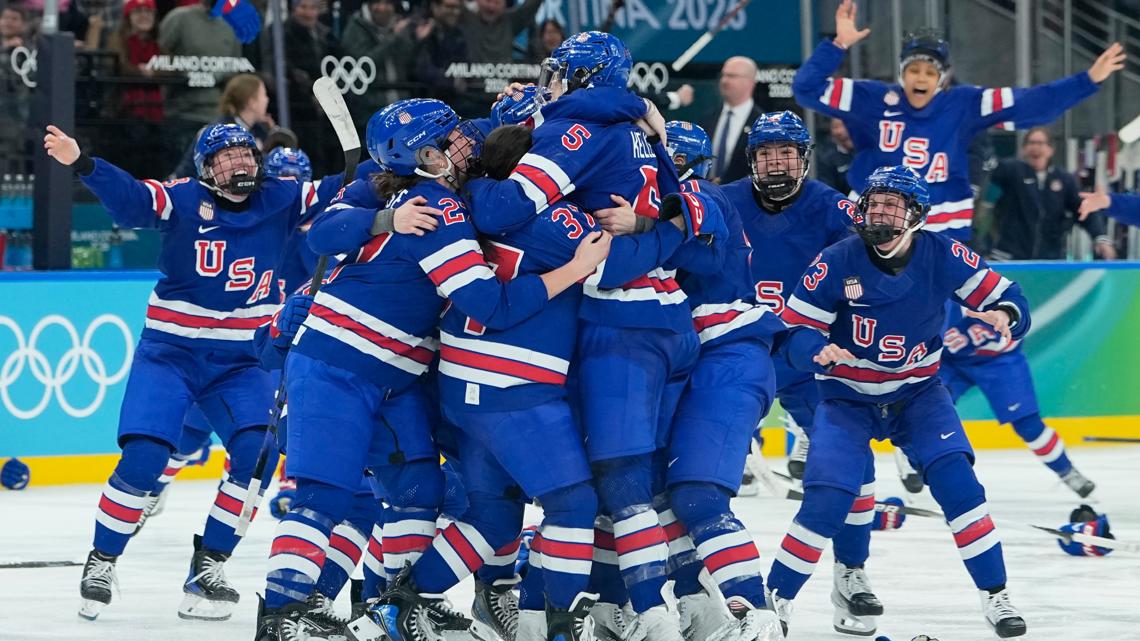
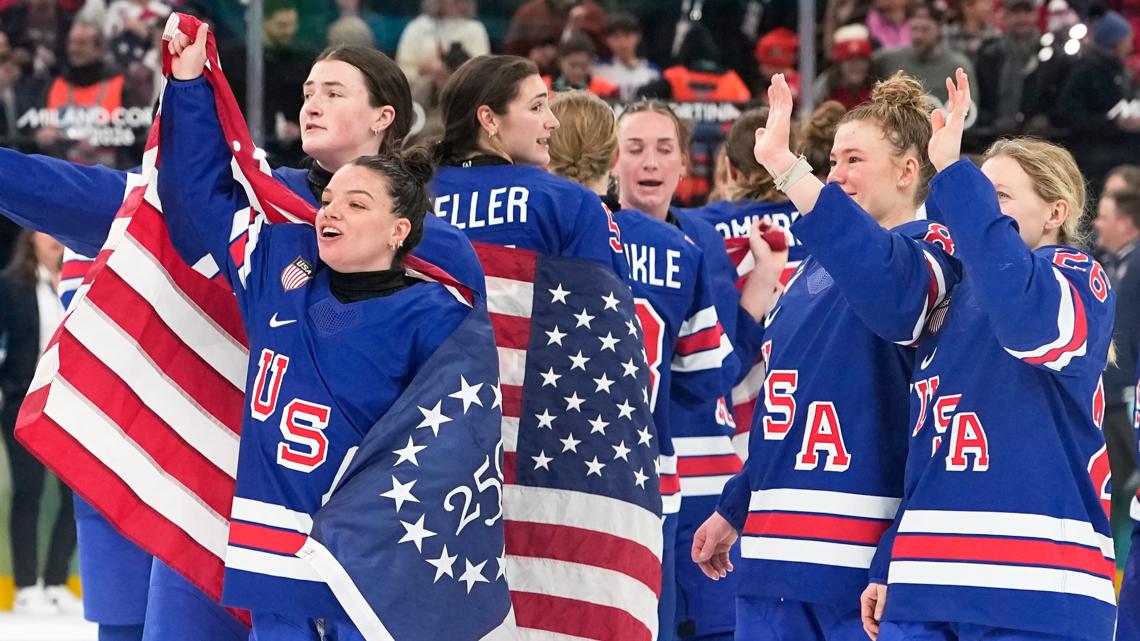
Overtime Goal Gives USA Gold On Thursday, Feb. 19, 2026, the United States defeated Canada 2‑1 in sudden‑death overtime at Milan’s Santagiulia Ice Hockey Arena, clinching its third Olympic women’s‑hockey title [1][2][5][6]. Defenseman Megan Keller backhanded the winning puck four minutes into the 3‑on‑3 overtime period, ending the match at 4:07 of overtime [1][6]. The victory followed a dramatic comeback after Canada had led early in the second period.
Knight’s Late Equalizer Sets U.S. Olympic Records Veteran captain Hilary Knight tied the game with a point‑blank tip‑in in the third period, her 15th Olympic goal and 33rd point, giving her the all‑time U.S. record for goals and points by a woman in Olympic history [1][2][3][4][6]. The goal forced overtime and marked Knight’s third consecutive gold‑medal game goal, cementing her status as the sport’s all‑time Olympic leader in scoring [2]. Her performance also signaled her final Olympic appearance after five Games [3][4].
Canada’s Early Lead and Goalie Performances Canada took a 1‑0 lead early in the second period when forward Kristin O’Neill scored a short‑handed breakaway goal, the first goal the U.S. allowed in over 350 tournament minutes [1][2][5][6]. Canadian goaltender Ann‑Renee Desbiens recorded 31 saves, keeping the contest tight, while U.S. netminder Aerin Frankel made 30 saves for the Americans [6]. Both goalies were praised for their composure in a high‑stakes final.
Tournament Dominance and Historical Context Entering the final, Team USA was unbeaten at 6‑0, outscoring opponents 31‑1 and extending a shutout streak of 331 minutes 23 seconds according to most U.S. sources, though the BBC reported a 352‑minute run [2][3][4][5]. This was the seventh gold‑medal showdown between the two rivals in eight Olympics, with the United States previously winning in 1998 and 2018 and Canada holding five titles [3][4][5]. The win adds a third gold to the U.S. tally and underscores its growing dominance in women’s Olympic hockey.
Player Milestones and Coaching Decisions Freshman forward Laila Edwards became the first Black woman to represent the United States at the Olympics, debuting in the gold‑medal game [6]. Canadian captain Marie‑Philip Poulin missed two games with a knee injury before returning for the quarterfinal, making this possibly her final Olympic encounter with Knight [3][4]. Head coach John Wroblewski fielded a revamped roster featuring 11 returning players and seven collegiate athletes, a blend that proved decisive in the overtime triumph [6].
Sources
-
1.
AP: U.S. Wins Third Olympic Gold in Women’s Hockey, Overtime Goal Beats Canada: Details Keller’s overtime winner, Knight’s equalizer, and the historic third gold for the U.S.
-
2.
CNN: Team USA Stages Overtime Comeback to Defeat Canada for Olympic Gold: Highlights the comeback narrative, Knight’s record‑breaking goal, and contrasting post‑game emotions.
-
3.
WBNS: USA wins women’s hockey gold 2‑1 in overtime over Canada: Emphasizes the seventh gold‑medal clash, shutout streak, and potential final meeting of stars Poulin and Knight.
-
4.
King5: USA clinches women’s hockey gold 2‑1 in overtime over Canada: Mirrors WBNS with focus on tournament dominance and Poulin’s injury.
-
5.
BBC: U.S. Women’s Ice Hockey Wins Gold Over Canada in Overtime: Provides venue details, a 352‑minute shutout streak figure, and broader rivalry context.
-
6.
AP: U.S. Wins Overtime 2‑1 Over Canada for Third Olympic Women’s Hockey Gold: Adds goalie statistics, Edwards’ debut, and coach Wroblewski’s roster overhaul.
Timeline
Feb 1998 – Women’s ice hockey debuts at the Nagano Winter Games and the United States captures the inaugural Olympic gold, establishing the long‑standing North‑American rivalry with Canada [3].
Feb 2018 – The United States wins its second Olympic women’s‑hockey title in Pyeongchang, its first gold since the sport’s debut [3].
Feb 9, 2026 – Team USA opens the Milan‑Cortina tournament with a shutout win over the Czech Republic, launching a 352‑minute streak without conceding a goal [1].
Feb 12, 2026 – In the round‑robin, the United States defeats Canada 5‑0, delivering the Canadians their worst Olympic loss in 28 years and underscoring U.S. dominance [1].
Feb 19, 2026 – In the gold‑medal final, Canada takes a 1‑0 lead when forward Kristin O’Neill scores a short‑handed breakaway goal in the second period, the first goal the U.S. allows in over 350 minutes of play [5][6].
Feb 19, 2026 – Veteran captain Hilary Knight ties the game in the third period with a tip‑in that gives her a record‑tying 15th Olympic goal and makes her the all‑time Olympic leader in goals and points for U.S. women [2][3][5].
Feb 19, 2026 – Defenseman Megan Keller scores the decisive backhand at 4:07 of three‑on‑three overtime, securing a 2‑1 victory and the United States’ third Olympic women’s‑hockey gold [1][2][3][4][5][6].
Feb 19, 2026 – After the win, Keller says the overtime play was “a deliberate attempt to win rather than avoid loss,” highlighting the team’s aggressive mindset [2].
Feb 19, 2026 – Canadian forward Laura Stacey describes the defeat as “heartbreaking,” reflecting the emotional intensity of the rivalry [2].
Feb 19, 2026 – Goalies Aerin Frankel (30 saves) and Ann‑Renee Desbiens (31 saves) dominate the final, with Desbiens’ performance keeping Canada in contention [3].
Feb 19, 2026 – Laila Edwards makes her Olympic debut as the first Black woman to play for the United States, marking a milestone for diversity in the sport [3].
Feb 19, 2026 – Coach John Wroblewski fields a revamped roster that blends 11 returning Olympians with seven college players, showcasing a mix of experience and youth [3].
Feb 19, 2026 – The United States completes the tournament unbeaten at 6‑0, outscoring opponents 31‑1 and extending its shutout streak to 331 minutes 23 seconds [5][6].
Feb 20, 2026 – The medal ceremony takes place at Milan’s Santagiulia Ice Hockey Arena, where the U.S. team celebrates gold and Canada receives silver [1].
Feb 21, 2026 – The Olympic hockey schedule moves to the men’s semifinals, with the United States set to face Slovakia and Canada slated to play Finland, underscoring the broader Games context [1].