Kim Jong Un Appoints 13‑Year‑Old Daughter to Lead Missile Administration Amid Party Congress
Updated (3 articles)
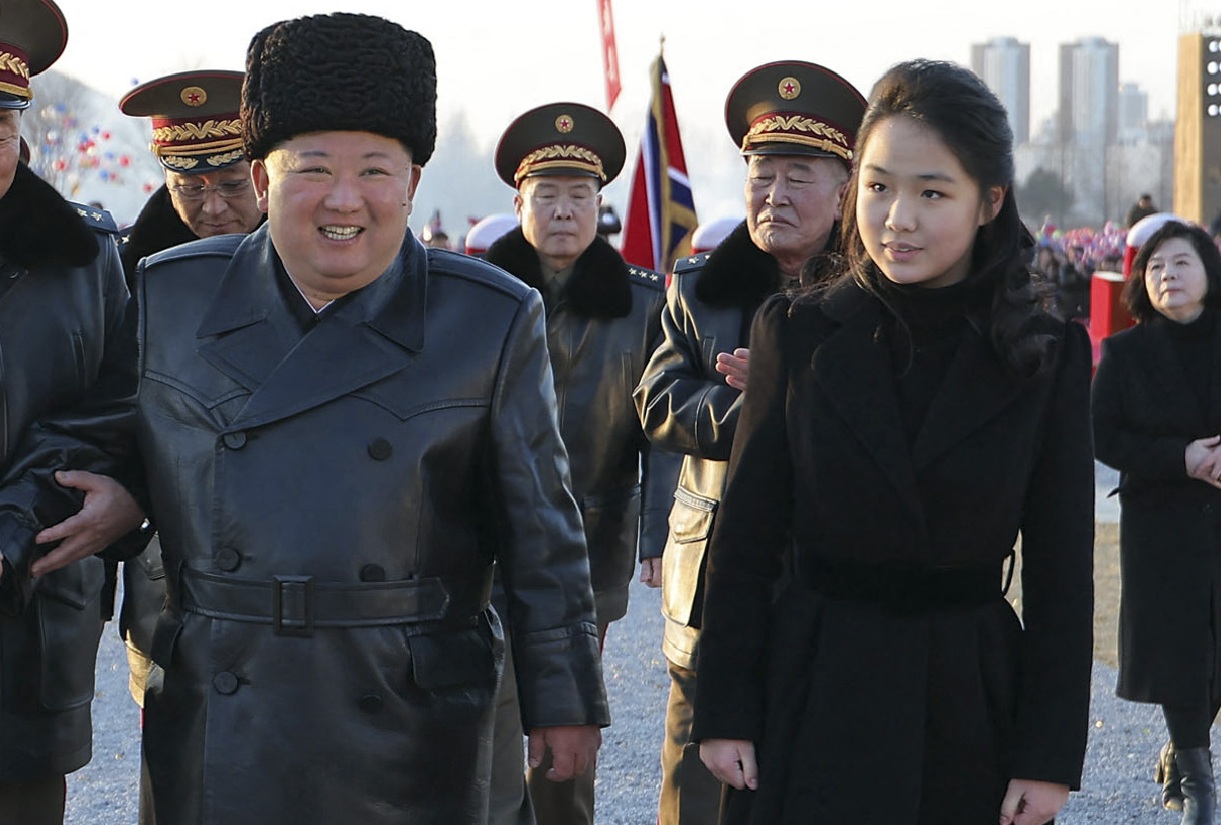
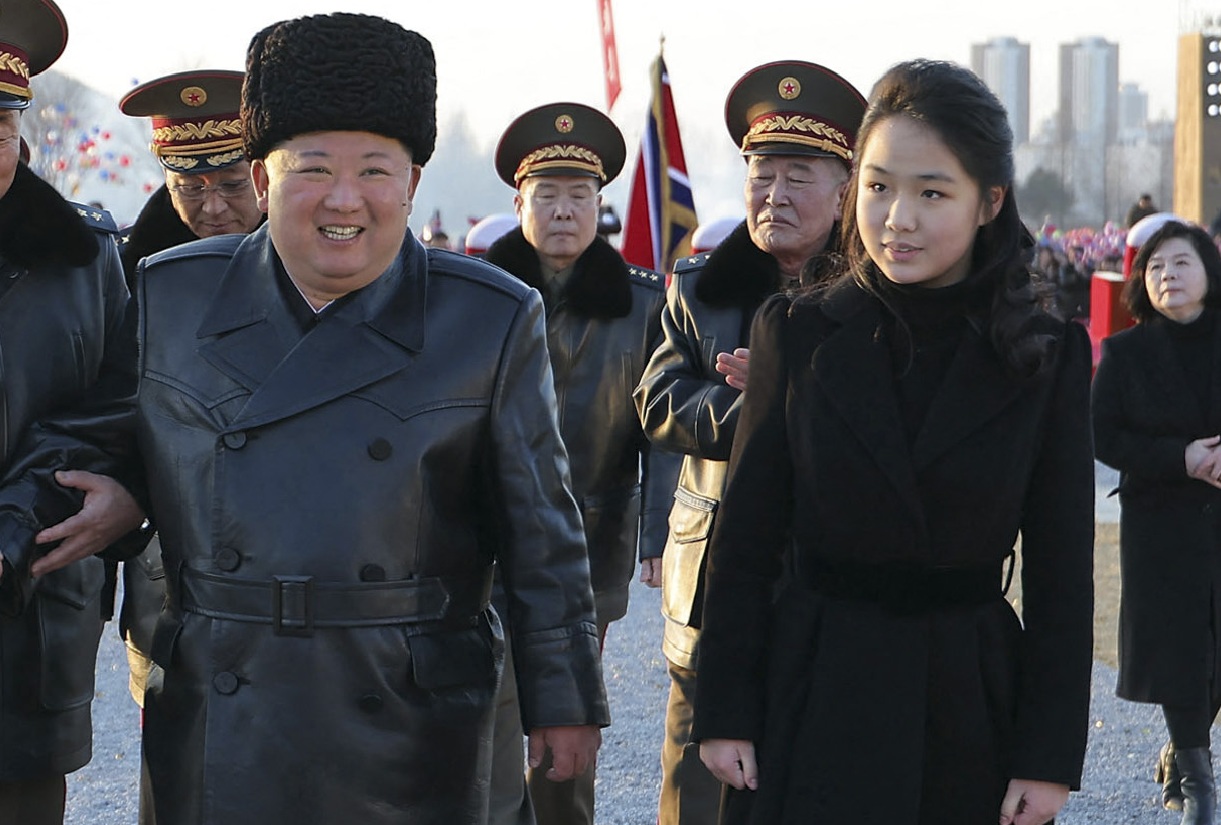
Workers' Party Congress Reelects Kim and Sets Five‑Year Agenda The Ninth Workers’ Party Congress opened on Feb 20 in Pyongyang’s House of Culture and concluded on Feb 23, reappointing Kim Jong Un as secretary‑general and adopting a five‑year resolution praising his leadership of the Korean People’s Army [2][3]. Delegates heard Kim claim the economy is improving and the nation’s regional standing is stronger [2]. The gathering, the first since 2021, is set to guide nuclear and economic policy through 2031 [2][3].
Teen Daughter Ju Ae Assigned Director‑Like Role Over Missile Administration On Feb 23, Kim placed his 13‑year‑old daughter, identified as Ju Ae, in a director‑like position within the Missile Administration that controls nuclear and ballistic missile forces [1]. South Korean intelligence reported she now receives briefings, issues orders, and has replaced longtime head Jang Chang Ha [1]. She was photographed at missile test sites alongside her father, prompting analysts to view her as a potential heir [1][2][3].
Economic Growth Claims and Strengthened Ties with Russia and China Kim told the congress that North Korea’s economy grew roughly 10 % over the past five years, a figure echoed by Lee Jong‑kyu of the Korea Development Institute [2]. The regime highlighted expanding trade with China and increased arms shipments to Russia as drivers of that growth [2]. Recent summits with President Xi Jinping and continued cooperation with Moscow were presented as evidence of an “irreversible” rise in state strength [2][3].
Nuclear and Conventional Weapons Programs Accelerate Under New Plan The congress announced a five‑year military development plan that will integrate nuclear and conventional forces and expand the nuclear arsenal [2][3]. Recent tests of solid‑fuel ICBMs, development of a nuclear‑propelled submarine, new warships, anti‑air systems and attack drones were cited as proof of progress [2]. Officials emphasized portable warheads for long‑range missiles as a priority after an eight‑year testing hiatus [3].
Succession Landscape Remains Fluid Amid Sister’s Potential Influence South Korean intelligence labeled Ju Ae the likely successor, but experts warned that internal dynamics, including the influence of Kim’s sister Yo Jong, could alter the outcome [1][3]. Observers noted seating arrangements at the congress to gauge elite fortunes, with some officials relegated to the back [3]. The fluid succession picture underscores the regime’s reliance on dynastic legitimacy while navigating power balances within the ruling family [1][3].
Sources
-
1.
Newsweek: Kim Jong Un Elevates Teen Daughter to Missile Administration Role: reports Ju Ae’s appointment to a director‑like missile post, her presence at launch sites, and intelligence’s heir assessment ahead of the party congress .
-
2.
AP: Kim Jong Un Praises Economy and Regional Power at Workers’ Party Congress: details Kim’s economic growth claim, stronger ties with Russia and China, weapons advancements, and the possibility of showcasing his daughter as heir .
-
3.
The Hindu: Kim Jong Un Opens Rare Workers' Party Congress, Signals Nuclear Push: describes the congress’s focus on nuclear expansion, elite seating analysis, supportive messages from China and Russia, and U.S. diplomatic overtures being rebuffed .
Related Tickers
Timeline
2021 – North Korea holds its previous Workers’ Party Congress, the last such gathering before the 2026 session, establishing a benchmark for the party’s five‑year planning cycle and highlighting the rarity of the event[3].
Late 2023 – Jang Chang Ha assumes leadership of the Missile Administration, overseeing the country’s nuclear and ballistic missile programs until his replacement in 2026[1].
2025 – Kim Jong Un attends a Beijing parade with Chinese President Xi Jinping and Russian President Vladimir Putin, reinforcing the strategic partnership that underpins his “irreversible” rise in regional power[3].
2025 – President Donald Trump announces he is “100 %” open to meeting Kim during a planned Asian tour, but Kim continues to reject high‑level U.S. diplomatic overtures[3].
2025 – Kim conducts a summit with Xi Jinping, deepening ties that fuel arms shipments to Russia and bolster North Korea’s claim of a stronger economy and geopolitical standing[2].
Feb 15, 2026 – The Ninth Workers’ Party Congress begins, reelects Kim Jong Un as secretary‑general, adopts a five‑year agenda praising the Korean People’s Army and setting policy direction through 2031[1].
Feb 20, 2026 – Kim opens the Workers’ Party Congress in Pyongyang’s House of Culture, declares the party has moved from “worst difficulties” to “optimism and confidence,” and calls for rapid economic construction and higher living standards[3].
Feb 20, 2026 – In his opening address, Kim praises a roughly 10 % economic growth over the past five years, cites stronger ties with Russia and China, and frames the congress as the platform for his next five‑year agenda[2].
Feb 20, 2026 – Kim announces plans to expand the nuclear arsenal, integrate nuclear and conventional forces under a new five‑year military development plan, and highlights progress on solid‑fuel ICBMs, a nuclear‑propelled submarine, new warships, anti‑air systems and attack drones[2].
Feb 20, 2026 – China and Russia send supportive messages to the congress, underscoring the alliance highlighted by Kim’s recent appearances with Xi and Putin, while U.S. diplomatic overtures remain rebuffed[3].
Feb 20, 2026 – Analysts note the congress may showcase Kim’s teenage daughter, Ju Ae (about 13), as a potential fourth‑generation successor, with her presence in the delegate audience signaling a formal dynastic transition[2][3].
Feb 23, 2026 – Kim elevates his daughter Ju Ae to a director‑like role in the Missile Administration, replacing Jang Chang Ha, briefs her on missile operations, and has her issue orders at test sites, prompting South Korean intelligence to label her the likely heir ahead of the party congress[1].
Feb 23, 2026 – South Korean officials observe that Ju Ae’s new position gives her direct access to generals and strategic weapons decisions, while analysts warn that internal dynamics, including the influence of Kim’s sister Yo Jong, could still shape the succession outcome[1].
2026‑2031 (planned) – The five‑year agenda adopted at the congress guides North Korea’s economic construction, nuclear weapons expansion, and integration of nuclear and conventional forces, setting the strategic roadmap for the regime through the next decade[2][3].