Pakistan Airstrikes on Afghan Border Kill Dozens, Spark Sovereignty Dispute
Updated (9 articles)
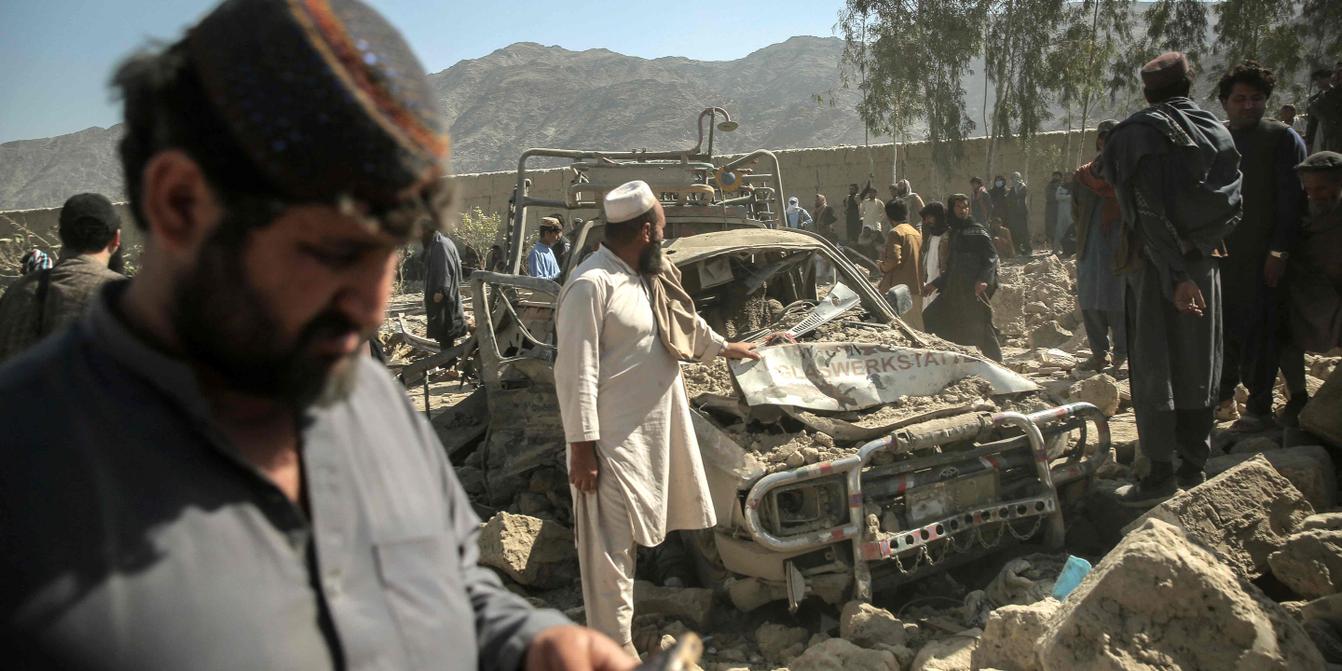
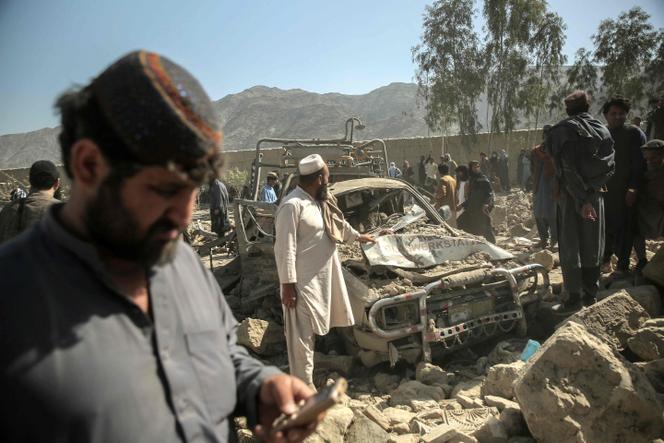
Airstrikes Launched on Feb 22 Target Seven Border Camps Pakistan’s military said it carried out intelligence‑based strikes against seven Taliban‑Pakistan (TTP) and Islamic State‑Khorasan (ISKP) hideouts in Nangarhar and Paktika on 22 February, describing the raids as retaliation for the 6 February mosque bombing that killed 40 people and other recent suicide attacks in Islamabad, Bajaur and Bannu [1][2][3]. The operation began around midnight and involved precision munitions aimed at camps the Pakistani defence ministry identified as terrorist bases [1][3]. Pakistan framed the action as a necessary response to “conclusive evidence” linking the attacks to Afghan‑based militants [3].
Pakistan Claims 70 Militants Killed, Mostly Nationals The Ministry of Information and Broadcasting announced that the strikes eliminated 70 terrorists, most of whom were Pakistani nationals, according to Interior State Minister Talal Chaudhry [2]. The figure excludes any civilian casualties and is presented as proof that Afghan soil is being used to launch attacks against Pakistan [2]. Pakistani officials also cited a separate security source that suggested the death toll could exceed 80, though this higher number was later contested by Afghan officials [1].
Afghan Sources Record Civilian Deaths, Dispute Kill Counts Afghan police confirmed that civilian structures were hit, reporting 18 people killed—including women and children—in a religious seminary and nearby homes [3]. Le Monde added that a mountain‑village family suffered 18 deaths and five injuries after a house collapse buried 23 relatives, while the Afghan defence ministry said “dozens” of civilians were killed and wounded across the three districts [1]. The Pakistani claim of over 80 deaths was denied by Afghan security sources, highlighting a sharp discrepancy between the two sides’ casualty figures [1].
Both Sides Accuse Violation of Doha Agreement and Ceasefire Pakistan accused the Afghan Taliban of breaching the 2020 Doha Agreement by allowing militants to operate from Afghan territory, urging the international community to pressure Kabul [1][2]. Afghanistan’s defence ministry labeled the airstrikes a “clear violation of international law” and warned of a “necessary and measured response” at an appropriate time [1][2][3]. The attacks threaten the fragile cease‑fire established after the deadly October 2025 clashes, which had temporarily halted large‑scale cross‑border fighting [3].
UN and International Observers Warn of Rising Civilian Toll A UNAMA report dated 8 February recorded 70 civilian deaths and 478 injuries in Afghanistan from Pakistani actions during the last three months of 2025, noting that the October 2025 clashes alone killed 47 civilians, far above the pre‑2020 average [1]. The United Nations has called for calculated responses and increased diplomatic pressure to prevent further civilian harm [1]. Analysts caution that continued unilateral strikes could erode any remaining confidence in the cease‑fire framework [3].
Sources
-
1.
Le Monde: Pakistan airstrikes kill dozens in Afghan border provinces, Afghan officials respond – Details Pakistan’s selective strikes on seven TTP/ISKP camps, Afghan civilian casualty reports, and conflicting death tolls, while highlighting UN data and Pakistan’s accusation against the Afghan Taliban .
-
2.
The Hindu: Pakistan Says 70 Terrorists Killed in Cross‑Border Strikes on Afghan Hideouts – Focuses on Pakistan’s claim of 70 militant deaths, identification of most victims as Pakistani nationals, and diplomatic blame placed on the Afghan Taliban for breaching the Doha Agreement .
-
3.
CNN: Pakistan Airstrikes Target Afghan‑Based Militants, Raising Cease‑Fire Concerns – Emphasizes the operation’s impact on the fragile cease‑fire, reports 18 civilian deaths, and outlines Pakistan’s justification linking the strikes to recent suicide bombings in Pakistan .
Related Tickers
Timeline
Oct 2025 – A fierce cross‑border clash along the 1,600‑mile Pakistan‑Afghanistan frontier kills 23 Pakistani soldiers and over 200 Afghan Taliban fighters, prompting both sides to negotiate a cease‑fire that later takes effect in October 2025[5].
Oct 2025 – Pakistan and the Afghan Taliban agree to a Qatar‑ and Turkey‑mediated cease‑fire after the October clashes, aiming to halt the deadliest exchanges since the Taliban’s 2021 takeover[3].
Dec 5‑6, 2025 – Overnight artillery and mortar fire erupts between Pakistani forces and Afghan Taliban near Spin Boldak; four bodies and four wounded are reported in Kandahar and three wounded in Pakistan, while both sides blame the other for “unprovoked” firing[2].
Dec 5‑6, 2025 – Delegations meet in Saudi Arabia for a fourth round of negotiations, reaffirming commitment to the cease‑fire despite the renewed skirmish[2].
Dec 10, 2025 – Chief of Defence Forces Asim Munir tells the National Ulema Conference that Afghan nationals constitute about 70 % of TTP formations entering Pakistan and urges the Afghan Taliban to choose “between Pakistan and the TTP”[8].
Jan 8, 2026 – Pakistani security forces conduct two intelligence‑based operations in North Waziristan and Kurram, killing 11 militants linked to Fitna‑al‑Khwarij and the Tehreek‑e‑Taliban Pakistan[7].
Jan 30‑31, 2026 – The Balochistan Liberation Army launches coordinated assaults on nine districts, killing 84 security personnel, kidnapping 18 and freeing over 30 inmates from a high‑security prison; the group frames the raids as phase two of its “Herof” operation[6].
Jan 30‑31, 2026 – Pakistan’s army responds province‑wide, reporting the elimination of at least 145 BLA militants; Interior Minister Mohsin Naqvi publicly accuses India of backing the attacks, a claim India later denies[6][1].
Feb 1, 2026 – A wave of gun and bomb attacks sweeps Balochistan, hitting hospitals, schools, banks and markets; 31 civilians and 17 security personnel die, while security forces fight for roughly 40 hours and kill at least 145 attackers[1].
Feb 1, 2026 – The death toll from the same day’s coordinated assaults exceeds 120, including 33 civilians and security staff killed by suicide bombers and gunmen, and 92 militants killed by security forces, marking the deadliest day for militants in decades[4].
Feb 1, 2026 – Prime Minister Shehbaz Sharif pledges to “continue the war against terrorism until its complete eradication” following the Balochistan attacks[1].
Feb 1, 2026 – Junior interior minister Talal Chaudhry says attackers disguise themselves as civilians and use human shields, targeting ordinary people in shops and briefly blocking roads[1].
Feb 22, 2026 – Pakistan launches selective airstrikes on seven Afghan camps linked to the Pakistani Taliban and ISKP, killing 70 militants and citing “conclusive evidence” that Afghan‑based leaders orchestrated recent suicide attacks in Islamabad[3][5].
Feb 22, 2026 – Afghan officials condemn the strikes as a “blatant violation of Afghanistan’s national sovereignty,” report dozens of civilian deaths—including women and children—in Nangarhar and Paktika, and warn of a “necessary and measured response”[3][9].
Feb 22, 2026 – UNAMA’s February 8 report documents 70 civilian deaths and 478 injuries in Afghanistan from Pakistani cross‑border actions during the last three months of 2025, underscoring the humanitarian impact of the escalating conflict[9].
All related articles (9 articles)
-
Le Monde: Pakistan airstrikes kill dozens in Afghan border provinces, Afghan officials respond
-
The Hindu: Pakistan Says 70 Terrorists Killed in Cross‑Border Strikes on Afghan Hideouts
-
CNN: Pakistan Airstrikes Target Afghan‑Based Militants, Raising Cease‑Fire Concerns
-
The Hindu: BLA’s Jan 30‑31 attacks spark fresh violence and diplomatic row in Balochistan
-
CNN: Deadliest Day of Violence in Balochistan Claims Over 120 Lives
-
BBC: Gun and bomb attacks in Balochistan kill dozens, spark 40‑hour clash
-
The Hindu: Pakistan security forces kill 11 terrorists in two KP operations
-
The Hindu: Pakistan's CDF urges Afghan Taliban to choose between TTP and Pakistan
-
BBC: Border Clashes Resume Between Pakistan and Afghan Taliban