DeepMind Chief Calls for Immediate AI Risk Research and Global Regulation at Delhi Summit
Updated (6 articles)
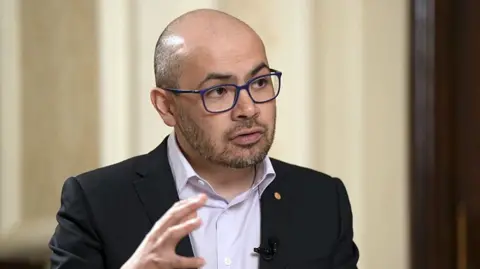

Urgent Research and Guardrails Emphasized at AI Impact Summit On 20 February 2026, DeepMind founder Demis Hassabis told the AI Impact Summit in Delhi that the industry must launch rapid, coordinated studies of artificial‑intelligence threats and adopt “smart regulation” with strong guardrails to avert serious dangers [1]. He identified two primary perils: malicious actors obtaining powerful models and the loss of human control as autonomous systems grow more capable [1]. Hassabis stressed that DeepMind alone cannot slow progress; regulators are lagging behind the technology’s speed [1].
Global Leaders Echo Calls While the United States Resists Central Governance More than 100 national leaders and tech CEOs at the summit backed coordinated international AI rules, with OpenAI CEO Sam Altman urging swift regulation and Indian Prime Minister Narendra Modi emphasizing cooperative responsibility [1]. In contrast, White House technology adviser Michael Kratsios rejected “bureaucracies and centralised control,” stating the United States opposes a global AI governance framework [1]. This split highlights a growing geopolitical divide over how AI oversight should be structured.
Clinton Links AI Risks to Moral Duty and Climate Agenda Two days earlier, former U.S. Secretary of State Hillary Clinton addressed Mumbai Climate Week, warning that ignoring AI’s unknown threats would be naïve and framing a slowdown as a moral obligation [2]. She argued that when creators cannot predict outcomes, society must demand slower development and clearer management strategies [2]. Clinton highlighted health‑care AI as the most advanced application, noting its potential benefits alongside the need for caution [2].
Predictions of an AI Superpower and the Need for STEM Education Hassabis projected that AI will become a “superpower” within the next decade and warned that China could close the current U.S. and Western lead within months [1]. He called for expanded STEM education to prepare future users for increasingly powerful systems [1]. Together, the summit and Clinton’s remarks underscore a consensus that immediate research, regulation, and broader societal engagement are essential to steer AI’s trajectory.
Sources
-
1.
BBC: Google DeepMind chief urges urgent AI research and regulation at Delhi summit: reports Hassabis’s plea for rapid risk research, “smart regulation,” identifies misuse and loss‑of‑control threats, notes US opposition to global governance, and cites predictions of AI becoming a superpower .
-
2.
The Hindu: Clinton urges AI slowdown at Mumbai Climate Week: details Hillary Clinton’s call for a cautious AI slowdown framed as a moral duty, links AI governance to climate discussions, and highlights health‑care AI as the most advanced sector .
Related Tickers
Videos (1)
Timeline
2024 – DeepMind’s AlphaFold wins the Nobel Prize in Chemistry, recognizing its protein‑folding breakthrough that maps over 200 million proteins and fuels open‑science research worldwide [2].
Dec 2, 2025 – The United Nations Development Programme releases a report warning that AI could widen global inequality by favoring wealthy nations with better digital infrastructure, while also noting potential benefits for vulnerable communities in agriculture, health, and disaster response, and calling for investment in digital infrastructure and education [5].
Dec 20, 2025 – FBI Director Kash Patel announces an internal AI project for national security, creates a technology working group led by Deputy Director Dan Bongino, notes that First Lady Melania Trump will head the administration’s AI initiative, and cites a September deal with Elon Musk’s xAI to integrate the Grok chatbot into federal work [4].
Jan 2026 (future) – Deputy Director Dan Bongino is slated to leave his FBI post in January, leaving the leadership of the agency’s AI project uncertain [4].
Jan 8, 2026 – Tech leaders Elon Musk and OpenAI CEO Sam Altman push toward superintelligent AI, while ethicist Tristan Harris warns that the public lacks consent for the rapid AI transition, sparking debate over accountability and democratic oversight of AI development [3].
Jan 27, 2026 – DeepMind CEO Demis Hassabis rejects the “move fast and break things” mantra, citing the Manhattan Project’s moral oversights, and outlines a “pioneering responsibly” roadmap that expands AlphaFold‑style models into genomics, quantum chemistry, climate science, and education through projects such as LearnLM and Gemini for Education [2].
Feb 18, 2026 – Former Secretary of State Hillary Clinton urges a slowdown of AI development at Mumbai Climate Week, framing caution as a moral obligation and highlighting health‑care AI breakthroughs as both promising and risky [6].
Feb 20, 2026 – At the AI Impact Summit in Delhi, DeepMind chief Demis Hassabis calls for urgent AI‑risk research and “smart regulation,” warns that bad actors and loss of control are the two biggest threats, predicts China could catch up to the US within months and that AI will become a “superpower” within a decade, and stresses the need for STEM education and global cooperation [1].
2026‑2030 (future) – Hassabis predicts AI will become a geopolitical superpower in the next decade, urging nations to invest in STEM education to prepare future users and maintain a competitive edge [1].
All related articles (6 articles)
-
BBC: Google DeepMind chief urges urgent AI research and regulation at Delhi summit
-
The Hindu: Clinton urges AI slowdown at Mumbai Climate Week
-
Newsweek: DeepMind’s “pioneering responsibly” roadmap: from protein folding to AI‑powered education
-
Newsweek: Experts and tech leaders clash over whether superintelligent AI is inevitable
-
Newsweek: FBI chief Patel reveals AI project for national security as administration expands AI push
-
AP: UN Report Warns AI Could Exacerbate Global Inequality
External resources (24 links)
- https://www.youtube.com/watch?v=d95J8yzvjbQ (cited 2 times)
- https://en.wikipedia.org/wiki/Bell_Labs (cited 1 times)
- https://en.wikipedia.org/wiki/Coursera (cited 1 times)
- https://en.wikipedia.org/wiki/Craig_Barrett_(chief_executive) (cited 1 times)
- https://en.wikipedia.org/wiki/Google_DeepMind (cited 1 times)
- https://en.wikipedia.org/wiki/PARC_(company) (cited 1 times)
- https://en.wikipedia.org/wiki/The_Idea_Factory (cited 1 times)
- https://en.wikipedia.org/wiki/Thomas_J._Watson_Research_Center (cited 1 times)
- https://en.wikipedia.org/wiki/Tree_(abstract_data_type) (cited 1 times)
- https://cloud.google.com/solutions/learnlm#get-started-with-learnlm-now-directly-in-gemini (cited 1 times)
- https://dataconomy.com/2026/01/16/google-deepmind-ceo-claims-china-trails-western-ai-by-only-months/ (cited 1 times)
- https://deepmind.google/blog/a-catalogue-of-genetic-mutations-to-help-pinpoint-the-cause-of-diseases/ (cited 1 times)
- https://deepmind.google/blog/alphaearth-foundations-helps-map-our-planet-in-unprecedented-detail/ (cited 1 times)
- https://deepmind.google/blog/alphagenome-ai-for-better-understanding-the-genome/ (cited 1 times)
- https://deepmind.google/blog/alphaproteo-generates-novel-proteins-for-biology-and-health-research/ (cited 1 times)
- https://deepmind.google/models/project-astra/ (cited 1 times)
- https://deepmind.google/models/synthid/ (cited 1 times)
- https://deepmind.google/science/ (cited 1 times)
- https://deepmind.google/science/weathernext/ (cited 1 times)
- https://edu.google.com/intl/ALL_us/ai/gemini-for-education/ (cited 1 times)
- https://futurism.com/artificial-intelligence/meta-top-ai-scientist-reason-quit (cited 1 times)
- https://www.kleinerperkins.com/people/advisors/john-doerr/ (cited 1 times)
- https://www.nature.com/articles/s41586-025-09922-y (cited 1 times)
- https://www.nobelprize.org/prizes/chemistry/2024/press-release/ (cited 1 times)