Putin’s Four‑Year War Deepens Authoritarianism as Economy Stagflates
Updated (4 articles)
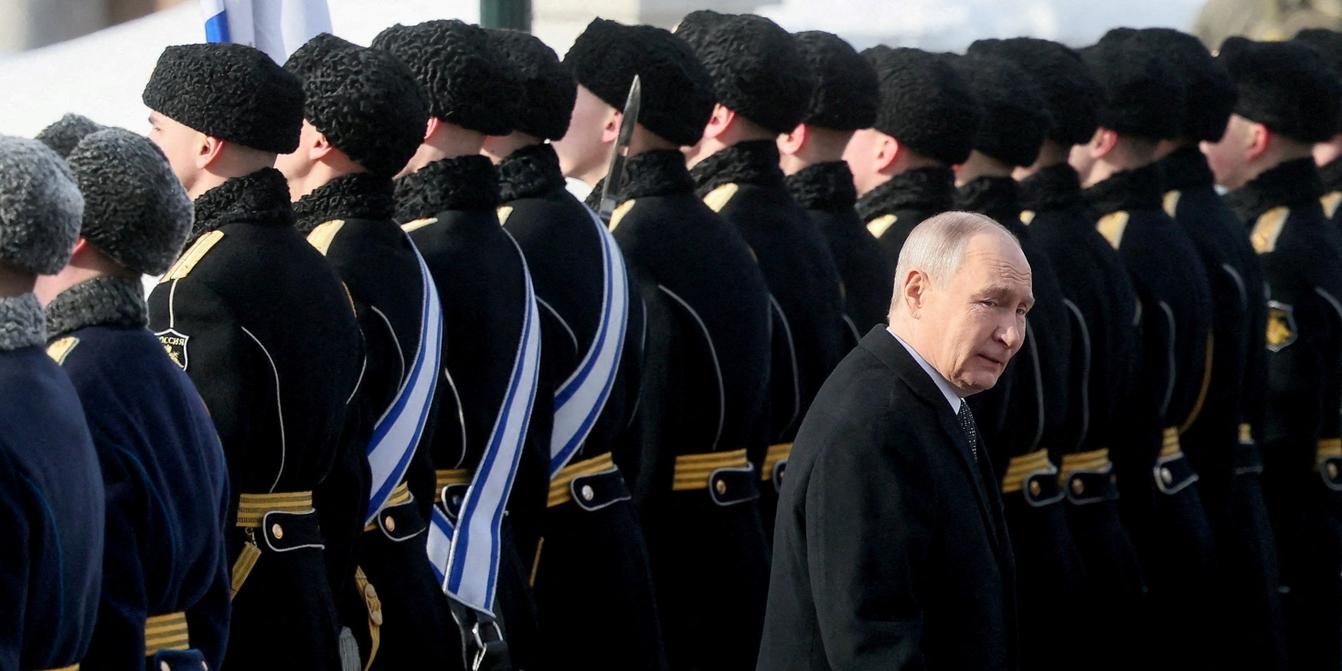
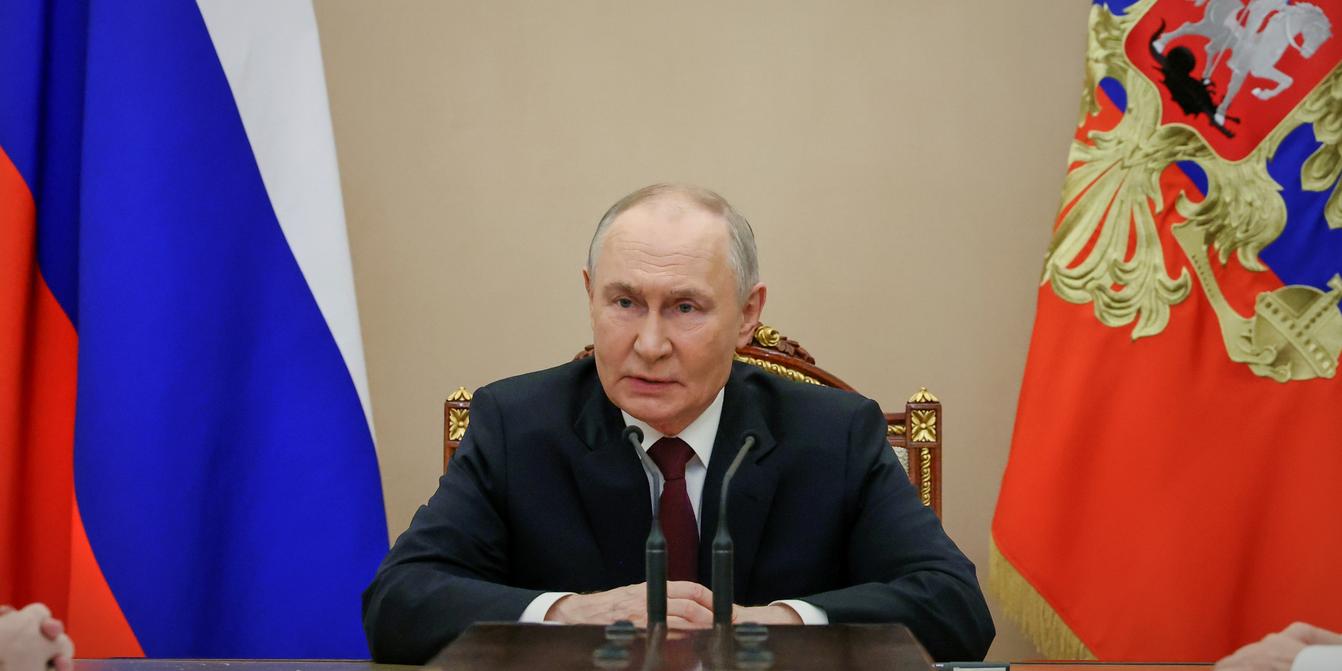
War Duration Surpasses Soviet Great Patriotic War Benchmark The “special military operation” began on 24 February 2022 and, by early 2026, has outlasted the 1941‑45 Great Patriotic War that Russian propaganda traditionally cites as a heroic standard [1][2]. Kremlin officials continue to use the historic comparison to justify the conflict, even as Ukrainian resistance and Western support prevent rapid advances [2]. The prolonged timeline marks the conflict’s entry into its fifth year, a milestone highlighted by both reports.
Putin Continues to Claim Victory Despite Stalemate President Vladimir Putin repeatedly declares the war a “victory” while avoiding any admission that the campaign has become a costly positional stalemate with limited territorial gains [1][2]. He refrains from explaining the lack of decisive progress, maintaining a narrative of eventual success despite mounting casualties [1]. Analysts note that this rhetoric serves to sustain domestic legitimacy amid growing war fatigue.
Russian Society Faces Intensified Repression and Controlled Polling Over the past four years, opposition parties, independent media, and civil‑society groups have been effectively eliminated, consolidating a tighter authoritarian grip [1]. The Levada Center reports over 80 % public support for the war, a figure the poll’s methodology critics argue is inflated by fear and restricted expression [1]. This environment of repression limits genuine public discourse and reinforces the regime’s narrative control.
Economy Shifts From Wartime Boost to Stagflation Initially, the Russian economy benefited from heightened military‑industrial demand, but by 2026 it is sliding into stagflation, marked by stagnant growth and rising prices [2]. Recruitment challenges persist without a full mobilization, and intensified police‑judicial pressure further strains the population’s capacity to sustain the war effort [2]. These economic pressures undermine the Kremlin’s ability to finance prolonged operations.
International Diplomatic Calculations Remain Stalled Putin had hoped a Trump presidency would enable a swift peace settlement, but negotiations led by U.S. envoys since May 2025 have yielded no substantive concessions from Moscow [2]. The Kremlin maintains maximalist demands, including territorial gains and a ban on Ukraine’s NATO membership, while avoiding direct criticism of U.S. actions in other regions [2]. This diplomatic impasse reinforces Putin’s isolation and the war’s continuation.
Sources
-
1.
Le Monde: Russia Deepens Authoritarianism Four Years After Ukraine Invasion: Highlights the regime’s tightening grip, the war’s unprecedented length, inflated poll support, and the absence of dissenting voices, emphasizing how authoritarianism has intensified since the 2022 invasion .
-
2.
Le Monde: Putin Remains Trapped in a Failing Four‑Year War: Focuses on the war’s strategic failure, economic stagflation, Putin’s reliance on a hoped‑for Trump‑era peace, and the broader diplomatic deadlock, portraying the conflict as a self‑limiting trap for the Russian leader .
Related Tickers
Timeline
Feb 24, 2022 – Russia launches its “special military operation” in Ukraine, marking the start of a war that the Kremlin frames as a fight against “fascist” Kyiv and that later exceeds the length of the Soviet Great Patriotic War (1941‑45) [3][4].
1941‑1945 – The Soviet victory in the Great Patriotic War becomes a benchmark for Kremlin propaganda, with Putin repeatedly invoking WWII imagery to legitimize the current conflict [3][4].
Dec 20, 2025 – U.S. intelligence concludes that Putin still aims to conquer all of Ukraine and reclaim former Soviet‑bloc territories, noting Russia holds roughly 20 % of Ukrainian land, including most of Donbas, while Kyiv rejects any cession [2].
Dec 31, 2025 – Putin tells India Today, “We will liberate Donbas and Novorossiya by any means,” projecting confidence that the war can end peacefully and positioning the upcoming summit with Narendra Modi as a diplomatic showcase of Russian resolve [1].
Early 2026 – Negotiators in Berlin finalize a U.S.–backed security‑guarantee package for Ukraine, slated for ratification by the U.S. Senate, but Zelenskyy remains skeptical about its effectiveness and Putin offers no concrete concessions [2].
Feb 23, 2026 – The conflict enters its fifth year, surpassing the duration of the Great Patriotic War; Putin, having counted on a Trump presidency to deliver a swift peace, now faces a stalled war, a stagflating economy, and mounting domestic repression while refusing to soften maximalist demands [4].
Feb 24, 2026 – Russia deepens authoritarian rule, with the Levada Center reporting “over 80 % of Russians approve the war,” a figure analysts treat as dubious given the climate of fear; the war’s length now exceeds WWII, reinforcing the regime’s narrative of an inevitable “victory” despite limited territorial gains [3].
All related articles (4 articles)
-
Le Monde: Russia Deepens Authoritarianism Four Years After Ukraine Invasion
-
Le Monde: Putin Remains Trapped in a Failing Four‑Year War
-
CNN: Putin projects confidence as Russia nears a grim milestone in Ukraine war
-
The Hindu: US intelligence says Putin's aims in Ukraine unchanged, broader European goals persist
External resources (3 links)
- https://abcnews.go.com/International/russia-ukraine-verge-deal-end-war-deputy-foreign/story?id=128390935 (cited 1 times)
- https://x.com/stanovaya/status/2005947027440406925?s=48 (cited 1 times)
- https://www.imf.org/external/datamapper/profile/RUS (cited 1 times)