India’s AI Impact Summit Secures 70+ International Sign‑Ons, Announces Sovereign AI Plans, Youth Arrests
Updated (3 articles)
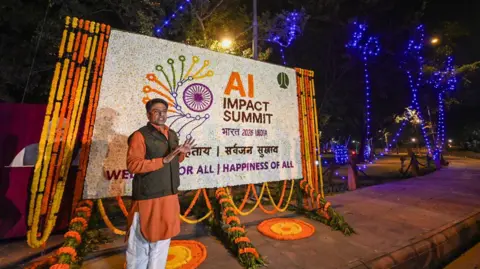
Record‑Breaking International Commitment and Economic Outlook The summit recorded more than 70 nation‑level signatories to its AI governance declaration, with Union IT Minister Ashwini Vaishnaw projecting the tally will exceed 80 [1]. IMF Managing Director Kristalina Georgieva warned that AI could lift global growth by 0.8 % while also posing job‑loss and financial‑stability risks, urging balanced policy action [1]. OECD Secretary‑General Mathias Cormann warned that 27 % of occupations face high automation risk and called for modular upskilling programs for adult workers [1].
Human‑Centred AI Strategy Targets Millions of Jobs Organizers framed the summit around human‑centred AI, citing India’s status as the world’s largest monthly active ChatGPT mobile user base and projecting over three million new technology jobs by 2030, reshaping more than ten million existing roles [2]. The International Labour Organization partnered with India to collect evidence that roughly one‑quarter of global workers encounter generative‑AI, emphasizing role transformation rather than wholesale replacement [2]. India’s e‑Shram platform now covers 315 million informal workers, boosted by Microsoft’s $17.5 billion AI‑diffusion pledge to embed AI in social‑protection services and the National Career Service portal [2]; a new High‑Powered “Education to Employment and Enterprise” committee will monitor AI’s labor impact [2]. Disparities persist, with only 11.5 % of jobs in low‑income economies exposed to generative AI versus about one‑third in high‑income nations [2].
Sovereign AI Initiatives and On‑Stage Demonstrations Highlighted Prime Minister Narendra Modi met OpenAI CEO Sam Altman and Qualcomm chief Cristiano Amon to discuss sovereign AI infrastructure for agriculture, environment, and education [1]. Bengaluru startup BLUE unveiled a “Semantic Video Data Lake” capable of compressing CCTV footage by up to 90 % and converting video into searchable semantic data [1]. Delhi Police detained four Youth Congress members after a shirtless protest inside the venue, charging them with disrupting the summit [1].
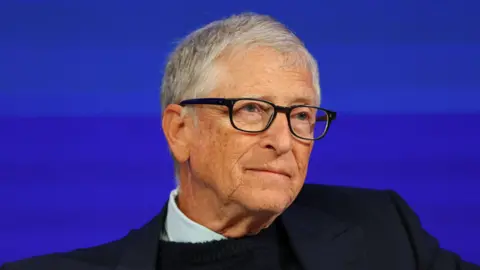
Global‑South Perspective Reveals Language Gaps and Skepticism The summit, the first of its kind in the Global South, attracted CEOs, politicians, and activists, with Bill Gates confirming a keynote appearance after earlier doubts [3]. While major tech firms operate in Bengaluru, Hyderabad, and Mumbai, many Indian data‑labelers earn an average of 480,000 rupees annually, underscoring stark income gaps [3]. Only half of India’s 22 official languages are supported by leading U.S. chatbots, prompting calls for multilingual AI to avoid exclusion in education, health, and banking [3]. Experts such as Dame Wendy Hall and Gina Neff warned that safety discussions were marginalised, casting doubt on the summit’s concrete outcomes [3].
Sources
-
1.
The Hindu: India AI Impact Summit sees record‑high global sign‑ups and key policy pledges: details 70+ international signatories, IMF growth estimate, OECD job‑risk warning, BLUE’s video‑compression demo, Modi’s meeting with Altman, and arrests of protesting Youth Congress members .
-
2.
The Hindu: India pushes human‑centred AI at Impact Summit, cites job growth and social‑protection goals: emphasizes human‑centred AI agenda, ChatGPT usage stats, ILO partnership, e‑Shram expansion with Microsoft funding, AI Mission and budget committee, and uneven AI exposure across economies .
-
3.
BBC: India’s AI Impact Summit Highlights Global‑South Shift and Ongoing Inequities: reports summit’s global‑South focus, Bill Gates keynote confirmation, low‑paid data‑labeler wages, language coverage gaps, sovereign AI mission funding, and expert skepticism about safety outcomes .
Related Tickers
Timeline
2025 – India’s e‑Shram platform registers over 315 million informal workers and lifts coverage from 19 % in 2015 to 64.3 % in 2025, while Microsoft commits $17.5 billion to embed AI across e‑Shram and the National Career Service portal, aiming to improve job access and skills development [3].
Feb 20, 2026 – The AI Impact Summit opens in New Delhi on the World Day of Social Justice, marking the first high‑level AI gathering in the Global South and framing the agenda around human‑centred AI for decent work and shared prosperity [3].
Feb 20, 2026 – Bill Gates confirms he will deliver the summit keynote after earlier doubts, underscoring the event’s global prominence [1].
Feb 20‑21, 2026 – India’s AI ecosystem reveals stark contrasts: data‑label workers earn an average of 480,000 rupees per year while firms such as OpenAI hold valuations above $500 billion, highlighting deep labour‑market inequities [1].
Feb 20‑21, 2026 – Language gaps limit AI accessibility: U.S. chatbots cover only about half of India’s 22 official languages, and Google’s Gemini supports just nine, prompting calls for broader multilingual development [1].
Feb 20‑21, 2026 – The government pushes a sovereign AI platform under the $1.2 billion AI Mission, but progress lags behind better‑funded U.S. and Chinese competitors, raising concerns about digital sovereignty [1].
Feb 21, 2026 – Over 70 nations sign the AI Impact Summit declaration, with expectations to exceed 80 signatories, creating the broadest multilateral commitment to AI governance to date [2].
Feb 21, 2026 – IMF Managing Director Kristalina Georgieva warns AI could add 0.8 % to global growth and help India achieve “Viksit Bharat,” while urging policymakers to balance benefits with safeguards against job loss and financial instability [2].
Feb 21, 2026 – OECD Secretary‑General Mathias Cormann warns that 27 % of jobs face high automation risk and calls for modular, targeted upskilling programs for adults [2].
Feb 21, 2026 – Prime Minister Narendra Modi meets OpenAI CEO Sam Altman and Qualcomm CEO Cristiano Amon on the summit sidelines, touting sovereign AI’s role in agriculture, environment and education [2].
Feb 21, 2026 – Bengaluru startup BLUE unveils a “Semantic Video Data Lake” that compresses CCTV footage by up to 90 % and stores events as searchable semantic data, showcasing advanced video‑AI capabilities [2].
Feb 21, 2026 – The International Labour Organization partners with India and global AI observatories to guide inclusive AI governance, noting that roughly one‑quarter of workers worldwide face generative‑AI exposure [3].
Feb 21, 2026 – Four Youth Congress members are arrested after a shirtless protest inside the summit venue, charged for displaying T‑shirts bearing Modi and Trump images [2].
Feb 21, 2026 – Experts such as Dame Wendy Hall, AI ethicist Gina Neff and OpenUK chief Amanda Brock warn that safety discussions are being sidelined, limiting the summit’s potential to produce concrete outcomes [1].
Feb 2026 (budget cycle) – The Union Budget 2026‑27 creates a High‑Powered “Education to Employment and Enterprise” Standing Committee to assess AI’s impact on jobs, embed AI education from school level and enable AI‑driven worker‑job matching [3].
Future (2026‑2027) – India aims to achieve digital sovereignty and economic transformation through its AI Mission and related research funds, seeking to position itself as a leader in inclusive AI governance despite a modest budget [1].