US Deputy Secretary Warns China Nearing Nuclear Parity After New START Expiration
Updated (5 articles)
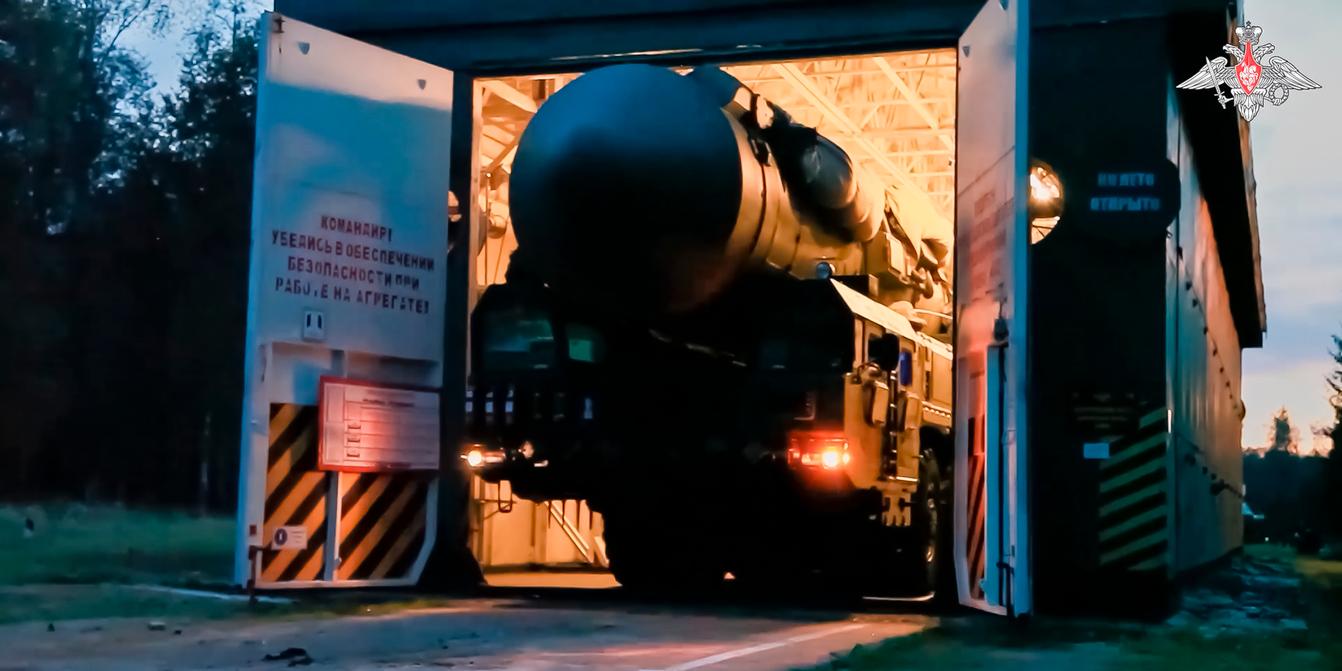
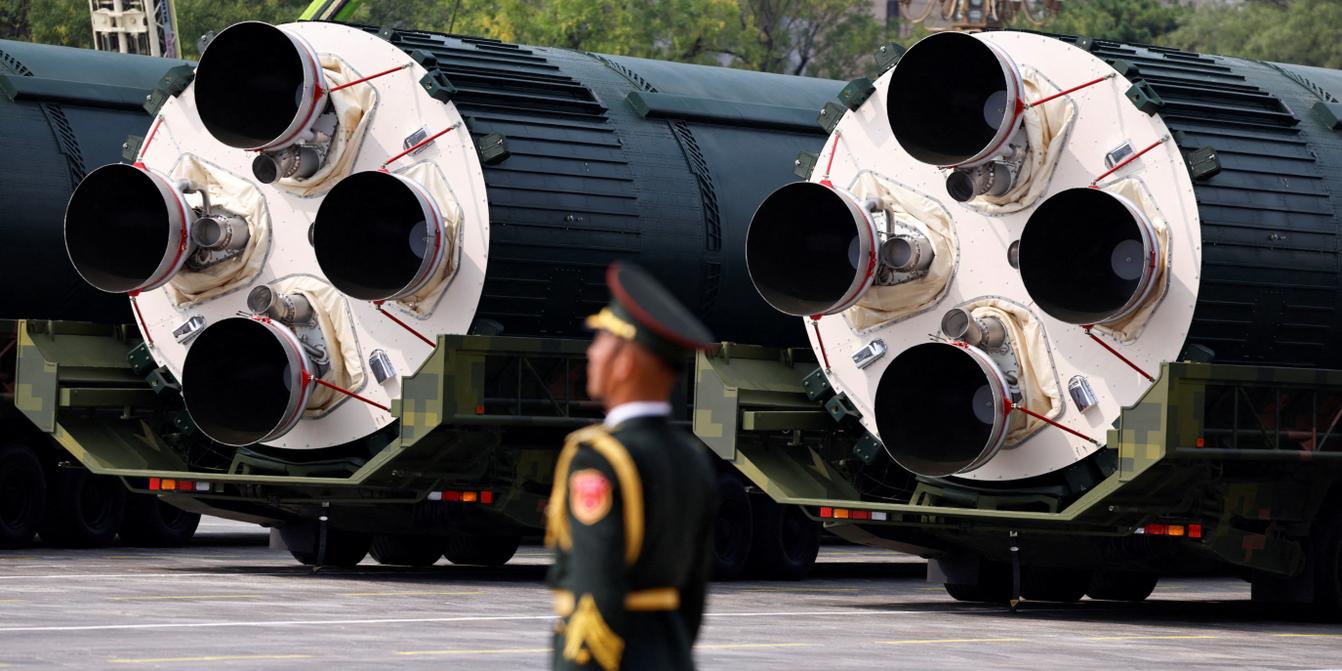
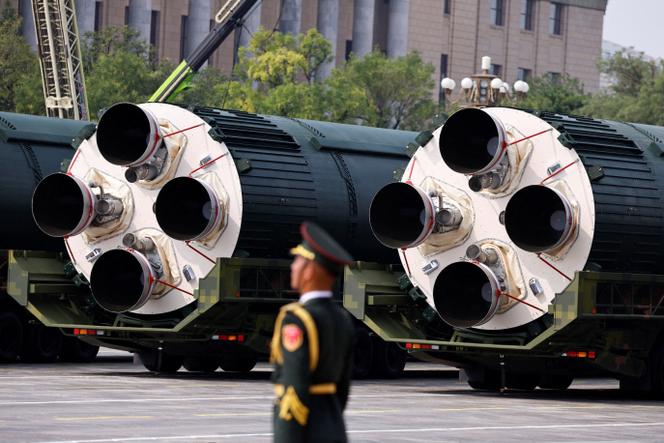
New START Treaty Lapsed, Removing Legal Caps on Warheads The New START agreement expired on 5 February 2026, ending the last binding limit that capped U.S. and Russian deployed warheads at 1,550 each and provided verification mechanisms [2]. For the first time since 1972, no international treaty now regulates the development, deployment, or testing of strategic nuclear forces [2]. The lapse leaves the U.S. and Russia’s combined arsenals—each exceeding 5,000 warheads—unconstrained, raising global security concerns [1][2].
U.S. and Russia Retain Majority of Global Nuclear Stockpiles Together, the United States and Russia possess roughly 90 % of the world’s nuclear weapons, underscoring their dominant role in any future arms dynamics [2]. The Ican coalition highlighted these figures while warning that the removal of treaty limits could spark a new arms race [1]. Both powers have signaled interest in negotiating a “better agreement,” though no concrete framework has emerged yet [1].
U.S. Deputy Secretary Accuses China of Rapid Arsenal Growth At the Geneva disarmament conference on 23 February 2026, Deputy Secretary of State for Arms Control Christopher Yeaw asserted that China is “deliberately and without constraint” expanding its nuclear stockpile, potentially exceeding 1,000 warheads by 2030 [1]. He cited hidden nuclear tests in June 2020 and plans for larger explosions, estimating China could achieve parity with the United States within four to five years [1]. The claim aligns with broader editorial concerns that China, while currently lagging, is set to “muscle” its way toward matching U.S. and Russian arsenals [2].
China Denies Allegations, Rejects Trilateral Negotiations Shen Jian, China’s ambassador for disarmament in Geneva, dismissed Yeaw’s accusations as unfounded, arguing China’s arsenal is far smaller than those of the United States and Russia [1]. He rejected the notion of Chinese participation in any trilateral talks that might include the U.S. and Russia, labeling such expectations “unreasonable” [1]. This rebuttal highlights a diplomatic split over how to address nuclear expansion in the post‑New START era.
Policy Gap Fuels Concerns Over Renewed Arms Race The treaty’s end, combined with President Trump’s decision not to extend New START—contrary to Russian President Vladimir Putin’s wishes—has left a regulatory vacuum that analysts fear could accelerate proliferation [2]. New York Times journalists David Sanger and William Broad warned that a “new generation of nuclear weapons” is emerging as “vengeance after New Start,” signaling heightened risk of a fresh arms competition [2]. The divergent U.S. stance and China’s denial create uncertainty about future arms‑control frameworks.
Sources
-
1.
Le Monde: US Deputy Secretary Accuses China of Rapid Nuclear Expansion After New Start Lapse: details Yeaw’s Feb 23 Geneva remarks, claims China could field >1,000 warheads by 2030, notes Chinese rebuttal and Ican coalition data, emphasizing the urgency of a new trilateral agreement .
-
2.
Le Monde: Nuclear Arms Unchecked After New START Lapse: editorial on Feb 19 describing the treaty’s expiration, the absence of any caps, the projected expansion of U.S., Russian, and Chinese arsenals, Trump’s refusal to extend the pact, and NYT journalists’ warnings of a renewed nuclear race .
Related Tickers
Timeline
Feb 2010 – President Barack Obama and President Dmitri Medvedev sign the New START treaty, limiting each side to 1,550 deployed warheads, 700 delivery systems and 800 launchers and establishing a verification regime [1][2].
Feb 2011 – New START enters into force, becoming the last legally binding U.S.–Russia nuclear arms‑control pact [1][2].
2020 – The United States and Russia agree to a five‑year extension of New START, pushing the original 2021 expiration to 2026 [1][2].
2022 – A Pentagon report projects China’s nuclear stockpile could reach roughly 1,500 warheads by 2035, underscoring a strategic gap not covered by the bilateral treaty [1][3].
Feb 4, 2026 – Chinese Foreign Ministry spokesperson Lin Jian says China will not join any trilateral nuclear‑arms‑control talks, calling the demand “neither fair nor reasonable” given its ~600‑warhead arsenal [3].
Feb 5, 2026 – New START expires, ending the last legal caps on U.S. and Russian strategic arsenals for the first time since 1972 and removing limits of 1,550 warheads and 700 delivery systems [1][5].
Feb 5, 2026 – President Donald Trump posts on Truth Social that the U.S. will not extend New START, calls the treaty “badly negotiated,” and urges nuclear experts to draft a modernized, China‑inclusive agreement [1][2].
Feb 5, 2026 – Secretary of State Marco Rubio states the administration will not maintain New START caps and insists any future treaty must involve China to reflect 21st‑century realities [1][2].
Feb 5, 2026 – The Russian Foreign Ministry labels the U.S. stance “erroneous and regrettable,” declares Russia no longer bound by treaty obligations and free to choose its next steps [1].
Feb 5, 2026 – Former officials Paul Dean, Rose Gottemoeller, Matthew Kroenig and Daryl Kimball warn the lapse could spark a rapid Russian buildup and a three‑way U.S.–Russia–China nuclear race [1][3].
Feb 5, 2026 – The Bulletin of the Atomic Scientists moves the Doomsday Clock to 89 seconds to midnight, citing heightened nuclear tensions after the treaty’s expiration [3].
Feb 7‑8, 2026 – New York Times reporters David Sanger and William Broad note a “new generation of nuclear weapons” emerging as “vengeance after New START,” signaling a renewed arms competition [5].
Feb 23, 2026 – Deputy Secretary of State for Arms Control Christopher Yeaw tells the Geneva disarmament conference that China is rapidly expanding its arsenal, could field >1,000 warheads by 2030, and may reach parity with the U.S. in four‑to‑five years, accusing Beijing of opaque development [4].
Feb 23, 2026 – Yeaw adds that the Feb 5 lapse of New START removed warhead caps, prompting Washington to seek a “better agreement” that includes China [4].
Feb 24, 2026 – Chinese ambassador for disarmament Shen Jian rejects U.S. accusations, asserts China’s arsenal is far smaller than the U.S. and Russia, and opposes expectations of Chinese participation in trilateral talks [4].
2026‑2027 (future) – The Trump administration signals intent to convene U.S. nuclear experts to draft a new, China‑inclusive treaty before the end of 2026, though formal negotiations have yet to begin [2].
All related articles (5 articles)
-
Le Monde: US Deputy Secretary Accuses China of Rapid Nuclear Expansion After New Start Lapse
-
Le Monde: Nuclear Arms Unchecked After New START Lapse
-
CNN: Nuclear Arms Control Unraveling as New START Ends
-
Newsweek: Trump Calls for New Nuclear Treaty as New START Ends
-
Newsweek: China Rejects Calls to Join New START as Treaty Expires