Trump Raises Global Tariff to 15% Starting Feb 24, Courts Block Emergency Authority
Updated (3 articles)


Announcement and Decree Set 15% Rate Effective Feb 24 President Donald Trump announced on 21 February via Truth Social that the worldwide tariff would rise from 10 % to 15 % with immediate effect; a presidential decree orders the higher rate to begin on 24 February and last for 150 days, exempting pharmaceuticals and goods covered by the United States‑Mexico‑Canada Agreement and applying to partners such as the EU, Japan, South Korea and Taiwan [1][2][3].
Supreme Court Ruling Curtails Use of Emergency Powers In a 6‑3 decision the U.S. Supreme Court held that the president cannot invoke the 1977 International Emergency Economic Powers Act without clear congressional authorization, overturning the legal basis for the earlier emergency tariffs and affirming a lower‑court order that blocked reciprocal duties on South Korea and other allies [1][2][3].
Legal Limits Allow Temporary 15% Tariffs Under Section 122 Section 122 of the Trade Act permits a president to impose up to a 15 % duty for a limited period, but Congress must approve any extension beyond 150 days; analysts estimate the new rate would raise the overall tariff burden on U.S. imports to about 6 % this year. Trump said additional “legally permissible” tariffs will be rolled out over the next short number of months, and USTR Jamieson Greer launched Section 301 investigations into major partners over industrial excess capacity, forced labor and digital‑goods issues [2][3].
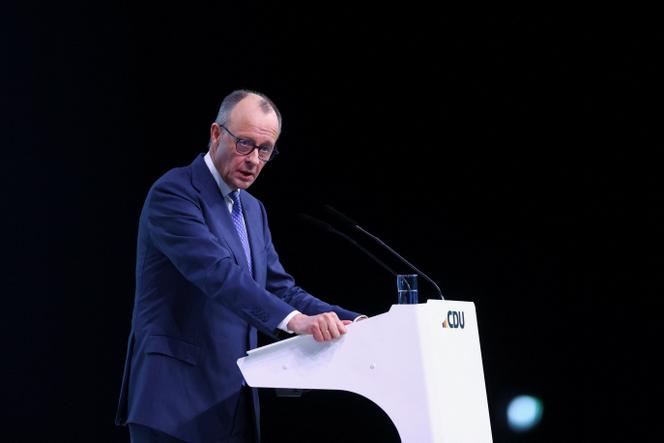
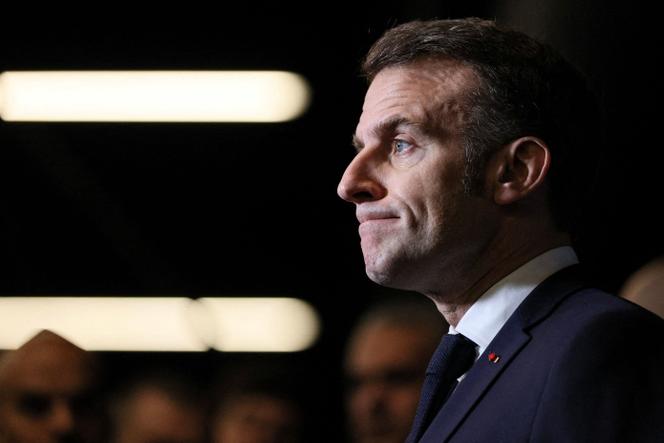
EU Leaders Plan Coordinated Response Amid Economic Concerns French trade minister Nicolas Forissier and German Chancellor Friedrich Merz announced plans to discuss a common EU stance, citing tools such as the anti‑coercion instrument to counter U.S. surcharges. Economists note Brazil, Canada, China and India would face lower rates, while Argentina, Australia, Saudi Arabia and the UK would see higher tariffs; retailers like Walmart and Amazon may benefit, but Treasury Secretary Scott Bessent warned consumers are unlikely to see price relief. President Emmanuel Macron praised the court decision as a democratic check and reiterated France’s intent to export under fair rules [1][2].
Sources
-
1.
Le Monde: Trump raises global tariffs to 15% after US Supreme Court rebuke: Details Trump’s Feb 21 announcement, the Feb 24 start, 150‑day period, exemptions, and French/German reactions, emphasizing the $130 billion customs revenue in 2025 .
-
2.
CNN: Trump lifts global tariff to 15% after Supreme Court rebuke: Highlights the Supreme Court’s 6‑3 ruling, uncertainty about implementation timing, projected overall tariff burden of 6 %, and mixed impact on various countries and consumers, noting Section 122 and Section 301 tools .
-
3.
Yonhap: Trump Raises Global Tariff to 15% After Supreme Court Ruling: Focuses on Trump’s criticism of the court, the immediate 10 % provisional tariff under Section 122, upcoming legally permissible tariffs, and the launch of Section 301 investigations by USTR Greer targeting industrial excess capacity and forced labor .
Related Tickers
Timeline
1977 – The International Emergency Economic Powers Act (IEEPA) is enacted, later becoming the legal foundation the Trump administration attempts to use for emergency tariffs, a basis the Supreme Court later rejects[1].
2025 – Customs duties collected from Trump’s global tariffs surpass $130 billion, raising the prospect of large refunds if the tariffs are invalidated[3].
Feb 21, 2026 – The U.S. Supreme Court issues a 6‑3 ruling that blocks the president’s use of IEEPA to justify reciprocal tariffs, curtailing his authority under the 1977 law[1].
Feb 21, 2026 – President Trump signs a proclamation invoking Section 122 of the 1974 Trade Act, imposing a temporary 10 percent global tariff that takes effect at 12:01 a.m. Tuesday, as an immediate reaction to the Court’s decision[2].
Feb 21, 2026 – Trump announces on Truth Social that the worldwide tariff rises from 10 percent to 15 percent “effective immediately,” framing the move as retaliation against countries that have “ripped” the U.S. off for decades[1].
Feb 21, 2026 – Trump calls the Court’s ruling “ridiculous, poorly written and extraordinarily anti‑American,” and says the administration will roll out additional legally permissible tariffs over the “next short number of months”[2].
Feb 21, 2026 – Treasury Secretary Scott Bessent warns that consumers are unlikely to see price relief despite the tariff increase[1].
Feb 21, 2026 – U.S. Trade Representative Jamieson Greer launches Section 301 investigations of major trading partners, targeting industrial excess capacity, forced labor, pharmaceutical pricing, discrimination against U.S. tech firms, and digital goods/services[2].
Feb 21, 2026 – French trade minister Nicolas Forissier states the EU has appropriate tools, including the anti‑coercion instrument, to counter U.S. surcharges[3].
Feb 21, 2026 – German Chancellor Friedrich Merz announces plans to discuss a coordinated EU response with allies before his upcoming Washington meeting with Trump[3].
Feb 21, 2026 – French President Emmanuel Macron praises the Supreme Court decision as a democratic check on power and reaffirms France’s intent to export under fair rules without unilateral U.S. actions[3].
Feb 21, 2026 – A presidential decree sets the 15 percent tariff to begin on Feb 24 for a 150‑day period, exempting pharmaceuticals and USMCA‑covered goods and applying to partners such as the EU, Japan, South Korea, and Taiwan[3].
2026 (later months) – Trump signals that additional tariffs compliant with the law will be rolled out during the “next short number of months,” indicating further trade actions beyond the initial 15 percent increase[2].
External resources (2 links)
- https://google.com/search?q=furniture+tariff+cnn&rlz=1C5GCCM_en&oq=furniture+tariff+cnn&gs_lcrp=EgZjaHJvbWUqBggAEEUYOzIGCAAQRRg7MggIARAAGBYYHjIKCAIQABiABBiiBDIKCAMQABiABBiiBDIKCAQQABiABBiiBDIGCAUQRRg8MgYIBhBFGDzSAQgzNjYxajBqNKgCALACAfEF1yZPvfUj5tQ&sourceid=chrome&ie=UTF-8 (cited 1 times)
- https://www.ft.com/content/b1177a90-56ed-4936-8a02-a72424df510d (cited 1 times)