Judge Expected to Grant Injunction Blocking Pentagon Punishment of Senator Kelly
Updated (20 articles)
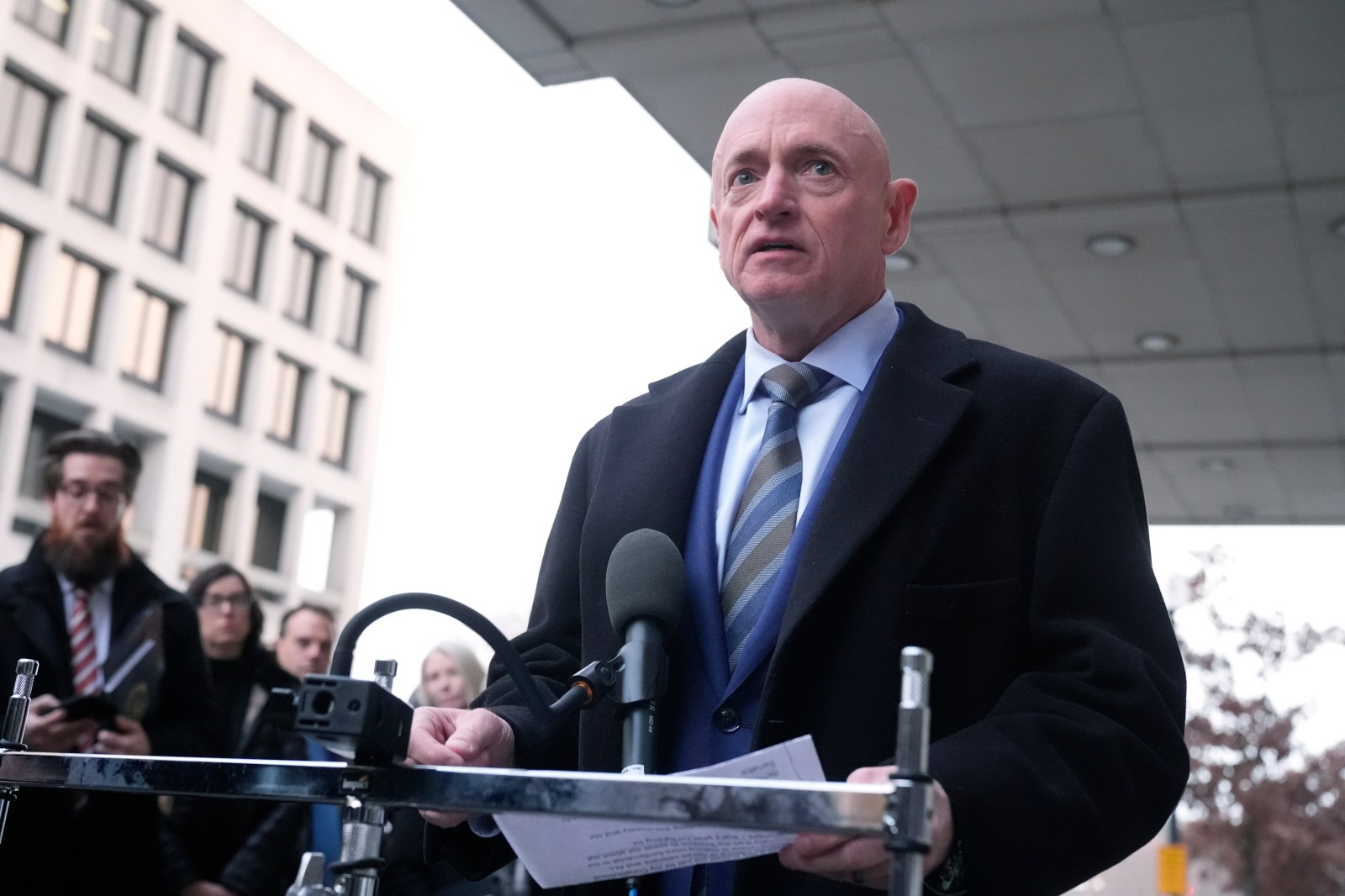
Background Video Triggers Pentagon Discipline In November 2025, Senator Mark Kelly and five Democratic veterans appeared in a 90‑second video urging service members to refuse unlawful orders, prompting Defense Secretary Pete Hegseth to open a recall investigation and later issue a formal censure on Jan 5, 2026, along with threats to downgrade Kelly’s retired rank and cut his pension [1][2][3]. The Pentagon justified the action by citing a federal statute that permits recalling retirees for court‑martial or discipline, asserting that retired personnel remain subject to the Uniform Code of Military Justice [2][3]. President Donald Trump subsequently labeled the lawmakers “sedition punishable by death,” intensifying the political pressure surrounding the case [3].
Legal Clash Centers on Constitutional Protections Kelly’s attorneys argue the Pentagon’s measures violate his First Amendment rights and the Speech‑and‑Debate Clause, contending that no precedent limits speech protections for retired service members [1][2][3]. The Justice Department counters that Congress has determined retirees are still bound by the UCMJ, a position Judge Richard Leon described as “unprecedented” and lacking Supreme Court authority [1][2][3]. Kelly’s counsel, Benjamin Mizer, warned that any restriction would require new legislation, emphasizing the broader free‑speech stakes for all military retirees [1][2][3].
Judge Leon Signals Likely Injunction During a Feb 3 hearing, Judge Leon expressed doubt that any Supreme Court case authorizes the Pentagon’s censure, warned of a chilling effect on retirees, and indicated he expects to issue a ruling by next Wednesday, Feb 11, likely granting Kelly’s request for an injunction [1][2][3]. Leon questioned the expansion of constitutional precedent to cover retired members, describing it as “a bit of a stretch,” and signaled reluctance to create new First Amendment protections for retirees [1]. His remarks suggest the court may block the rank reduction, pension cut, and formal censure pending a definitive legal determination.
Broader Political and Institutional Implications The DOJ has already interviewed at least four other senators and representatives featured in the November video, indicating a wider investigation into Democratic lawmakers [1]. Legal scholars note that upholding the Pentagon’s actions could silence retired military voices and deter elected officials from speaking on defense matters [1][2]. The case highlights tension between civilian oversight of the military and constitutional rights, with the upcoming decision poised to set a precedent for how retired service members are treated under the UCMJ and First Amendment jurisprudence [2][3].
Sources
-
1.
CNN: Judge Likely to Grant Mark Kelly Injunction Against Pentagon Punishment: reports Judge Richard Leon’s indication he will likely block the Pentagon’s rank downgrade, pension cut, and censure, with a decision expected by Feb 11, emphasizing First Amendment concerns .
-
2.
Newsweek: Judge Questions Pentagon’s Authority to Censure Senator Mark Kelly: details Leon’s skepticism about any Supreme Court precedent permitting the Pentagon’s punishment, outlines the November recall investigation and Hegseth’s Jan 5 censure, and highlights DOJ’s claim retirees remain under the UCMJ .
-
3.
AP: Judge doubts Supreme Court precedent for Pentagon’s censure of Sen. Mark Kelly: focuses on Leon’s doubts about legal authority, the constitutional arguments from Kelly’s team, the background of the November video and Trump’s reaction, and the potential chilling effect on retired military speech .
Timeline
Nov 2025 – Six Democratic lawmakers, including Sen. Mark Kelly, release a 90‑second video urging U.S. service members that they “can refuse illegal orders,” sparking controversy over recent drug‑boat strikes [2][18].
Nov 29, 2025 – Former President Donald Trump posts on Truth Social that the video constitutes “sedition punishable by death,” intensifying political pressure on the Pentagon [19][13].
Late Nov 2025 – Defense Secretary Pete Hegseth sends a memo to Navy Secretary John Phelan requesting guidance on possible punishment for Kelly, citing his retired status [8].
Dec 5, 2025 – At a Tucson town hall, Kelly declares a court‑martial threat “unconstitutional” and tells Trump to “take a hike,” defending his right to speak as a civilian [13].
Dec 6, 2025 – The Department of Defense formally opens an investigation into Kelly under the Uniform Code of Military Justice, noting the possibility of recalling him to active duty for a court‑martial [13].
Dec 10, 2025 – The Navy secretary’s deadline to advise Hegseth on disciplinary options arrives; no decision is announced publicly [13].
Dec 11, 2025 – The Navy submits recommendations on potential sanctions—including rank reduction and pension cuts—to the Pentagon’s Office of General Counsel; Kelly is not notified [8].
Dec 16, 2025 – The Pentagon upgrades the review to a formal 30‑day command investigation led by a senior officer, labeling the video “seditious” and signaling possible UCMJ charges [7][17].
Jan 5, 2026 – Secretary Hegseth announces retirement‑grade determination proceedings, a formal Letter of Censure, and a proposed reduction of Kelly’s retired pay, calling the remarks “reckless and seditious” [12][6][16].
Jan 5, 2026 – The Pentagon also moves to demote Kelly’s retired rank and cut his pension under 10 U.S.C. § 1370(f), framing the action as “accountability for seditious acts” [2][6].
Jan 6, 2026 – Kelly vows to “fight this with everything I’ve got,” calling the censure “outrageous” and “un‑American,” and pledges legal resistance [11].
Jan 12, 2026 – Kelly files a federal lawsuit in Washington, D.C., seeking an injunction against the censure, rank reduction, and pension cut, alleging violations of the First Amendment and the Speech‑and‑Debate Clause [10][20][15].
Jan 13, 2026 – Kelly sues Defense Secretary Hegseth directly, asserting the department “illegal‑ly” attempts to demote him in retaliation for protected speech [1].
Jan 21, 2026 – The dispute raises Kelly’s national profile, prompting standing ovations and speculation about a future presidential run, while allies like Sen. Jon Ossoff frame the case as a civil‑liberties fight [4].
Feb 3, 2026 – U.S. District Judge Richard Leon holds a hearing on Kelly’s request for a temporary restraining order, expressing doubt that any Supreme Court precedent authorizes the Pentagon’s punishment and warning of a chilling effect on retirees [14][9].
Feb 4, 2026 – Judge Leon signals he will likely grant Kelly’s injunction blocking the punitive measures, with a written decision expected by Feb 11, 2026 [3].
Feb 4, 2026 – Leon reiterates that disciplining Kelly could deter “many, many other retirees” from speaking out, underscoring the constitutional stakes of the case [9].
Feb 11, 2026 (expected) – The judge is slated to issue a ruling on the injunction, which will determine whether the Pentagon can proceed with rank reduction and pension cuts [3].
Dive deeper (14 sub-stories)
-
Judge Expected to Grant Injunction Blocking Pentagon Punishment of Senator Kelly by Feb 11
(2 articles)
-
Newsweek: Judge Questions Pentagon’s Authority to Censure Senator Mark Kelly
-
CNN: Kelly's Pentagon clash elevates his profile as threats mount and lawsuit advances
-
Senator Mark Kelly Files Lawsuit Against Defense Secretary Over Alleged Demotion Retaliation
(2 articles)
-
Senator Mark Kelly Seeks Court Block of Pentagon Censure Over Illegal‑Order Video
(2 articles)
-
Senator Mark Kelly Sues Pentagon and Navy Over Retirement Rank and Pay Reduction
(2 articles)
-
AP: Defense Secretary Pete Hegseth censures Sen. Mark Kelly amid Pentagon probe over video urging troops to defy illegal orders
-
BBC: Pentagon moves to demote Senator Mark Kelly over video it called 'seditious'
-
CNN: Pentagon moves to cut Sen. Mark Kelly's retirement pay over 'illegal orders' video
-
Newsweek: Hegseth says Pentagon moves to cut Mark Kelly's pension and issue formal censure over seditious remarks
-
Pentagon Launches Formal Command Investigation Into Sen. Mark Kelly’s ‘Illegal Orders’ Video
(2 articles)
-
CNN: Navy Submits Report on Potential Punishment for Senator Mark Kelly Over Illegal Orders Video
-
Newsweek: Pentagon Considers Court‑Martial of Senator Mark Kelly Over Video, Hegseth Responds
-
Pentagon Investigation of Retired Senator Kelly Meets Legal Resistance After Trump‑Triggered Probe
(2 articles)
All related articles (20 articles)
-
CNN: Judge Likely to Grant Mark Kelly Injunction Against Pentagon Punishment
-
Newsweek: Judge Questions Pentagon’s Authority to Censure Senator Mark Kelly
-
AP: Judge doubts Supreme Court precedent for Pentagon’s censure of Sen. Mark Kelly
-
CNN: Kelly's Pentagon clash elevates his profile as threats mount and lawsuit advances
-
BBC: Senator Mark Kelly sues Defence Secretary Pete Hegseth over attempted demotion
-
AP: Sen. Mark Kelly sues Pentagon over censure tied to warnings about unlawful orders
-
CNN: Sen. Mark Kelly sues to block Pentagon punishment over illegal-orders video
-
Newsweek: Mark Kelly files federal lawsuit against Hegseth and the Pentagon over rank and pension actions
-
King5 (Seattle, WA): Sen. Kelly sues Pentagon over attempts to punish him for warnings about illegal orders
-
Newsweek: Sen. Mark Kelly vows legal fight after Hegseth moves to censure and seek demotion of his Navy retirement
-
AP: Defense Secretary Pete Hegseth censures Sen. Mark Kelly amid Pentagon probe over video urging troops to defy illegal orders
-
BBC: Pentagon moves to demote Senator Mark Kelly over video it called 'seditious'
-
CNN: Pentagon moves to cut Sen. Mark Kelly's retirement pay over 'illegal orders' video
-
Newsweek: Hegseth says Pentagon moves to cut Mark Kelly's pension and issue formal censure over seditious remarks
-
CNN: Pentagon initiates formal Command investigation of Sen. Mark Kelly over “illegal orders” video
-
AP: Pentagon probe of Sen. Mark Kelly seen as effort to curb military dissent
-
CNN: Navy Submits Report on Potential Punishment for Senator Mark Kelly Over Illegal Orders Video
-
Newsweek: Pentagon Considers Court‑Martial of Senator Mark Kelly Over Video, Hegseth Responds
-
AP: Pentagon Investigation of Senator Mark Kelly Over “Illegal Orders” Video Faces Legal Pushback
-
AP: Pentagon probes Senator Mark Kelly over “illegal orders” video
External resources (7 links)
- https://www.congress.gov/crs-product/R45043 (cited 1 times)
- https://storage.courtlistener.com/recap/gov.uscourts.dcd.288365/gov.uscourts.dcd.288365.1.0_1.pdf (cited 2 times)
- https://www.nytimes.com/2026/01/08/briefing/trump-interview-oval-office-apple-ceo.html (cited 1 times)
- https://s3.documentcloud.org/documents/26456665/secretary-hegseths-letter-to-senator-kellys-counsel.pdf (cited 1 times)
- https://truthsocial.com/@realDonaldTrump/posts/115582703277798715 (cited 1 times)
- https://x.com/SecWar/status/2008189258528665898?lang=en (cited 1 times)
- https://x.com/SenMarkKelly/status/2008215189275963870 (cited 1 times)