13-Year-Old Swims Four Hours, Saves Mother and Siblings Off Western Australia
Updated (3 articles)
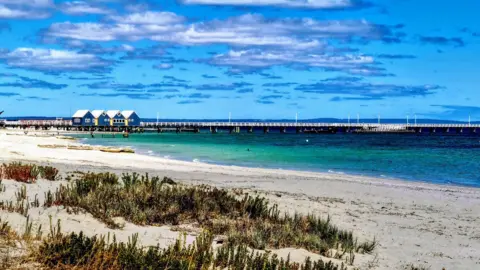
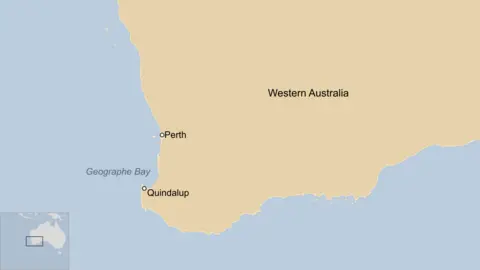
Teen’s marathon swim amid rough sea conditions On Friday, February 2, 2026, 13‑year‑old Austin Appelbee set out with his mother Joanne (47) and two younger siblings (12‑year‑old brother Beau and 8‑year‑old sister) on a kayak and paddleboard off Quindalup in Geographe Bay. Strong offshore winds and choppy water dragged the inflatable craft 14 km (9 mi) from shore, forcing the family to cling to a paddleboard in darkness. Austin abandoned his kayak after it filled with water and, after discarding his life jacket, swam roughly four kilometres over four hours using breaststroke, freestyle and backstroke to reach land [1][2][3].
Rescue operation triggered by the boy’s signal At about 6 p.m. local time the teenager signaled for help, prompting WA Police to launch a large‑scale search [3]. A rescue helicopter located the family at 8:30 p.m., and a volunteer marine‑rescue vessel retrieved them shortly thereafter, bringing all three survivors ashore around 9 p.m. [1][3]. The operation involved police, the Naturaliste Volunteer Marine Rescue Group and Marine Rescue Busselton, which later issued a public safety warning about offshore winds [2].
Authorities hail the effort as “superhuman” Police Inspector James Bradley praised Austin’s determination, saying it “cannot be praised highly enough” and credited it with saving lives [1]. Marine Rescue commander Paul Bresland described the swim as a “superhuman effort,” noting the extreme conditions and the teenager’s endurance without a life jacket for the final two hours [2][3]. The rescue crew received thanks from the family, and officials used the incident to stress how quickly ocean conditions can change [1][3].
Physical impact on the siblings and family background After the rescue, brother Beau reported loss of leg sensation from prolonged exposure to cold water, while all three children survived shivering but alive [1]. Joanne Appelbee highlighted that all her children had been swimming since early childhood, which she believes contributed to Austin’s confidence and technique [2]. The family’s experience underscores the importance of water‑safety education in coastal communities [2].
Sources
-
1.
AP: Teen’s Four‑Hour Swim Saves Mother and Siblings Off Western Australia – Details the four‑hour, 4 km swim, police praise, and the family’s condition after rescue .
-
2.
CNN: Teen’s Four‑Kilometre Swim Saves Family Off Western Australia Coast – Emphasizes the “superhuman” label from Marine Rescue, the boy’s mixed‑stroke technique, and the post‑rescue safety warning .
-
3.
BBC: Teen Swims 4 km to Save Family Off Western Australia – Focuses on the timeline of the alarm, life‑jacket removal, and the coordinated helicopter‑vessel rescue .
Timeline
Jan 30, 2026 – A family of four sets out paddle‑boarding and kayaking off Quindalup in Geographe Bay when gusty offshore winds push their inflatable craft away from shore, leaving the mother, 13‑year‑old son, 12‑year‑old brother and 8‑year‑old sister stranded at sea. [1][2]
Jan 30, 2026 – The teen’s kayak fills with water; he abandons the kayak and begins swimming toward shore, initially wearing a life jacket for two hours before discarding it to increase his speed in the rough sea. [1]
Jan 30, 2026 – Using breaststroke, freestyle and survival backstroke, the boy covers roughly four kilometres in cold, choppy water, reaches shore around 18:00, collapses on the beach, then sprints two kilometres to a phone and calls emergency services. [2]
Jan 30, 2026 – At 18:00 local time the boy signals for help, prompting WA Police to launch a large‑scale search and rescue operation from Quindalup beach, coordinating police, helicopter and volunteer marine‑rescue assets. [1][2]
Jan 30, 2026 – At 20:30 a rescue helicopter locates the mother, son and daughter clinging to a paddleboard ≈ 14 km offshore; a volunteer marine‑rescue vessel then retrieves them and brings them safely ashore. [1]
Jan 30, 2026 – Marine‑Rescue commander Paul Bresland describes the teenager’s two‑hour, life‑jacket‑free swim as a “superhuman effort,” while Police Inspector James Bradley says his determination “cannot be praised highly enough.” [1][3]
Jan 30, 2026 – Mother Joanne Appelbee tells reporters she is “speechless” and credits the family’s lifelong swimming background for the rescue, while her son Austin explains he used multiple strokes and a sprint to reach a phone. [2]
Jan 30, 2026 – The family’s younger son Beau later reports loss of leg sensation from prolonged cold exposure, underscoring the physical toll of the ordeal. [3]
Jan 30, 2026 – Marine‑Rescue Busselton issues a public safety warning urging beachgoers to heed strong offshore winds that commonly occur this time of year. [2]
Feb 2, 2026 – The rescued family visits the Naturaliste Volunteer Marine‑Rescue crew to thank them, and the rescue group publicly hails the teen’s “superhuman” bravery. [1]