Abu Dhabi Trilateral Talks Prompt US‑Russia Military Dialogue and New START Extension Talks
Updated (11 articles)
Abu Dhabi Trilateral Meeting Deemed Constructive by Ukrainian Leaders On February 5, 2026, delegations from the United States, Ukraine and Russia met in Abu Dhabi for trilateral consultations and working‑group sessions, which Ukrainian Defense Council Secretary Rustem Umerov described as constructive. Presidential Office Head Kyrylo Budanov echoed the assessment, calling the talks constructive and noting progress on confidence‑building measures. The meeting followed earlier diplomatic overtures and set the stage for renewed military‑to‑military contacts. [1]
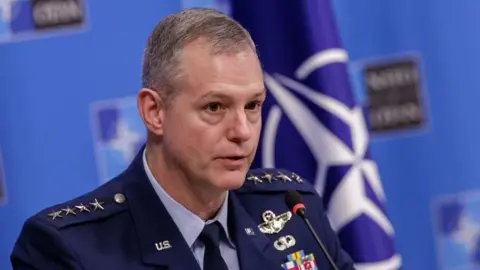
U.S. and Russian Senior Officers Re‑Establish Military Dialogue Senior U.S. and Russian officers resumed regular dialogue on the margins of the Abu Dhabi summit, with U.S. European Command’s General Alexus Grynkewich leading the American side. The renewed channel is framed as a peace‑building tool to reduce miscalculation and increase transparency between the forces. Both sides agreed to maintain senior‑level contacts while broader negotiations continue. [2]
New START Treaty Expired; Six‑Month Bridge Negotiated The New START treaty, limiting each side to 1,550 strategic warheads, expired on February 5, 2026, creating a potential legal vacuum. U.S. EUCOM officials and Russian military representatives discussed a six‑month bridge to extend the pact while a new agreement is negotiated. Russia expressed regret over the lapse and signaled willingness to talk, as reported by Kremlin spokesman Dmitry Peskov. [1][2]
Kremlin Pushes “Neutral” Ukraine Narrative Amid Negotiations In a February 4 interview with RT, Foreign Minister Sergei Lavrov dismissed Western security guarantees for Ukraine as a pretext for arming Kyiv and warned of a false‑flag attack. Lavrov also stated that Russia would only accept a “friendly, neutral, and benevolent” Ukraine, implying a proxy‑state outcome rather than full territorial control. These narratives accompany the diplomatic talks and aim to shape international perception of Moscow’s objectives. [1]
Ukraine Hits Kapustin Yar and Deploys Starlink Terminals The Ukrainian General Staff confirmed that on January 2026, Ukraine struck Russia’s Kapustin Yar launch site with FP‑5 Flamingo cruise missiles, damaging missile‑preparation hangars. Defense Minister Mykhailo Fedorov announced the first operational Starlink terminals, intended to deny Russian forces communications and drone control. Both actions illustrate Kyiv’s effort to degrade Russian strike capabilities while enhancing its own battlefield connectivity. [1]
Sources
-
1.
ISW: Abu Dhabi talks, new Kremlin narratives, and shifting battlefield tools: Details the constructive Abu Dhabi trilateral meeting, Lavrov’s narrative on a neutral Ukraine, the six‑month New START bridge, Ukraine’s Kapustin Yar strike and rollout of Starlink terminals.
-
2.
BBC: US and Russia Resume Regular Military‑to‑Military Dialogue: Reports the resumption of senior U.S.–Russian military contacts after the Abu Dhabi summit, frames it as a peace‑building measure, and highlights negotiations to extend the expiring New START treaty.
Related Tickers
Videos (1)
Timeline
2010 – The New START treaty is signed, capping each side at 1,550 strategic warheads and 700 delivery vehicles and establishing the first post‑Cold‑War nuclear arms‑control framework in decades [1].
2014 – Russia annexes Crimea, creating a precedent for Moscow’s territorial demands that later dominate the Donbas negotiations in 2026 [8].
2021 – The United States and Russia suspend regular senior‑level military‑to‑military contacts, a channel that remains dormant until early 2026 [1].
Feb 2022 – Russia launches a full‑scale invasion of Ukraine, sparking a multi‑year conflict that underpins all subsequent diplomatic initiatives [2][3].
Jan 2026 (early) – President Donald Trump meets President Volodymyr Zelenskyy at the Davos World Economic Forum; Zelenskyy calls the discussion “really positive” and hints at forthcoming U.S. security guarantees [4].
Jan 22, 2026 – Zelenskyy announces that trilateral talks with Russia and the United States will be held in the United Arab Emirates, stressing that “the future status of eastern Ukraine” – the Donbas – is the central unresolved issue and urging Russia to be ready to compromise [4].
Jan 23, 2026 – The first trilateral security talks open in Abu Dhabi in a closed format, bringing together U.S. envoys Steve Witkoff and Jared Kushner, Russian General Igor Kostyukov, and Ukrainian Defense Council head Rustem Umerov; minutes after a three‑hour Putin‑Witkoff meeting, Russia launches a five‑hour long‑range bomber patrol over the Baltic Sea as a show of force [2][3][6][7].
Jan 23, 2026 – Zelenskyy tells reporters the talks are “too early to judge,” notes that Ukraine’s security‑guarantees document is finalized and a signing date is being coordinated with President Trump, and warns that the Donbas remains the “key obstacle” to any settlement [7][10].
Jan 23, 2026 – The EU delivers 447 emergency generators to Ukraine and Kyiv orders 18 IRIS‑T air‑defence launchers from Diehl Defence, underscoring the acute energy‑crisis and defense needs amid ongoing Russian strikes [7].
Jan 25, 2026 – Zelenskyy declares the U.S. security‑guarantees paper “100 % ready,” links Ukraine’s EU accession by 2027 to those guarantees, and stresses that any deal must respect Ukraine’s borders, with the text awaiting a Trump‑set signing date and subsequent ratification by both legislatures [9].
Jan 26, 2026 – U.S. envoy Witkoff describes the Abu Dhabi session as “very constructive” and announces a follow‑up round for Feb 1; the same day Russia conducts its largest overnight air raid on Kyiv, killing a civilian and cutting heat to 6,000 apartments, while Ukraine retaliates with strikes on Russian targets, including a Krasnodar oil refinery [5][5].
Jan 26, 2026 – Kremlin spokesman Dmitry Peskov says the talks are constructive but note “no major agreement,” and German Foreign Minister Johann Wadephul warns that Moscow’s “stubborn insistence on the decisive territorial issue” could stall the process [8].
Jan 2026 – Ukrainian forces hit Russia’s Kapustin Yar missile‑launch complex with FP‑5 Flamingo cruise missiles, damaging preparation hangars and marking a rare deep‑strike into Russian rear areas [11].
Feb 1, 2026 – A second round of trilateral negotiations is scheduled to reconvene in Abu Dhabi to continue work on the 20‑point plan, security guarantees, and a possible ceasefire, though no outcome is reported yet [5].
Feb 4, 2026 – Russian Foreign Minister Sergei Lavrov tells RT that the proposed multi‑layered U.S. security guarantees amount to “practically an ultimatum,” dismisses them as a pretext for Western arms to Kyiv, and reiterates that Russia seeks a “neutral, friendly” Ukraine rather than a fully sovereign state [11].
Feb 4, 2026 – Senior U.S. and Russian military commanders discuss a six‑month “bridge” to extend the New START treaty beyond its Feb 5 expiry while informal dialogue continues, reflecting a mutual desire to avoid a legal vacuum [11].
Feb 5, 2026 – The New START treaty expires; U.S. European Command frames the renewed senior‑level dialogue as a “peace‑building tool,” Russia expresses regret over the lapse and offers to negotiate an extension, and President Trump later posts on social media urging a “new, improved, and modernized” treaty [1].
Feb 5, 2026 – The United States and Russia officially resume regular senior‑level military‑to‑military dialogue on the margins of the Abu Dhabi meeting, agreeing to maintain consistent contact to reduce miscalculation as the New START treaty lapses [1].
Feb 5, 2026 – Ukraine begins registering Starlink terminals to disrupt Russian communications and drone control, a step announced by Defense Minister Mykhailo Fedorov as part of a broader effort to blunt battlefield interdiction [11].
Feb 10, 2026 – Trilateral talks continue in Abu Dhabi, with Ukrainian officials Rustem Umerov and Kyrylo Budanov calling the sessions “constructive,” while Lavrov’s narrative of a “neutral, friendly” Ukraine gains prominence in Russian media [11].
Future (2026‑2027) – The United States and Ukraine plan to sign the finalized security‑guarantees document, pending a Trump‑set date, followed by ratification in the U.S. Congress and Ukraine’s parliament; parallel negotiations aim to secure a six‑month extension of New START and eventually a longer‑term arms‑control agreement, while the Donbas territorial question remains the decisive hurdle to any comprehensive peace settlement [1][5][9].
All related articles (11 articles)
-
ISW: Abu Dhabi talks, new Kremlin narratives, and shifting battlefield tools
-
BBC: US and Russia Resume Regular Military‑to‑Military Dialogue
-
AP: Kremlin Reports Constructive Progress in Abu Dhabi Peace Talks Amid Ongoing Conflict
-
CNN: Ukraine‑Russia‑US Trilateral Talks Advance Amid Ongoing Fighting
-
AP: U.S. Security Guarantees for Ukraine Declared Ready, Zelenskyy Says
-
BBC: Ukraine‑Russia‑US Trilateral Talks in Abu Dhabi: Limited Progress Amid High Stakes
-
Newsweek: Zelensky says it's too early to judge Abu Dhabi trilateral talks
-
AP: Kremlin says territorial issue key obstacle to Ukraine peace as Abu Dhabi talks proceed
-
CNN: US, Ukraine and Russia hold first trilateral talks on security issues in Abu Dhabi
-
BBC: Russia, Ukraine and US to hold trilateral talks in Abu Dhabi
-
BBC: Zelensky says trilateral talks with US and Russia set for UAE after Davos meeting
External resources (123 links)
- https://www.youtube.com/watch?v=ZDBt8L4uAGE (cited 2 times)
- https://www.state.gov/new-start-treaty (cited 1 times)
- https://www.ap.org/news-highlights/spotlights/2024/russia-has-used-its-hypersonic-oreshnik-missile-for-the-first-time-what-are-its-capabilities/ (cited 1 times)
- https://www.axios.com/2026/02/05/new-start-arms-control-us-russia-extend (cited 1 times)
- https://www.wsj.com/politics/national-security/trump-calls-for-new-nuclear-pact-with-russia-as-previous-treaty-ends-eb3a4a9a?gaa_at=eafs&gaa_n=AWEtsqe9tx83y1eM3bSbrkc2tcmVRwXJLEfvsfanXR3G7-uiAuKkyLbHtrDu&gaa_ts=6985628d&gaa_sig=5bl_4dKWc7HBoIvrjWn73RtGU76Xk9h-jGg5H3Xq5COUm3ox-oDoHzUH3LCv07SWuCAYf4YLBgaPck-dbyic3g%3D%3D (cited 1 times)
- https://t.me/GeneralStaffZSU/34637 (cited 10 times)
- https://t.me/GeneralStaffZSU/34639 (cited 10 times)
- https://t.me/GeneralStaffZSU/34677 (cited 10 times)
- https://t.me/wargonzo/32111 (cited 9 times)
- https://t.me/GeneralStaffZSU/34665 (cited 4 times)
- https://t.me/SJTF_Odes/13556 (cited 4 times)
- https://t.me/boris_rozhin/196946 (cited 4 times)
- https://t.me/Joint_Forces_Task_Force/20009 (cited 3 times)
- https://t.me/DnevnikDesantnika/39364 (cited 2 times)
- https://t.me/DnevnikDesantnika/39380 (cited 2 times)
- https://t.me/DnevnikDesantnika/39402 (cited 2 times)
- https://t.me/severnnyi/6639 (cited 2 times)
- https://t.me/voenkorKotenok/70390 (cited 2 times)
- https://t.me/voin_dv/18573 (cited 2 times)
- https://t.me/DSNS_Kharkiv/20549 (cited 1 times)
- https://t.me/DnevnikDesantnika/39371 (cited 1 times)
- https://t.me/DnevnikDesantnika/39375 (cited 1 times)
- https://t.me/DnevnikDesantnika/39382 (cited 1 times)
- https://t.me/DnevnikDesantnika/39386 (cited 1 times)
- https://t.me/DnevnikDesantnika/39401 (cited 1 times)
- https://t.me/GeneralStaffZSU/34666 (cited 1 times)
- https://t.me/GeneralStaffZSU/34678 (cited 1 times)
- https://t.me/Khyzhak_brigade/2318 (cited 1 times)
- https://t.me/NeoficialniyBeZsonoV/49374 (cited 1 times)
- https://t.me/RBC_ua_news/181246 (cited 1 times)
- https://t.me/RVvoenkor/108710 (cited 1 times)
- https://t.me/RVvoenkor/108730 (cited 1 times)
- https://t.me/UVO58/1016 (cited 1 times)
- https://t.me/ZA_FROHT/50897 (cited 1 times)
- https://t.me/beslavnaya_baltica/188 (cited 1 times)
- https://t.me/boris_rozhin/196923 (cited 1 times)
- https://t.me/corps7DSHV/1066 (cited 1 times)
- https://t.me/dva_majors/87607 (cited 1 times)
- https://t.me/dva_majors/87624 (cited 1 times)
- https://t.me/dva_majors/87659 (cited 1 times)
- https://t.me/kpszsu/54626 (cited 1 times)
- https://t.me/milinfolive/165670 (cited 1 times)
- https://t.me/mod_russia/60889 (cited 1 times)
- https://t.me/mod_russia/60897 (cited 1 times)
- https://t.me/mod_russia/60902 (cited 1 times)
- https://t.me/mod_russia/60902. (cited 1 times)
- https://t.me/mod_russia/60906 (cited 1 times)
- https://t.me/mod_russia/60907 (cited 1 times)
- https://t.me/mod_russia/60909 (cited 1 times)
- https://t.me/motopatriot78/48420 (cited 1 times)
- https://t.me/motopatriot78/48426 (cited 1 times)
- https://t.me/motopatriot78/48433 (cited 1 times)
- https://t.me/motopatriot78/48434 (cited 1 times)
- https://t.me/nm_dnr/14993 (cited 1 times)
- https://t.me/osvedomitell_alex/32532 (cited 1 times)
- https://t.me/rusich_army/28139 (cited 1 times)
- https://t.me/rybar/77229 (cited 1 times)
- https://t.me/severnnyi/6642 (cited 1 times)
- https://t.me/tass_agency/359920 (cited 1 times)
- https://t.me/tkachenkotymur/2249 (cited 1 times)
- https://t.me/umerov_rustem/344 (cited 1 times)
- https://t.me/usf_army/1480 (cited 1 times)
- https://t.me/vitaliy_klitschko/6142 (cited 1 times)
- https://t.me/voin_dv/18502 (cited 1 times)
- https://t.me/voin_dv/18568 (cited 1 times)
- https://t.me/voin_dv/18572 (cited 1 times)
- https://t.me/vpolezrenia1/10514 (cited 1 times)
- https://t.me/wargonzo/32118 (cited 1 times)
- https://t.me/yuzhny_front_ZOV/22413 (cited 1 times)
- https://t.me/zedigital/6621 (cited 1 times)
- https://t.me/zedigital/6623 (cited 1 times)
- https://www.facebook.com/DSNSMYKOL/posts/1212972354344920?ref=embed_post (cited 1 times)
- https://www.facebook.com/reel/1428790445577618/ (cited 1 times)
- https://www.facebook.com/stepan.masel.s.kij/posts/pfbid02oPLZZUqc59iXd5PEeebYSoLwYgDa16rUmVW3oBwQJojZSoEm1bzsoqxEnWqX3iccl (cited 1 times)
- https://www.facebook.com/zelenskyy.official/posts/pfbid0FriaxEahcM5N1PgCiYZz7NPMi1ep8sjsWkszi5ss5eetja5m4D77jkJjaoNDBNp9l?rdid=lelntBdiHFC6EtBB# (cited 1 times)
- https://www.tiktok.com/@polk.dnipro1.npu/video/7603302276114976017 (cited 1 times)
- https://x.com/AudaxonX/status/2019027736275075395 (cited 1 times)
- https://x.com/AudaxonX/status/2019330700852514903 (cited 1 times)
- https://x.com/AudaxonX/status/2019357777509118299?s=20 (cited 1 times)
- https://x.com/AudaxonX/status/2019374012942676137?s=20 (cited 1 times)
- https://x.com/DenShtilierman/status/2019361495407071687 (cited 1 times)
- https://x.com/MedvedevRussiaE/status/2019115643455639634 (cited 1 times)
- https://x.com/SEPeaceMissions/status/2015152029622997116 (cited 1 times)
- https://x.com/SEPeaceMissions/status/2019354305661137340 (cited 1 times)
- https://x.com/Tatarigami_UA/status/2019356301810180163 (cited 1 times)
- https://x.com/ZelenskyyUa/status/2015062372386250962 (cited 1 times)
- https://x.com/ZoamSc2/status/2019113813153665455 (cited 1 times)
- https://x.com/dallasparkua/status/2019308604029899079 (cited 1 times)
- https://x.com/richardzai38580/status/2019117987257843979?s=20 (cited 1 times)
- https://x.com/richardzai38580/status/2019139327666843999?s=20 (cited 1 times)
- https://x.com/richardzai38580/status/2019150689117827219?s=20 (cited 1 times)
- https://x.com/richardzai38580/status/2019207029211152512?s=20 (cited 1 times)
- https://x.com/richardzai38580/status/2019334918606934519 (cited 1 times)
- https://mid.ru/ru/press_service/minister_speeches/2077070/ (cited 4 times)
- (cited 1 times)
- http://kremlin.ru/events/president/news/79098 (cited 1 times)
- http://kremlin.ru/events/president/news/79106 (cited 1 times)
- http://suspilne.media/kharkiv/1232502-na-izumsini-vnaslidok-ataki-bpla-poraneni-dvi-zinki-poskodzeni-dvi-avtivki-ta-svidka/ (cited 1 times)
- https://armyinform.com.ua/2026/02/04/ostannij-zabig-okupanta-operatory-sbs-nyshhat-rosiyan-na-lymanskomu-napryamku/ (cited 1 times)
- https://armyinform.com.ua/2026/02/05/7-j-korpus-dshv-vorog-skynuv-1340-aviabomb-na-pokrovskomu-napryamku/ (cited 1 times)
- https://armyinform.com.ua/2026/02/05/naslidky-nichnoyi-ataky-na-kyyiv-dvoye-postrazhdalyh-poshkodzheni-zhytlovi-budynky/ (cited 1 times)
- https://armyinform.com.ua/2026/02/05/sydyat-posered-polya-zakutavshys-inkoly-vdayut-mertvyh-rosiyany-viryat-u-chudodijnist-pingvin-poncho/ (cited 1 times)
- https://armyinform.com.ua/2026/02/05/vorog-ne-idiot-i-bude-shukaty-alternatyvu-vtratyvshy-starlink-rosiyany-ne-mozhut-atakuvaty-ta-rozviduvaty/ (cited 1 times)
- https://armyinform.com.ua/2026/02/05/vsya-grupa-odnym-stadom-mchyt-u-bik-nashyh-pozyczij-pid-novopavlivkoyu-rosiyany-atakuyut-u-styli-shalenogo-maksa/ (cited 1 times)
- https://armyinform.com.ua/2026/02/05/zijshov-snig-my-pobachyly-shho-dorogy-vsiyani-nymy-vorog-ne-zalyshaye-sprob-infiltruvatysya-v-kostyantynivku/ (cited 1 times)
- https://armyinform.com.ua/2026/02/05/znajshov-sobi-nirku-vede-zvidty-koryguvannya-na-pokrovskomu-napryamku-yegeri-znyshhuyut-zabiguniv/ (cited 1 times)
- https://dallas-park.com/the-ghost-engineer/ (cited 1 times)
- https://isw.pub/UkrWar121824 (cited 1 times)
- https://militarnyi.com/uk/news/biloruskyj-maz-otrymuye-detali-z-kndr/ (cited 1 times)
- https://news.ru/vlast/sluckij-obyasnil-na-chej-storone-myach-v-voprose-prodleniya-dsnv (cited 1 times)
- https://news.ru/vlast/v-gosdume-otvetili-pochemu-ssha-ne-podpisyvayut-dogovor-o-yadernom-sderzhivanii (cited 1 times)
- https://suspilne.media/donbas/1232088-rosiani-nastupaut-unoci-81-oaembr-na-slovanskomu-napramku-za-tizden-znisila-akaciu-ta-blizko-desati-garmat-rf/ (cited 1 times)
- https://suspilne.media/kharkiv/1231896-dva-budinki-u-lubotinskij-gromadi-harkivsini-zajnalisa-cerez-ataki-bpla/ (cited 1 times)
- https://suspilne.media/kharkiv/1232178-grae-na-korist-obom-storonam-ak-zminilasa-taktika-vijsk-na-harkivsini-pid-cas-morozu/ (cited 1 times)
- https://suspilne.media/mykolaiv/1232380-rosijski-droni-atakuvali-pozeznu-castinu-v-mikolaivskomu-rajoni/ (cited 1 times)
- https://t,me/boris_rozhin/196946 (cited 1 times)
- https://tass.com/politics/2082247 (cited 1 times)
- https://tass.com/politics/2082283 (cited 1 times)
- https://www.bloomberg.com/news/articles/2026-02-05/us-and-russia-enter-uncertain-era-as-key-nuclear-pact-expires (cited 1 times)
- https://www.eucom.mil/pressrelease/44261/the-us-and-russian-federation-agreed-to-reestablish-high-level-military-to-military-dialog (cited 1 times)
- https://www.mid.ru/ru/foreign_policy/news/2076815/ (cited 1 times)
- https://www.rbc.ua/rus/news/zelenskiy-vpershe-rozkriv-zmist-20-punktiv-1766524369.html (cited 1 times)
- https://youtu.be/ktxTQEl2pCg (cited 1 times)