Russian Drone Strikes Ukrainian Train, Killing Five; Zelensky Calls Attack Terrorism
Updated (4 articles)
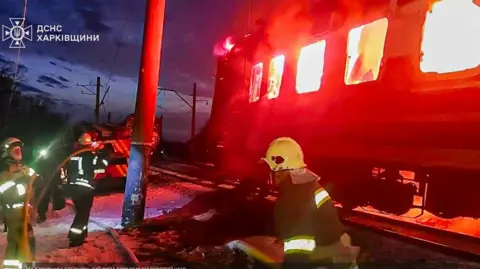
Drone Hits Kharkiv‑Region Passenger Train, Five Dead On 28 January 2026 a Russian‑launched drone struck a civilian train near the village of Yazykove in the Kharkiv region, killing at least five people and scorching a carriage [1][2]. The train was traveling from the western border town of Chop to Barvinkove, a route used by civilians visiting front‑line relatives, and carried roughly 300 passengers according to Ukrainian rail officials [1] (BBC notes “more than 200” passengers) [2]. Two additional drones exploded nearby, further damaging the train’s locomotive and a passenger car [2]. Emergency crews found bodies among the wreckage and began recovery amid snow‑covered woods [1].
Zelensky Labels Strike Pure Terrorism, No Military Target President Volodymyr Zelensky posted on Telegram that 18 people were inside the hit carriage and condemned the attack as “purely terrorism,” stressing there was no legitimate military purpose [1][2]. He argued any nation would view a drone strike on a civilian train as an act of terror [1][2]. The statement amplified Ukraine’s diplomatic protest against targeting non‑military infrastructure [1]. Zelensky’s remarks came as the Ukrainian government prepared a minute of silence and flag‑lowering ceremonies nationwide [1].
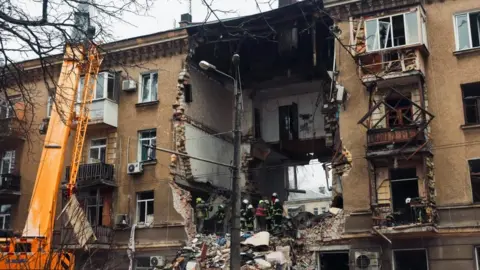
Concurrent Drone Barrages Damage Odesa Energy Facility and Kyiv Residence While the train was hit, a separate wave of drones struck the southern port city of Odesa, killing three people and causing “enormous” damage to a local energy plant, worsening the winter energy crisis [2]. In the Kyiv region, a residential block was hit, killing a couple and injuring their four‑year‑old child, with three bodies recovered from the rubble [2]. These attacks compounded nationwide shortages of heat, electricity, and water during one of the harshest winters in recent years [2]. Despite the escalations, Ukraine‑Russia peace talks continued in the United Arab Emirates under U.S. mediation [2].
Ukrainian Rail Operator Reports Injuries, Missing Passenger, Nationwide Mourning Ukrzaliznytsia confirmed two injuries and one passenger still missing after the train strike, and announced that flags at all stations would be lowered with a minute of silence observed [1]. Deputy Prime Minister Oleksii Kuleba described damage to the locomotive’s front and the destroyed passenger carriage, and released video showing smoke, flames, and a rescued woman with her infant [1]. The rail operator warned that the incident could disrupt civilian travel to front‑line areas, highlighting broader security risks to Ukraine’s transport network [1].
Sources
-
1.
CNN: Russian Drone Hits Ukrainian Civilian Train, Five Killed: details five fatalities, ~300 passengers, Zelensky’s terrorism label, injuries, a missing passenger, and Deputy PM Kuleba’s description of locomotive damage, with graphic footage
-
2.
BBC: Zelensky calls Russian train drone strike terrorism as attacks hit Odesa and Kyiv region: covers the same train strike, adds Odesa energy‑facility devastation, three deaths, Kyiv residential block casualties, winter energy‑crisis impact, and ongoing peace talks
Timeline
Dec 23, 2025 – Russia launches a massive drone‑and‑missile assault across 13 Ukrainian regions, deploying more than 650 drones and over 30 missiles, which kills at least three civilians and injures 17 people[3].
Dec 23, 2025 – A Russian drone strikes a residential building in Zhytomyr, killing a 4‑year‑old child and triggering emergency power cuts nationwide[3].
Dec 23, 2025 – US‑led peace talks in Miami wrap up with a 20‑point framework; Zelensky says bilateral security guarantees with the United States are approaching a real outcome[3].
Dec 23, 2025 – Ukrainian forces withdraw from the town of Siversk in Donetsk to preserve combat capability amid Russian pressure[3].
Dec 23, 2025 – President Vladimir Putin signals no willingness to compromise on Donbas territory, and Kremlin spokesman Dmitry Peskov warns against any breakthrough[3].
Jan 2, 2026 – Zelensky condemns a Kharkiv missile strike as “heinous,” noting two missiles hit a residential area and at least 16 people are injured[4].
Jan 2, 2026 – Ukraine’s air force reports Russia launched 116 long‑range drones overnight, intercepting 86 while 27 strike targets, intensifying attacks on cities such as Zaporizhzhia[4].
Jan 2, 2026 – Zelensky appoints General Kyrylo Budanov, head of military intelligence, as his new chief of staff; Budanov calls the role “an honor and a responsibility” at a historic moment[4].
Jan 2, 2026 – Moscow alleges a Ukrainian drone attack on Putin’s residence; Kyiv denies the claim and a CIA assessment later finds it false[4].
Jan 2, 2026 – Zelensky cites cumulative war casualties—43,000 killed and about 370,000 wounded by the end of 2024—and warns that the remaining 10 % of a peace deal will decide Ukraine’s future[4].
Jan 27, 2026 – A Russian drone strikes a Kharkiv passenger train near Yazykove, killing five civilians, injuring two, and leaving one passenger missing among roughly 300 aboard[1][2].
Jan 27, 2026 – President Zelensky labels the train attack “purely terrorism” in a Telegram post, stressing there is no military justification for targeting civilians[1][2].
Jan 27, 2026 – Deputy Prime Minister Oleksii Kuleba describes the drone impact on the locomotive and a passenger carriage, and video shows a woman rescued with her infant[2].
Jan 27, 2026 – Odesa endures a heavy drone barrage that kills three people, wounds dozens, and inflicts “enormous damage” on a local energy facility[1].
Jan 27, 2026 – A residential block in the Kyiv region is hit, killing a couple and injuring their four‑year‑old child; police find three bodies in the rubble[1].
Jan 27, 2026 – The winter energy crisis deepens as Russian attacks on power and water infrastructure leave millions without heating, electricity, and water[1].
Jan 27, 2026 – Ukraine‑Russia peace talks in the United Arab Emirates continue, described as constructive, with additional meetings scheduled for the weekend[1].
All related articles (4 articles)
-
CNN: Russian Drone Hits Ukrainian Civilian Train, Five Killed
-
BBC: Zelensky calls Russian train drone strike terrorism as attacks hit Odesa and Kyiv region
-
Newsweek: Zelensky condemns Kharkiv strike as Russia escalates attacks; Budanov named new chief of staff
-
CNN: Massive Russian attack on Ukraine kills 4-year-old as Zelensky is briefed on peace talks