Rahul Gandhi’s Unpublished Memoir Sparks Parliamentary Chaos, Suspensions and Vow to Hand Book to Modi
Updated (8 articles)
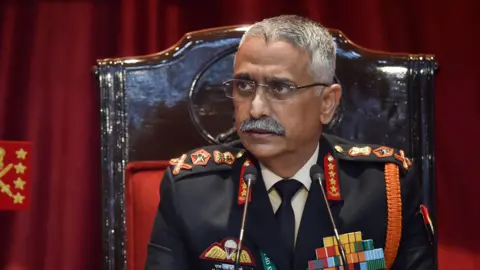
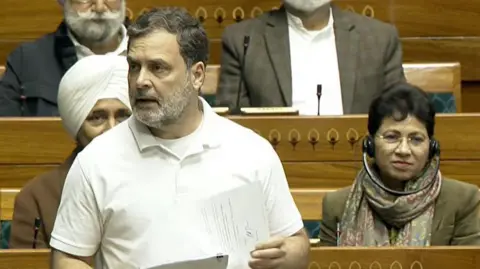
Speaker Bars Gandhi from Citing Unpublished Memoir On 2 February 2026, Lok Sabha Speaker Om Birla invoked Rule 349(i) to stop Leader of the Opposition Rahul Gandhi from reading any part of former Army chief M.M. Naravane’s unpublished manuscript Four Stars of Destiny during the motion of thanks debate, despite Gandhi’s offer to authenticate the magazine excerpt he intended to quote [7][8][6]. Birla demanded proof of the document’s authenticity before allowing reference, a request Gandhi fulfilled by producing a Caravan copy, yet the Speaker maintained the ban [6][4]. Defence Minister Rajnath Singh and Home Minister Amit Shah backed the ruling, arguing that unpublished material could not be cited in Parliament [1][7].
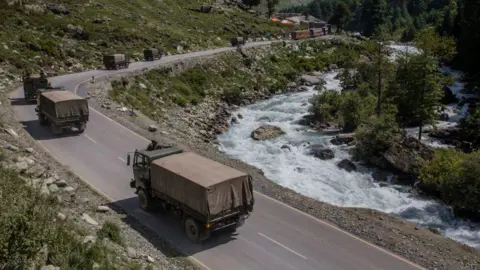
Memoir Allegations Target 2020 Ladakh Standoff The manuscript, delayed for clearance since 2024, claims senior officials failed to issue clear orders as Chinese tanks advanced toward Rechin La on 31 August 2020, resulting in a two‑hour hesitation before Defence Minister Rajnath Singh relayed Prime Minister Narendra Modi’s instruction to “do whatever you deem appropriate” [1][4][8]. Gandhi highlighted passages portraying Modi as having “abdicated responsibility” and the army chief feeling “abandoned by the entire establishment” [1][3]. These allegations echo The Caravan report cited by Gandhi, which asserts the leadership’s delayed response contributed to the Galwan valley casualties [4][8].
Opposition Protest Escalates, MPs Suspended From 3 to 4 February 2026, Congress and allied MPs staged banner displays, paper‑throwing and repeated adjournments to demand Gandhi be allowed to speak, forcing the government to halt Prime Minister Modi’s scheduled reply to the President’s address [2][3]. Speaker Om Birla subsequently suspended eight MPs—Gurjeet Singh Aujla, Hibi Eden, C Kiran Kumar Reddy, Amarinder Singh Raja Warring, Manickam Tagore, Prashant Padole, Dean Kuriakose and S Ventakesan—for the remainder of the budget session, citing disorderly conduct [4][5]. Gandhi denounced the action as “the first time in Parliamentary history… a blot on our democracy,” filing a formal protest letter to the Speaker [4][6].
Gandhi Vows to Hand Memoir Directly to Modi On 4 February 2026, Gandhi announced he would personally give the unpublished Four Stars of Destiny to Prime Minister Modi should the PM appear on the Lok Sabha floor, framing the gesture as a demand for accountability [3]. He reiterated that the memoir reveals the “truth” about the government’s handling of the 2020 China border clash and accused Modi of “running away from decisions” [8][3]. The vow intensified the standoff, with BJP leaders accusing Gandhi of undermining parliamentary dignity and morale of the armed forces [1][7].
Publication Remains on Hold Pending Defence Clearance Four Stars of Destiny has been awaiting approval from the defence ministry and publisher Penguin Random House since 2024, with officials citing “sensitive operational details” as the reason for the delay [1]. Indian regulations require retired officers to obtain clearance before releasing material that could affect sovereignty, and the army headquarters continues to review the manuscript for possible approval or rejection [1]. The ongoing impasse keeps the memoir’s full contents out of public view while the parliamentary dispute unfolds [1].
Sources
-
1.
BBC: Rahul Gandhi’s Parliamentary Row Over Unpublished Army Chief Memoir: Details Gandhi’s reading of Naravane’s manuscript, the ensuing chaos, BJP accusations, MP suspensions, and the legal requirement for clearance of sensitive material .
-
2.
The Hindu: Opposition Protests Halt PM’s Reply to Motion of Thanks in Lok Sabha: Describes how opposition MPs blocked Modi’s reply, demanded Gandhi speak first, and highlights procedural disputes over unrelated book quotations .
-
3.
The Hindu: Rahul Gandhi vows to hand former army chief’s unpublished memoir to PM Modi if he visits Lok Sabha: Reports Gandhi’s public display of the memoir, his promise to give it to Modi, and the heated exchanges with a MoS .
-
4.
The Hindu: Eight Lok Sabha MPs Suspended Amid Protest Over Rahul Gandhi’s Remarks: Lists the eight suspended MPs, cites Gandhi’s Caravan reference to the 2020 standoff, and notes the budget session’s schedule .
-
5.
The Hindu: Eight Opposition MPs Suspended as Parliament Turns Turbulent: Covers the suspension vote, Gandhi’s protest letter, and broader opposition grievances including trade‑deal transparency .
-
6.
The Hindu: Rahul Gandhi protests Speaker’s refusal to let him speak on national‑security issue: Summarizes Gandhi’s letter to the Speaker, his claim of procedural breach, and the redirection of floor time to NDA members .
-
7.
The Hindu: Rahul Gandhi’s attempt to cite an unpublished memoir blocked by Speaker Birla: Explains the Speaker’s rule‑based ban, the dual interpretation of Rule 349, and BJP criticism of Gandhi’s actions .
-
8.
The Hindu: Congress alleges government misused parliamentary rules to block Rahul Gandhi’s citation of Naravane memoir: Presents Congress’s argument that Rule 349(i) was misapplied, includes Gandhi’s accusations against Modi and the defence minister, and notes the memoir’s claim of delayed orders .
Timeline
Aug 31, 2020 – Chinese tanks advance toward Rechin La in Eastern Ladakh, prompting Defence Minister Rajnath Singh to relay Prime Minister Narendra Modi’s “do whatever you deem appropriate” order after a two‑hour delay, a detail later cited in Naravane’s memoir [8].
2020 – The Galwan Valley clash in Ladakh kills 20 Indian soldiers and at least four Chinese troops, a confrontation that Naravane’s unpublished book alleges senior officials gave no clear orders as Chinese forces moved forward [1].
2024 – Publication of General M.M. Naravane’s memoir Four Stars of Destiny stalls pending clearance from the defence ministry and Penguin Random House because of “sensitive operational details” of the 2020 standoff [1].
2024 – Union Minister of State for Railways Ravneet Singh Bittu switches parties, a move Congress labels a betrayal and later calls him a “traitor” during parliamentary protests [5].
Feb 2, 2026 – Rahul Gandhi attempts to quote the unpublished memoir during the President’s address debate; Speaker Om Birla asks him to authenticate the magazine source, and Defence Minister Rajnath Singh, Home Minister Amit Shah and Parliamentary Affairs Minister Kiren Rijiju block the reference under Rule 349(i) [6][8].
Feb 2, 2026 – Congress general secretary K.C. Venugopal accuses the Modi government of misusing Rule 349(i) to silence Gandhi, arguing that quoting a published magazine report on national security is permissible [8].
Feb 2, 2026 – Gandhi tells reporters the Prime Minister is “running away from decisions and leaving them on other people’s shoulders,” framing the memoir’s revelations as proof of leadership failure [8].
Feb 3, 2026 – Gandhi writes to Speaker Birla demanding the right to speak on a national‑security matter, calling the denial a “blot on our democracy” and asserting that once a document is authenticated the Speaker must allow reference [4].
Feb 3, 2026 – Speaker Birla reiterates the authentication requirement; Chair Krishna Prasad Tenneti moves the floor to NDA member Harish Balayogi after three opposition MPs decline to speak in solidarity with Gandhi [4].
Feb 3, 2026 – Chair Dilip Saikia names eight Congress MPs for suspension after they raise slogans and throw torn paper, and Union Minister Kiren Rijiju moves to suspend them for the remainder of the session [7].
Feb 4, 2026 – Gandhi displays a copy of Four Stars of Destiny in the Lok Sabha, vows to hand it to Prime Minister Modi if he appears on the floor, and repeats accusations that Modi and Rajnath Singh mishandled the 2020 Ladakh response [5].
Feb 4, 2026 – Women opposition MPs cross the aisle, unfurl banners before Modi’s seat and force BJP chair Sandhya Rai to adjourn the House, blocking the Prime Minister’s reply to the motion of thanks to President Droupadi Murmu’s address [2].
Feb 4, 2026 – Congress floor leaders convene at Mallikarjun Kharge’s residence to craft a joint opposition strategy, invoking the June 10, 2004 precedent when the BJP blocked Manmohan Singh’s reply to a motion of thanks [2].
Feb 4, 2026 – MP Nishikant Dubey reads from Edwina and Nehru and the Mitrokhin Archives to allege slander against former Prime Ministers, but Speaker Birla’s office later expunges his remarks from the official record [2].
Feb 4, 2026 – Speaker Om Birla suspends eight MPs (Gurjeet Singh Aujla, Hibi Eden, C Kiran Kumar Reddy, Amarinder Singh Raja Warring, Manickam Tagore, Prashant Padole, Dean Kuriakose, S Ventakesan) for the remainder of the budget session, citing disorderly conduct [3].
Feb 4, 2026 – The parliamentary budget session, which began earlier in February, is slated to conclude on Feb 13, 2026 [3].
Feb 5, 2026 – Chaos continues as Gandhi’s quoting of the memoir sparks repeated interruptions; the BJP accuses him of breaching parliamentary rules, eight MPs remain suspended, and Naravane’s alleged statements portray Prime Minister Modi as having “abdicated responsibility” during the Ladakh crisis [1].
External resources (7 links)
- https://www.youtube.com/@bbcnewsindia/featured (cited 1 times)
- https://t.co/6BKbJ60Y2H (cited 2 times)
- https://twitter.com/hashtag/Watch?src=hash&ref_src=twsrc%5Etfw (cited 2 times)
- https://t.co/Xv13858qPT (cited 1 times)
- https://www.facebook.com/bbcindia/ (cited 1 times)
- https://www.instagram.com/bbcnewsindia/ (cited 1 times)
- https://x.com/BBCIndia (cited 1 times)