Pakistan Declares Open War on Afghanistan, Launches Airstrikes Targeting Kabul, Kandahar, Paktia
Updated (3 articles)
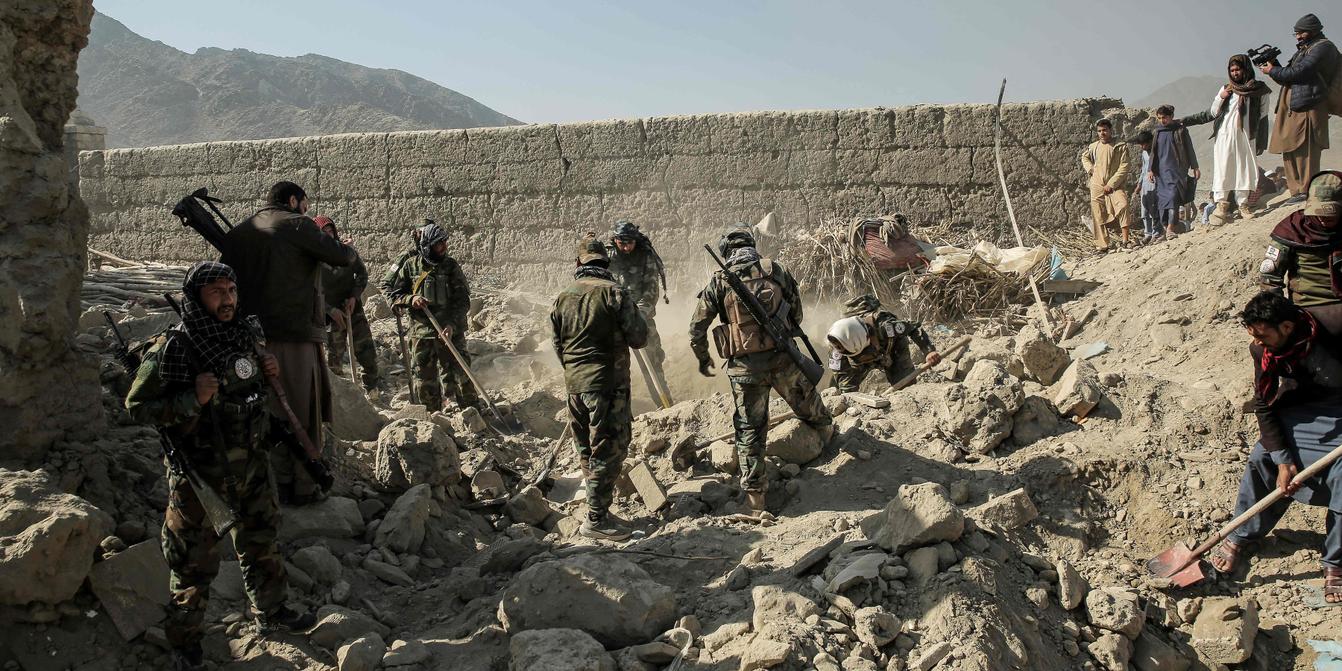
Pakistan Announces Open War and Vows Full Military Capability Defense Minister Khawaja Asif posted on X on 27 Feb 2026 that Pakistan’s patience has ended and an “open war” with Afghanistan has begun, while Prime Minister Shehbaz Sharif warned the armed forces possess “all the necessary capability to crush any aggressive ambition” [1][2][3]. The announcement follows a series of cross‑border attacks that Islamabad described as Afghan‑initiated, prompting a formal escalation after months of a Qatar‑Turkey‑brokered ceasefire [2][3]. Pakistan’s government framed the move as a defensive response to protect its border regions and civilian populations [1][3].
Airstrikes Hit Afghan Capital and Southern Provinces Pakistan launched retaliatory airstrikes on Kabul, Kandahar and Paktia on the night of Feb 26‑27, targeting what it called “terrorist camps” and claiming dozens of Taliban fighters killed [1][2][3]. Afghan Taliban spokesman Zabihullah Mujahid confirmed that Pakistani aircraft bombed the three locations, noting civilian injuries and damage to infrastructure [1][2]. Pakistan’s Information Minister Attaullah Tarar reported the operation “Ghazab lil Haq” killed 133 Taliban operatives and injured more than 200, while Afghan officials disputed the numbers [1][3].
Both Sides Trade Conflicting Casualty Figures and Territory Claims The Taliban announced the capture of 19 Pakistani posts and the death of 55 Pakistani soldiers, asserting that Afghan forces also bombed Kabul, Kandahar and Paktia [1][3]. Pakistan’s information ministry, however, claimed only two soldiers were killed and three wounded, while reporting 133 Afghan fighters killed and 27 Afghan posts destroyed [2][3]. These contradictory accounts highlight the fog of war and make independent verification difficult, with each side emphasizing its own strategic successes [1][2][3].
Russia, Iran, and UN Urge Diplomatic De‑Escalation Russia’s Foreign Ministry signaled willingness to mediate if both governments request it, and Iran’s Foreign Minister Seyed Abbas Araghchi offered assistance for dialogue on X [1]. United Nations Secretary‑General Antonio Guterres, via spokesman Stéphane Dujarric, called for continued diplomatic efforts to prevent further escalation [1]. The statements arrive as regional powers, including Saudi Arabia and Qatar, have previously intervened in the conflict, underscoring the international concern over a potential broader destabilization [2][3].
Humanitarian Fallout Accelerates Afghan Refugee Returns The United Nations High Commissioner for Refugees recorded 2.9 million Afghan returnees in 2023 and nearly 80 000 so far in 2024, a trend intensified by the renewed fighting [2]. Dozens of Afghan refugees waiting at the Torkham crossing were relocated to safer sites after the clashes, reflecting heightened security concerns on both sides [2]. The surge in displacement adds pressure to already strained humanitarian resources in the border region [2].
Sources
-
1.
The Hindu: Pakistan‑Afghanistan Border Clash Escalates as Russia, Iran Urge Diplomacy: Details Pakistan’s “open war” declaration, airstrikes, casualty claims, and diplomatic overtures from Russia, Iran, and the UN, emphasizing military balance data .
-
2.
AP: Pakistan Declares “Open War” with Afghanistan After Cross‑Border Strikes: Highlights the open‑war announcement, airstrike targets, conflicting casualty figures, collapse of Qatar‑Turkey ceasefire, and refugee movements .
-
3.
Le Monde: Pakistan Declares Open War on Afghanistan Amid Escalating Border Strikes: Focuses on political statements, reciprocal attacks, territorial captures, and Iran’s mediation offer, noting the breakdown of the 2025 truce .
Related Tickers
Timeline
2023 – The United Nations High Commissioner for Refugees records 2.9 million Afghan returnees, highlighting the massive displacement that predates the 2025 cease‑fire and underscores the humanitarian stakes of any renewed fighting[1].
2024 (so far) – UNHCR notes nearly 80,000 additional Afghan returnees, showing a continued flow of people even before the 2025 diplomatic breakthrough[1].
Oct 19, 2025 – Qatar and Turkey broker a cease‑fire between Pakistan and Afghanistan, temporarily halting border skirmishes that had escalated since 2023[3].
Oct ≈ 28, 2025 – The cease‑fire collapses nine days later, reigniting hostilities and exposing the fragility of the regional peace effort[3].
Oct 2025 – Saudi Arabia helps free three Pakistani soldiers captured in earlier border clashes, a diplomatic gesture that briefly eases tensions but does not prevent later escalation[3].
Feb 26, 2026 (night) – Pakistan launches Operation Ghazab lil Haq, striking Kabul, Kandahar and Paktia and claiming 133 Taliban killed and over 200 injured, marking the first large‑scale retaliation after Afghan cross‑border attacks[2].
Feb 26, 2026 – Russia’s Foreign Ministry calls for an immediate halt to cross‑border attacks and says it will consider mediating if both sides request assistance[2]; Iran’s foreign minister offers help for dialogue on X[2].
Feb 27, 2026 – Defence Minister Khawaja Asif posts “Pakistan’s patience has run out; it is now open war between us and you,” formally escalating the conflict[1][3].
Feb 27, 2026 – Prime Minister Shehbaz Sharif declares Pakistan has “all the necessary capability to crush any aggressive ambition,” reinforcing the government’s hardline stance[1][2][3].
Feb 27, 2026 – Pakistan’s air force hits Kabul, Kandahar and Paktia, targeting Taliban defence positions and reporting 133 Taliban operatives killed, while Afghan spokesman Zabihullah Mujahid claims 55 Pakistani soldiers killed and 19 posts seized, illustrating the tit‑for‑tat casualty spiral[1][2][3].
Feb 27, 2026 – Iran’s foreign minister Abbas Araghtchi offers Tehran’s assistance to facilitate dialogue and cooperation between the two neighbours, positioning Iran as a potential regional mediator[3].
Feb 27, 2026 – UN Secretary‑General Antonio Guterres, via spokesman Stéphane Dujarric, urges both sides to continue seeking diplomatic solutions, reflecting international concern over the widening conflict[2].
Feb 27, 2026 – Pakistan relocates dozens of Afghan refugees from the Torkham crossing to safer sites amid the clashes, a direct humanitarian impact of the renewed fighting[1].
Future (as of Feb 2026) – Russia stands ready to mediate if Pakistan and Afghanistan formally request its involvement, indicating a possible diplomatic avenue beyond Iran’s offer[2].
Future (as of Feb 2026) – The UN continues to call for diplomatic resolution, signaling ongoing international pressure for a cease‑fire and negotiated settlement[2].