Trump Implements 10% Global Tariff on Feb 24, 2026 After Supreme Court Ruling
Updated (8 articles)
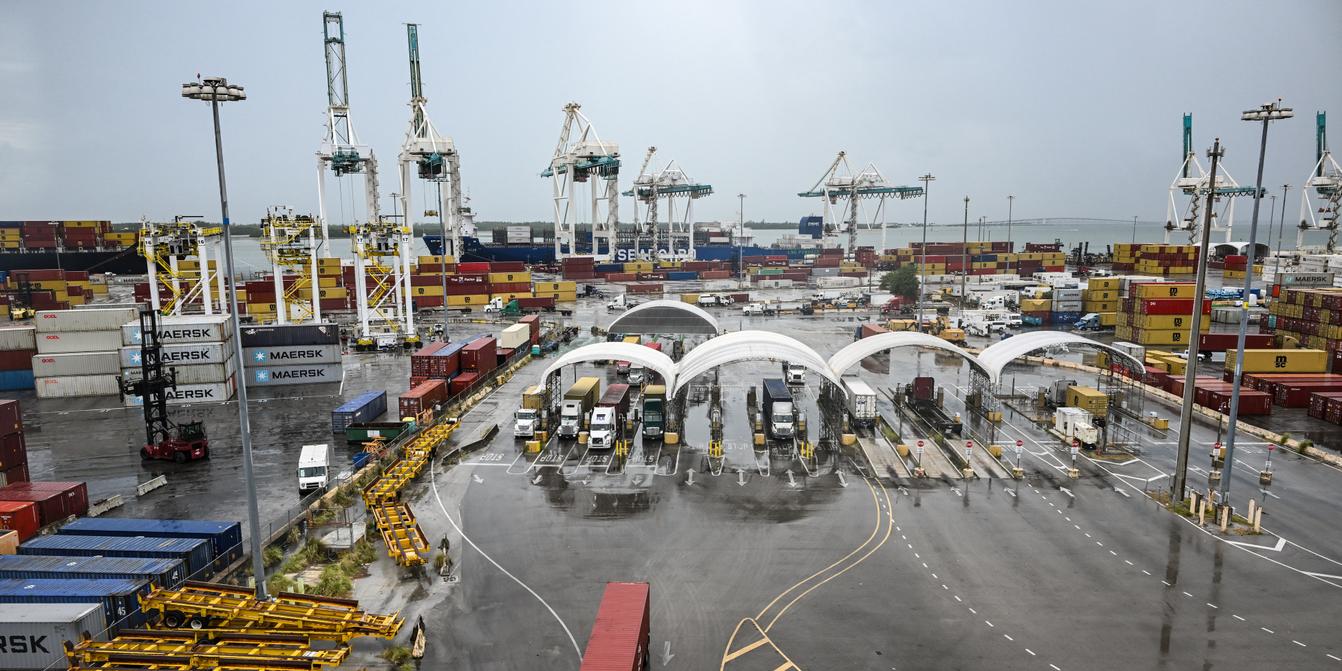
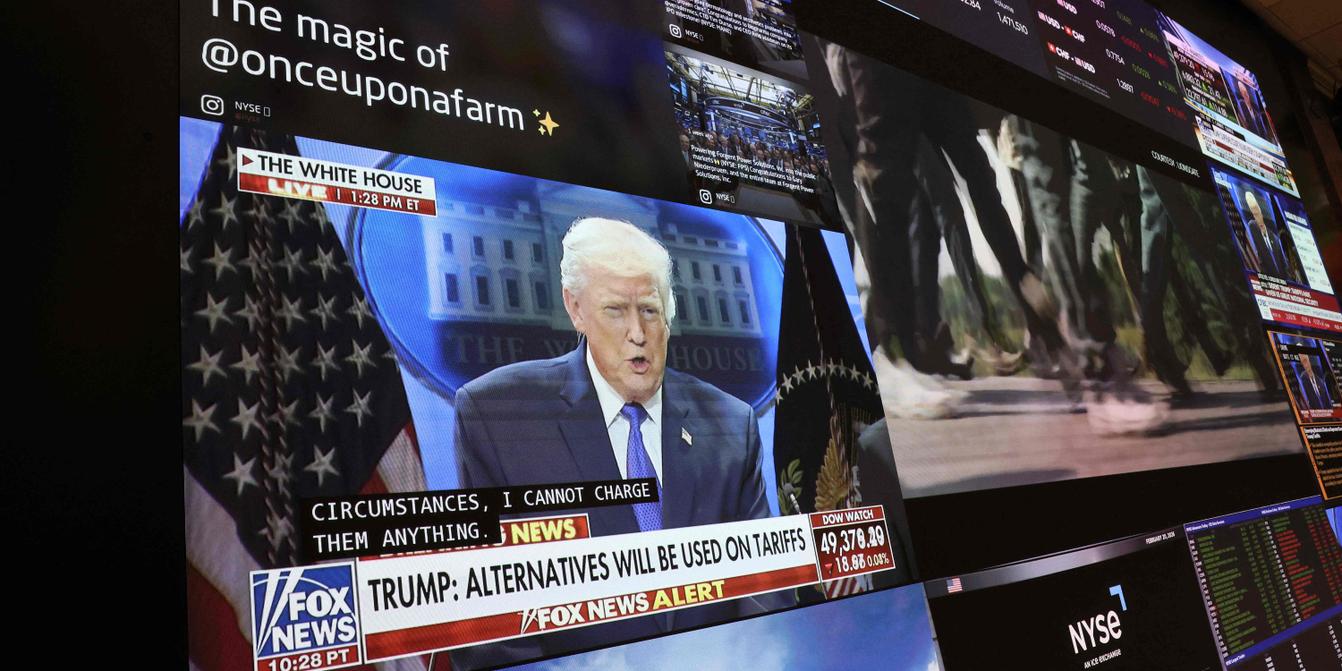
Supreme Court Decision Triggers New 10% Tariff On February 20, 2026 the U.S. Supreme Court ruled 6‑3 that President Trump had exceeded his authority under a 1977 emergency‑law provision, striking down large parts of his sweeping tariff regime [1][2]. Hours later Trump announced an executive order imposing a uniform 10 % duty on all imports, effective February 24, 2026, and pledged to raise the rate to 15 % while keeping sector‑specific exemptions [1][4]. Customs officials halted collection of the previously illegal duties and began enforcing the new levy on the announced date [1].
Tariff Scope, Duration, and Immediate Economic Burden The 10 % tariff applies to roughly $1.2 trillion of U.S. imports, covering about 34 % of total import value [1][5]. Under Section 122 the measure automatically expires after 150 days unless Congress extends it, setting an end date in late July 2026 [4][1]. Tax Foundation analyst Erica York estimates the duties will increase the average household’s 2026 cost of living by about $700, down from a projected $1,000 in 2025 [1]. Economists note that the burden falls on importers and consumers, with low‑income families facing disproportionate price hikes on essential goods [4][5].
Growth Slowdown and Trade Deficit Persist Despite Tariffs Real GDP grew at an annualized 1.4 % in Q4 2025 and 2.2 % for the full year, well below the 5 %‑plus growth Trump claimed and slower than the 2.8 % expansion in 2024 [2][3]. The United States recorded a record merchandise trade deficit of $1.241 trillion in 2025, a 2.1 % increase from the prior year, indicating the tariff regime failed to shrink the overall gap [5][3]. The deficit on Chinese goods fell 32 % to $202 billion, but deficits with the EU widened, reflecting a reshaped trade geography rather than a net reduction [5].
Consumer Impact and Political Opposition Studies by Yang Zhou and others warn that the duties will be passed to shoppers, raising prices on food, energy, and basic products, especially for low‑income households [4][5]. An AP‑NORC poll in January found six‑in‑ten Americans think the tariffs go too far, and a later April poll showed 76 % expect higher consumer‑goods costs [4]. Trump has framed the court’s decision as expanding his power, threatening licensing fees or higher tariffs on countries he deems uncooperative [1].
Future Tariff Plans and Legal Authority Trump signaled intent to increase the tariff to 15 % and hinted at additional duties under Section 232 following a Commerce Department investigation [1][4]. He also suggested using licensing mechanisms for “terrible” actions against countries that “play games,” indicating a possible escalation beyond the 10 % measure [1].
Sources
-
1.
The Hindu: New U.S. tariffs of 10% take effect after Supreme Court rebuke: details the 10 % tariff’s start date, 150‑day limit, Supreme Court ruling, Trump’s pledge to raise rates, and estimated household cost .
-
2.
Le Monde: Trump’s Tariffs Linked to Slower US Growth: links the Supreme Court decision to a slowdown in Q4 2025 GDP to 1.4 % and full‑year growth to 2.2 %, and cites Trump’s claim that a shutdown cost two growth points .
-
3.
CNN: New Economic Data Undercut Trump’s Tariff and Growth Claims: corrects Trump’s exaggerated trade‑deficit reduction claim, confirms the 10 % tariff’s legal basis after the court ruling, and repeats the 1.4 % Q4 GDP figure .
-
4.
WBNS (Columbus, OH): Trump Announces 10% Global Tariff After Supreme Court Ruling: reports the executive order, 150‑day expiration, potential Section 232 follow‑up, and emphasizes consumer‑price impacts and public opposition .
-
5.
Le Monde: US Record Trade Deficit Persists in 2025 Despite Trump Tariffs: shows the 2025 trade deficit reaching $1.241 trillion, the limited effect of tariffs on the deficit, and the shift in trade balances away from China toward the EU .
Related Tickers
Timeline
June 2022 – The U.S. Consumer Price Index spikes to a 9.1% year‑over‑year increase, marking the highest inflation rate in modern history and setting the backdrop for later political disputes over price pressures[3].
January 2025 – Inflation eases to 3% as supply‑chain bottlenecks ease and monetary policy tightens, contradicting President Trump’s later claim that he inherited “the worst inflation in history”[3].
2024 – Real GDP grows 2.8% for the year, the fastest among wealthy nations except Spain, providing a benchmark that Trump later compares against his tariff narrative[4].
Q1 2025 – U.S. GDP contracts, marking the first quarterly shrinkage since the pandemic, which Trump later blames on a “budget shutdown” he calls the longest in history[4].
Q2 2025 – The economy rebounds with a 3.8% annualized GDP gain, fueling Trump’s claim that his tariffs “resurrected” growth despite mixed data[4].
Q3 2025 – GDP expands at a 4.4% annualized rate, further bolstering the administration’s narrative of a “miracle” economy under tariffs[4].
October 2025 – A short‑term dip in the trade deficit creates a misleading 78% reduction figure that Trump posts on Truth Social, a statistic analysts warn is unsustainable and based on temporary swings in gold and pharmaceuticals trade[1].
2025 (full year) – The United States posts a record merchandise trade deficit of $1.241 trillion, a 2.1% rise from the prior year, showing that tariff policy fails to shrink the overall gap[8].
2025 (full year) – Tariff revenue jumps by roughly 200% to $187 billion more than in 2024, with businesses absorbing about 80% of the cost, highlighting the private‑sector burden of the tariff regime[2].
2025 (Jan through Nov) – The trade deficit rises 4% year‑to‑date to $840 billion, despite lower monthly deficits after an early‑year import surge, underscoring the limited impact of tariffs on the balance of payments[4].
February 20, 2026 – The Supreme Court rules 6‑3 that President Trump exceeded his authority under the 1977 emergency‑law tariff provision, striking down a large portion of his sweeping duties and prompting the administration to promise new, legally‑grounded tariffs[5].
February 20, 2026 – President Trump announces a 10% tariff on all imports, citing the Court decision as “far more powers and strength” and pledging to raise the rate to 15% while keeping sector‑specific exemptions[5][6].
February 20, 2026 – Analysts warn the 10% tariff will raise consumer prices, especially for low‑income households, and note that a study finds the duties hurt China’s economy three times more than the United States[6].
February 21, 2026 – BEA data show the trade deficit falls 0.2% overall in 2025 and Q4 2025 GDP expands at a modest 1.4% annualized rate, contradicting Trump’s claims of 5.4%‑5.6% growth and highlighting the slowdown under his tariff agenda[1].
February 21, 2026 – A Le Monde analysis reports U.S. GDP growth slows to 1.4% in Q4 2025 and 2.2% for the full year, while the Commerce Department estimates the October‑November 2025 shutdown cuts growth by one percentage point; Trump accuses Democrats of causing a two‑point loss[7].
February 24, 2026 – The 10% tariff takes effect, covering $1.2 trillion of imports and imposing an average household cost of about $700 in 2026; Customs stops collecting the previously illegal duties and begins enforcing the new rate[5].
February 24, 2026 – July 2026 (150 days) – The tariff is set to expire after 150 days unless Congress extends it, while Trump signals a plan to increase the rate to 15% and hints at using licensing fees or “terrible” actions against non‑compliant countries[5][6].
Future (2026 onward) – The administration eyes additional duties under Section 232 after a Commerce Department investigation, and a pending Supreme Court case could invalidate past tariffs and trigger refunds for firms that already paid them[2][6].
Future (2026) – JPMorgan projects the share of tariff costs passed to consumers to rise from roughly 20% to a higher proportion as businesses shift the burden, indicating growing price pressure on shoppers[2].
Future (2026) – Polls show broad public opposition, with six‑in‑ten Americans believing Trump has gone too far and 76% expecting higher consumer‑goods costs from the tariffs[6].
All related articles (8 articles)
-
The Hindu: New U.S. tariffs of 10% take effect after Supreme Court rebuke
-
Le Monde: Trump’s Tariffs Linked to Slower US Growth
-
CNN: New Economic Data Undercut Trump’s Tariff and Growth Claims
-
WBNS (Columbus, OH): Trump Announces 10% Global Tariff After Supreme Court Ruling
-
Le Monde: US Record Trade Deficit Persists in 2025 Despite Trump Tariffs
-
AP: Trump’s Tariff Claims Clash With Economic Data
-
CNN: Tariffs could sting in 2026 as prices rise and court ruling looms
-
CNN: Trump Blames Biden for Affordability Crisis, Inflation Now Slowing
External resources (17 links)
- https://www.bea.gov/news/2026/gdp-advance-estimate-4th-quarter-and-year-2025 (cited 1 times)
- https://www.bea.gov/sites/default/files/2026-02/trad1225.pdf (cited 1 times)
- https://www.whitehouse.gov/investments/ (cited 1 times)
- https://fred.stlouisfed.org/series/GDPC1 (cited 1 times)
- https://www.bu.edu/articles/2025/trade-deficit-is-a-sign-of-americas-strength/ (cited 1 times)
- https://www.cnbc.com/2026/01/29/trade-balance-soared-94percent-in-november-and-was-higher-than-a-year-ago-despite-tariff-efforts.html (cited 1 times)
- https://truthsocial.com/@realDonaldTrump/posts/116094375393499963 (cited 1 times)
- https://x.com/bencasselman/status/2016925206074327306 (cited 1 times)
- https://www.atlantafed.org/research-and-data/data/gdpnow/current-and-past-gdpnow-commentaries (cited 2 times)
- https://www.pricinglab.org/files/TrackingTariffs_Cavallo_Llamas_Vazquez.pdf (cited 2 times)
- https://rollcall.com/factbase/trump/transcript/donald-trump-interview-msnbc-chris-matthews-hardball-november-18-1999/#161 (cited 1 times)
- https://rollcall.com/factbase/trump/transcript/donald-trump-remarks-cabinet-meeting-january-29-2026/#14 (cited 1 times)
- https://rollcall.com/factbase/trump/transcript/donald-trump-remarks-unscheduled-economy-july-27-2018/#4 (cited 1 times)
- https://rollcall.com/factbase/trump/transcript/donald-trump-speech-economic-development-rome-georgia-february-19-2026/#33 (cited 1 times)
- https://rollcall.com/factbase/trump/transcript/donald-trump-speech-world-economic-forum-davos-january-21-2026/#149 (cited 1 times)
- https://www.cfr.org/articles/who-pays-trumps-tariffs (cited 1 times)
- https://www.kielinstitut.de/publications/news/americas-own-goal-americans-pay-almost-entirely-for-trumps-tariffs/ (cited 1 times)