New START Expiration Leaves Global Nuclear Limits Unbound
Updated (2 articles)
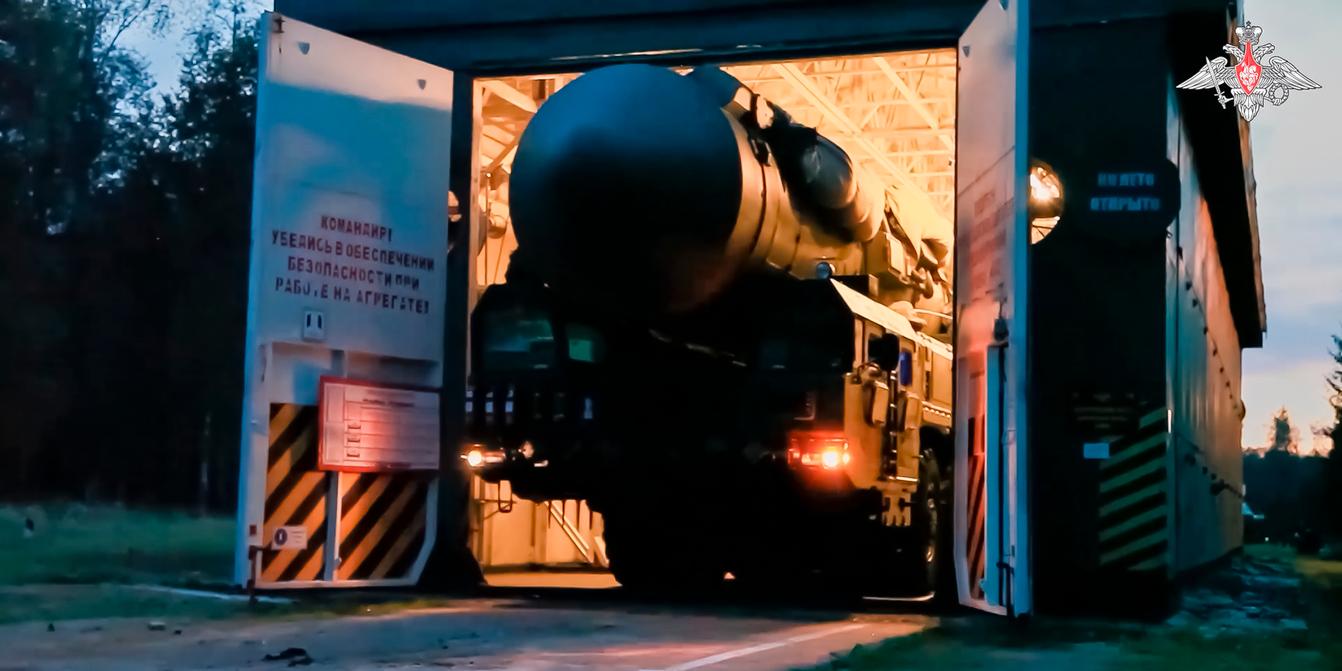
Treaty Lapse Removes Legal Cap on Strategic Warheads The New START treaty, which limited each side to 1,550 deployed nuclear warheads, expired on 5 February 2026, ending the last binding agreement that restrained U.S. and Russian strategic arsenals [1]. Without renewal or extension, no treaty now governs the development, deployment, or testing of intercontinental nuclear weapons across submarines, bombers, or land‑based missiles [1]. The lapse also eliminates verification, notification, and on‑site inspection mechanisms that previously provided transparency between the two powers [1].
U.S. President Refuses to Extend the Agreement President Donald Trump declined to guarantee the warhead ceiling or to negotiate a one‑year extension, a decision that directly opposed Russian President Vladimir Putin’s request for continuation [1]. Trump’s stance leaves the United States without a formal limit on its strategic nuclear forces for the first time since the Cold War [1]. The refusal signals a shift toward unilateral policy making on nuclear posture rather than multilateral constraint [1].
Russia and China Prepare to Grow Their Stockpiles Russian officials have indicated plans to increase their arsenal now that the cap is removed, while Chinese military planners are reportedly accelerating efforts to match U.S. and Russian capabilities [1]. Together, the United States and Russia possess roughly 90 % of the world’s nuclear warheads, and China’s expansion could further destabilize the strategic balance [1]. Analysts warn that the absence of a cap may trigger a new arms race among the three major powers [1].
Media Warn of Renewed Nuclear Competition New York Times journalists David Sanger and William Broad highlighted the emergence of a “new generation of nuclear weapons” as a direct consequence of the treaty’s expiration, describing the situation as a fresh nuclear competition [1]. Their reporting underscores concerns that without legal restraints, modernization programs will accelerate unchecked [1]. The editorial perspective frames the lapse as a pivotal moment that could reshape global deterrence dynamics [1].
Related Tickers
Timeline
1972 – For the first time since 1972, no international treaty governs the development, deployment, or testing of intercontinental nuclear weapons, leaving the strategic deterrence framework unbounded. [2]
Feb 2011 – The New START treaty is signed, capping each side at 1,550 deployed warheads, 700 deployed ICBMs/SLBMs/heavy bombers, and 800 launchers, and establishing verification, notification, and on‑site visit rules. [1]
2021 – The treaty receives a five‑year extension, scheduled to run out in early 2026, preserving the legal limits on U.S.‑Russia arsenals. [1]
2022 – A Pentagon report projects China’s nuclear stockpile could reach roughly 1,500 warheads by 2035, underscoring the treaty’s omission of Chinese forces. [1]
Feb 4‑5, 2026 – The 2021 extension expires and New START lapses on Feb 5, ending the last legally binding caps on U.S.‑Russia strategic nuclear arsenals. [1][2]
Feb 5, 2026 – The Russian Foreign Ministry calls the lapse “erroneous and regrettable” and states Russia is no longer bound by any treaty provisions, freeing it to choose its next steps. [1]
Feb 5, 2026 – President Donald Trump posts on Truth Social that the U.S. will not extend New START, labels the pact “badly negotiated,” and urges nuclear experts to craft a modernized treaty that includes China. [1]
Feb 5, 2026 – Secretary of State Marco Rubio says the administration will not maintain New START caps, arguing that true 21st‑century arms control must involve China. [1]
Feb 5, 2026 – A Trump administration official reiterates the president’s desire to keep limits but insists future negotiations must bring China into the framework. [1]
Feb 5, 2026 – Former officials Paul Dean, Rose Gottemoeller, Matthew Kroenig, and Daryl Kimball warn that abandoning the limits risks a rapid Russian buildup, erodes deterrence, and could spark an uncontrolled U.S.–Russia–China nuclear competition. [1]
Feb 7‑8, 2026 – New York Times reporters David Sanger and William Broad write that a “new generation of nuclear weapons” arrives “as vengeance after New Start,” indicating a renewed arms race. [2]
Feb 19, 2026 – An editorial notes that the United States, Russia, and China appear set to expand their arsenals, with the two superpowers together holding about 90 % of global nuclear warheads. [2]
Feb 19, 2026 – President Trump declines to extend the treaty, a stance opposed by Russian President Vladimir Putin, who had advocated an extension. [2]